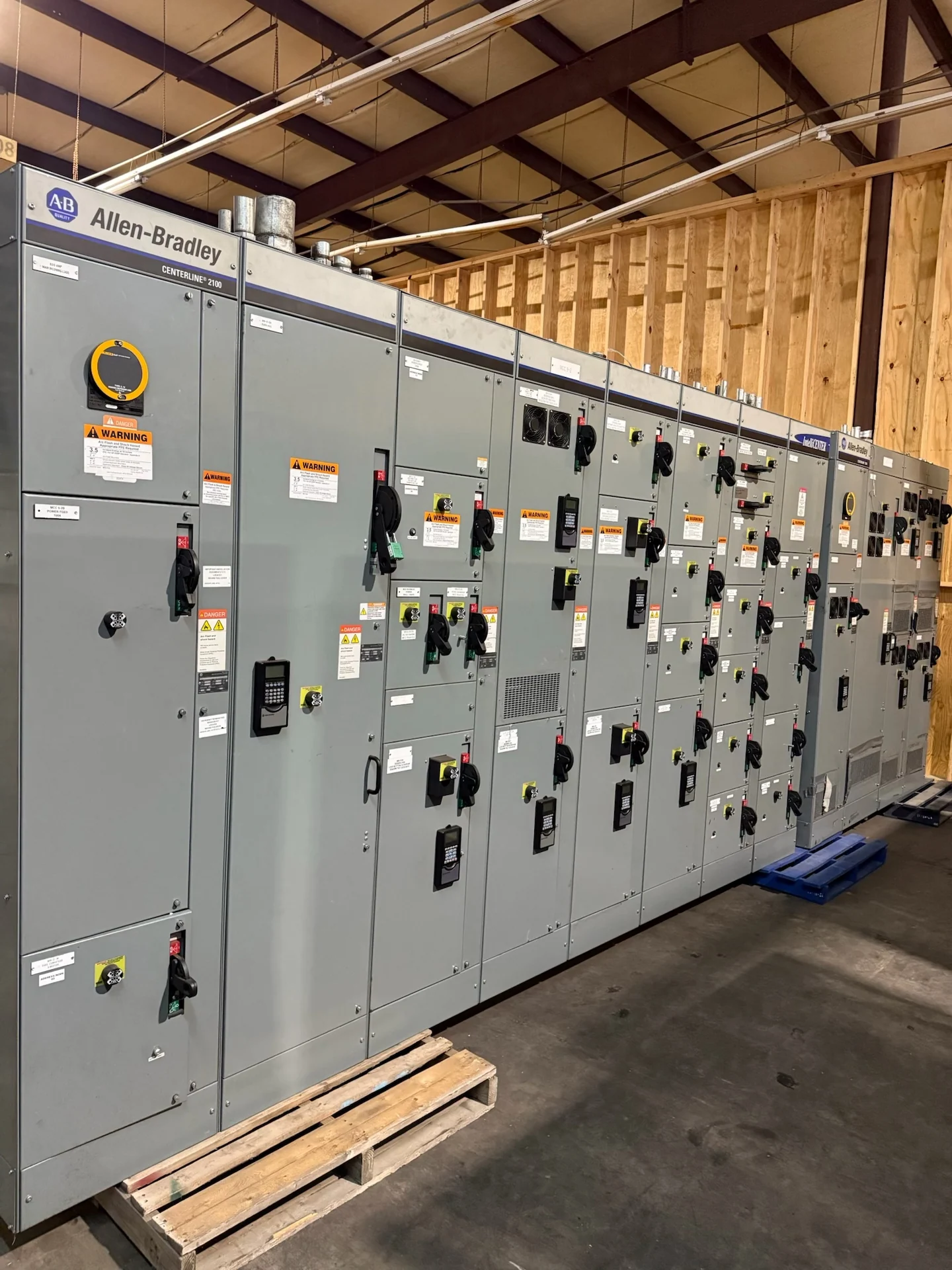
Start with the Wind Collection System Architecture
Wind collection systems gather generation from multiple turbines and route that power toward a project substation or interconnection point. A useful switchgear design begins with the one-line diagram: identify turbine feeder groupings, collector voltage, grounding method, transformer interfaces, sectionalizing points, and the normal operating path. The lineup may need separate incoming, feeder, bus-tie, or metering functions, but those choices depend on the electrical study and operating philosophy rather than the project label alone. A manufacturer can build new custom switchgear to the approved scheme, using American components and coordinating physical interfaces for the wind plant's cables, transformers, relays, and control system.
Define Voltage, Current, and Fault-Duty Inputs
Collection switchgear must be specified against the actual electrical duty at each location, not a generic wind-farm template. Provide nominal and maximum system voltage, frequency, phase arrangement, continuous current, short-circuit information, insulation requirements where applicable, and the transformer data that affects fault contribution. Protection studies should establish interrupting or withstand requirements for breakers, switches, fuses, bus, and cable terminations. For inverter-connected generation, the study team should also explain available fault current assumptions and control behavior used in the analysis. These inputs let the builder review device selection, bus construction, clearances, grounding, and enclosure details before fabrication.
Coordinate Feeder Protection and Switching
Wind collector feeders require an intentional relationship between switching devices, protective relays, fuses where specified, turbine step-up transformers, and the substation protection scheme. The project team should define which device clears feeder faults, how ground faults are detected, whether directional elements are needed, and what operating sequence applies during maintenance or abnormal conditions. Time-current coordination alone may not describe every inverter-based source behavior, so the engineer should document study assumptions and relay settings for review. Custom switchgear can reserve compartments and control wiring for the approved protection and communication architecture without assuming that one arrangement suits every collection circuit.
Plan Interconnection, Metering, and Controls
The point where a wind project connects to a utility or transmission system introduces requirements beyond collector feeder switching. Confirm the interconnection voltage, ownership boundary, revenue or supervisory metering, disconnecting means, grounding provisions, synchronism or transfer logic when applicable, and the utility's protection and communications requirements. Control schematics should show trip circuits, close permissives, breaker status, lockout functions, local controls, remote commands, and alarm points in a way that installers and commissioning personnel can follow. A switchgear quote is more useful when it includes the latest one-line, control narrative, relay list, terminal schedule, cable-entry direction, and documentation expectations.
Resolve Outdoor and Site-Interface Conditions
Wind sites can place equipment far from a central electrical room, so enclosure and installation details deserve early attention. Identify indoor or outdoor exposure, rain and dust conditions, elevation, ambient temperature range, corrosion concerns, solar exposure, access restrictions, foundation dimensions, cable trench locations, and the route for delivery and lifting. The equipment footprint should leave the working space and maintenance access required by the project design, while doors, removable panels, hinges, cable compartments, and lifting points should match the planned installation method. Nationwide shipping from the American manufacturer can be coordinated around destination, packaging, freight responsibilities, receiving access, and project-specific shipment sections.
Build a Reviewable Equipment and Documentation Package
For wind collection systems, documentation is part of the interface between the equipment builder, electrical engineer, controls integrator, utility, and field contractor. Request a quote using the approved electrical drawings, equipment schedule, protection requirements, enclosure conditions, component preferences, and requested inspection or testing scope. The manufacturer can then develop custom drawings showing lineup dimensions, bus arrangement, device locations, control circuits, terminal points, and nameplate information for review before fabrication. If UL 891 is relevant to the proposed assembly, its applicability and any project-specific listing or capability must be confirmed for that exact design; it should not be assumed from the application alone.