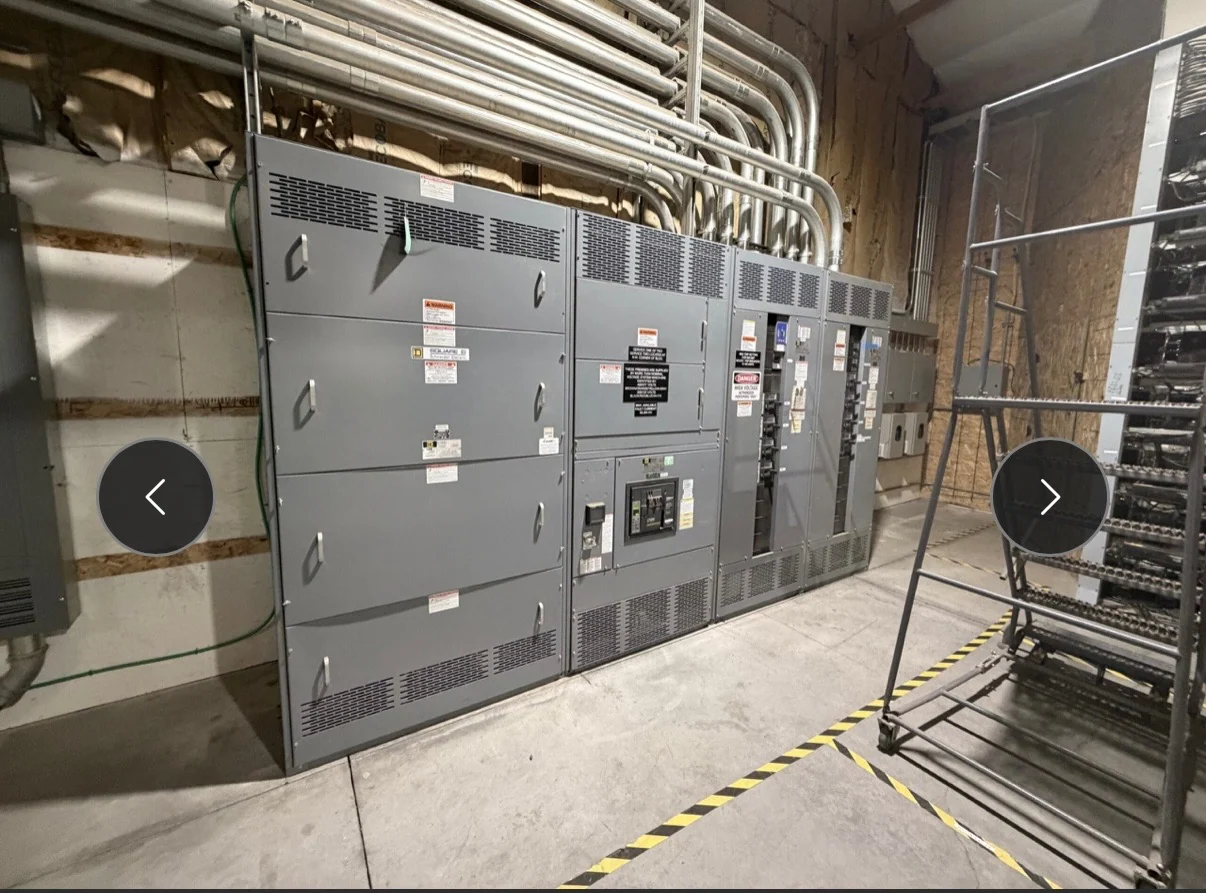
Start with the Battery Project Power Path
Battery energy storage projects connect power-conversion equipment, battery containers or enclosures, auxiliary loads, and a utility or facility interconnection. Switchgear for battery energy storage should therefore begin with a clear one-line diagram rather than a preferred enclosure or breaker. Identify every source and load, operating voltage, phase arrangement, grounding method, normal and alternate power paths, and the operating states that the equipment must support. A manufacturer can then develop new custom switchgear around the actual collection, inverter, transformer, and point-of-interconnection interfaces. The same review should identify whether the assembly is intended for indoor or outdoor installation, how cables enter, and how operators will access switching devices.
Coordinate Source Switching and Operating Sequences
Source switching in a storage facility may involve the utility, an inverter-based resource, an auxiliary transformer, a standby source, or a facility bus. The important question is not simply whether a transfer device can change sources, but which transitions are permitted and under what conditions. Define open-transition or closed-transition intent only after the electrical engineer confirms synchronization, transfer timing, backfeed prevention, and interlocking requirements. A custom lineup may include mains, ties, feeder devices, control power, metering provisions, and visible isolation points, but each function must be tied to a documented sequence. Written permissives and abnormal-state responses help the manufacturer align control wiring with the owner's operating philosophy.
Specify Protection from Fault and Backfeed Conditions
Protection for renewable energy electrical distribution must account for more than the utility contribution shown on a conventional load schedule. Inverters can contribute fault current differently from synchronous machines, while multiple converters, transformers, and feeder segments can create distinct protection zones. Provide available fault-current information, equipment voltage class, continuous current requirements, interrupting or withstand duties as applicable, grounding details, and the study assumptions used by the engineer. Protective-device coordination should address utility-connected, islanded, charging, discharging, and maintenance states when those states apply. The finished specification should distinguish breaker functions, fuses, relays, sensing, trip settings, and interlocks so that the switchgear application matches the modeled system.
Plan the Grid Interface and Utility Review
The grid interface is a project boundary with technical and commercial consequences. Before requesting a quote, identify the point of common coupling, utility-required disconnects, revenue or operational metering, protection communications, anti-islanding responsibilities, grounding arrangement, and any utility witness or approval steps specified for the project. A manufacturer can supply new equipment with the physical compartments, bus arrangement, instrument transformers, terminal points, and control interfaces defined by the approved design, but the utility and engineer determine what the interconnection requires. Keep utility comments, protection settings, and one-line revisions synchronized so that a late change to the interconnection does not leave the lineup, cable schedule, or control scheme inconsistent.
Match Enclosure, Environment, and Maintenance Needs
Storage sites can place electrical equipment near outdoor battery enclosures, inverter skids, transformers, gravel yards, or conditioned rooms. Describe ambient temperature range, moisture, dust, corrosive exposure, altitude, solar loading, seismic considerations, and access restrictions in the equipment inquiry instead of assuming a generic enclosure will fit. Include the available foundation, cable trench or conduit layout, lifting route, working clearances, and space for inspection and device operation. Maintenance planning also affects compartment arrangement: operators may need isolation points, test access, control-power separation, or clear indication of source status. These details let Switchgear Builders develop custom American-component assemblies for the stated installation and coordinate nationwide shipping around the destination and receiving plan.
Prepare a Complete New-Switchgear Quote Package
A useful quote request for battery storage switchgear includes the latest one-line diagram, load and generation data, voltage and frequency, fault study inputs, protection philosophy, control narratives, communications requirements, enclosure conditions, dimensions, cable details, metering needs, drawings, inspection expectations, and shipping destination. State which items are by the switchgear manufacturer and which are by the integrator, installer, utility, or controls contractor. Ask for a line-by-line description of included devices, documentation, testing scope, shipping sections, lifting provisions, and assumptions. Switchgear Builders manufactures new electrical switchgear in the United States with American components, customizes it to specification, and ships nationwide; project-specific ratings, standards, approvals, and any UL 891 applicability must be confirmed during engineering review.