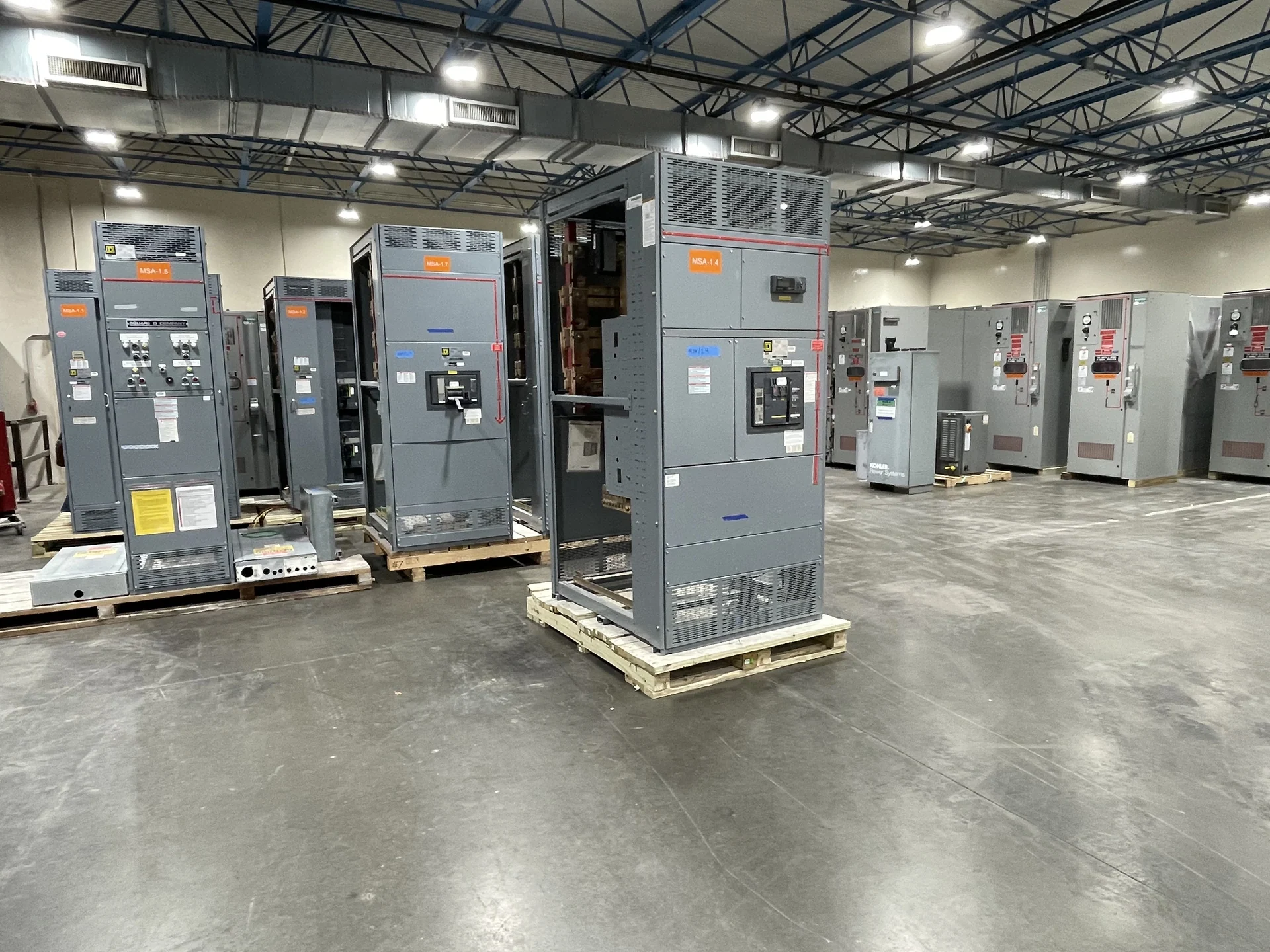
Start with the Pump Station Operating Sequence
Backup power for pump stations begins with the operating sequence, not a catalog label. Identify which pumps must run during an outage, whether duty and standby units alternate, how wet-well level signals initiate operation, and which controls must remain energized. Document normal and emergency source paths, motor starting expectations, ventilation or heating loads, communications, and any alarm circuits. Establish whether operators need local manual control during a communications failure and how high-level alarms should behave when generation is limited. This information lets the manufacturer shape new switchgear and transfer equipment around the actual water and wastewater electrical distribution plan rather than assuming every station has the same critical-load definition.
Match Transfer Equipment to Source Behavior
A transfer switch must be evaluated with both sources and the connected motors in view. Confirm the normal-source arrangement, generator output, system voltage, phase, frequency, grounding method, available fault current, and desired transition behavior. An open transition may briefly interrupt pump power, while another project may require a different sequence or bypass-isolation arrangement subject to engineering review. Control logic should address source verification, transfer and retransfer conditions, generator warm-up or cool-down signals, and manual operating provisions without assuming a particular feature is appropriate. Also identify whether the generator can accept the largest motor step, whether load sequencing is needed, and who owns the interface between transfer controls and generator controls.
Size Distribution Around Motor and Auxiliary Loads
Pump motors can create starting current and voltage-drop concerns that are not visible in a simple connected-load total. List each motor horsepower, starting method, drive or starter arrangement, duty cycle, and whether multiple motors can start together. Add control power, lighting, instrumentation, odor-control equipment, heaters, telemetry, and other essential auxiliaries. Review continuous current, short-circuit duty, conductor terminations, bus arrangement, and protective-device coordination for the complete lineup. Consider selective operation when generator capacity cannot support every motor simultaneously, and document restart behavior after a source disturbance. A custom build can then allocate feeders and compartments to the station’s operational priorities while leaving installation interfaces clear.
Coordinate Enclosure and Site Conditions
Water and wastewater sites often impose practical constraints beyond the one-line diagram. Provide the installation location, indoor or outdoor exposure, moisture and corrosion concerns, ambient conditions, elevation when relevant, access route, available wall or slab space, working clearances, cable-entry direction, and lifting limitations. Enclosure selection, doors, ventilation, drainage details, anchorage interfaces, and separation of power and control wiring should follow the project specification and applicable requirements. The equipment footprint must also allow operators and maintainers to inspect, isolate, and service the defined sources and feeders.
Build the Submittal Around Verification
A useful pump-station switchgear package connects design assumptions to reviewable documents. Supply the latest one-line diagram, load schedule, generator data, control narrative, site plan, cable schedule, utility information, and required metering or communications points. Include sequence-of-operations diagrams and the intended alarm or remote-status points so control wiring can be reviewed before fabrication. The manufacturer can use those inputs to develop equipment layouts, schematic diagrams, terminal schedules, nameplate information, and a project-specific inspection or test plan. If the specification references UL 891, confirm its applicability, construction requirements, and any listing expectations for the particular assembly; do not treat the reference as a blanket qualification for every project.
Plan Shipping and Field Integration
Before ordering new equipment, align the shipping plan with the station’s outage and installation constraints. Confirm destination, receiving hours, unloading equipment, rigging path, shipping splits, lifting points, staging space, and who will complete field terminations and startup checks. Switchgear Builders manufactures new electrical switchgear in the United States, builds custom to specification with American components, and supports nationwide shipping coordination. Project-specific freight terms, packaging details, documentation, and delivery estimates should be confirmed in the quotation and approved drawings rather than presumed.