Start with the Anchorage Service Definition
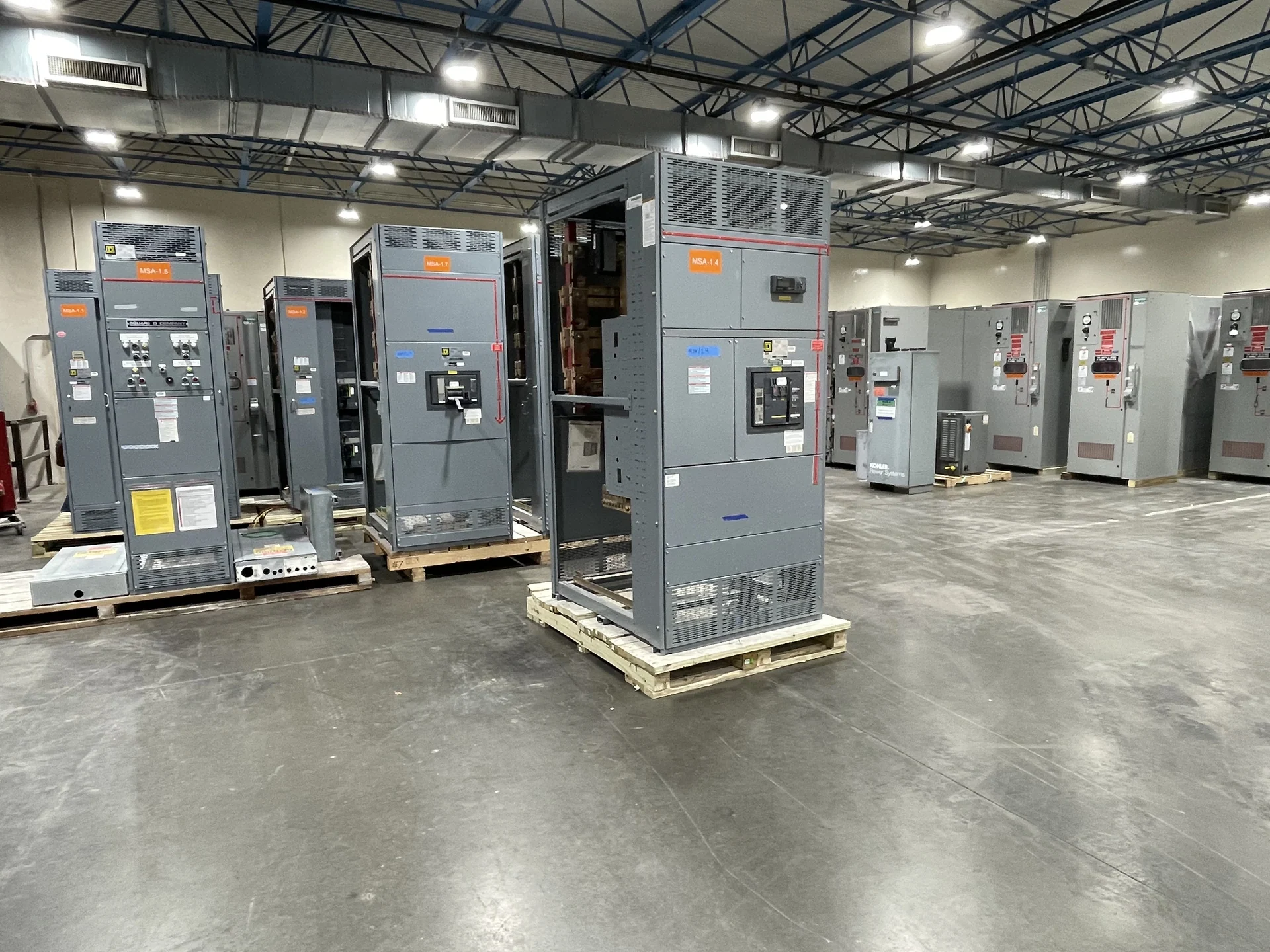
A service-entrance switchboard for a commercial or industrial project in Anchorage, Alaska, should begin with the electrical service definition rather than a preferred enclosure size or breaker arrangement. Gather the utility service voltage, phase and wire configuration, grounding method, continuous load, calculated demand, available fault current, service disconnect requirements, and metering arrangement. The same information helps distinguish a service-entrance switchboard from other distribution equipment and gives a manufacturer a defensible basis for project-specific equipment information. Switchgear Builders manufactures new electrical distribution equipment in the United States, builds custom equipment to specification, uses American components, and supplies projects with nationwide shipping; final design details remain subject to engineering review and the applicable utility requirements.
Coordinate Utility Metering and Service Interfaces
Utility metering can shape the switchboard lineup, compartment arrangement, service conductors, and access provisions. Before requesting a quote, identify whether metering is utility-owned, customer-owned, or arranged through a separate section, then obtain the utility's current requirements for meter compartments, instrument transformers, sealing, disconnects, labeling, and inspection coordination. Confirm the point of service, conductor entry direction, lug requirements, and space available for incoming and outgoing feeders. For an Anchorage project, the delivery package should also identify the responsible engineer, electrical contractor, utility contact, and site representative so questions about interfaces are resolved without assuming that a generic regional arrangement will be accepted.
Define Mains, Feeders, and Fault Duty
The main device and feeder schedule should show each circuit's function, calculated load, conductor size, protective-device type, frame or continuous-current requirement, and interrupting rating as applicable. Available fault current at the service location must be established by the design team and compared with the equipment's required short-circuit rating; a nominal voltage alone is not enough to select a safe assembly. Include future feeder spaces only when they are part of the actual design requirements, because unused space, bus capacity, and termination room affect dimensions and cost. A clear one-line diagram, panel schedules, and coordination study inputs allow the manufacturer to build a new switchboard around documented requirements rather than assumptions.
Plan the Enclosure for Alaska Site Conditions
Physical and environmental information matters as much as the electrical schedule. State whether the switchboard will be indoors or outdoors, provide the room dimensions and equipment access path, and identify floor loading, anchorage, cable entry, working clearances, ventilation, corrosion exposure, and any unusual temperature or moisture conditions specified by the project. Anchorage does not automatically determine an enclosure type or construction detail; the engineer should translate site conditions into documented requirements. Also coordinate shipping splits, lifting points, receiving access, and storage protection before release. Nationwide shipping can be arranged for manufacturer-built equipment, but the project team must confirm freight access, unloading responsibility, and final placement methods.
Review Drawings, Standards, and Testing Scope
A useful submittal review should cover the one-line diagram, front elevation, section arrangement, bus and conductor information, device schedules, terminal locations, metering provisions, nameplates, control wiring, and installation interfaces. State which inspections, continuity checks, insulation checks, functional checks, or witnessed factory tests are required, and identify the records expected with delivery. If the specification references UL 891, treat applicability, construction requirements, and any listing or project evidence as matters to confirm for this specific switchboard project; do not assume a blanket listing. The engineer of record and authority having jurisdiction should determine applicable code, utility, and inspection requirements before fabrication proceeds.
Prepare a Complete New-Equipment Inquiry
For a project-specific inquiry, send the manufacturer the latest one-line diagram, service data, feeder schedule, fault-current information, metering requirements, enclosure location, dimensions, cable-entry preferences, shipping destination, and requested documentation. Explain whether the equipment is for a new building, an expansion, or a planned replacement, while keeping the electrical interfaces tied to verified drawings. Ask which assumptions require confirmation and which items are included in the proposed scope. Customers seeking service-entrance switchboards in Anchorage can buy new custom equipment directly from the manufacturer rather than relying on a generic catalog configuration. A complete inquiry supports a more useful technical response and helps the buyer clarify pricing, component availability, lead time, and project-specific performance requirements.