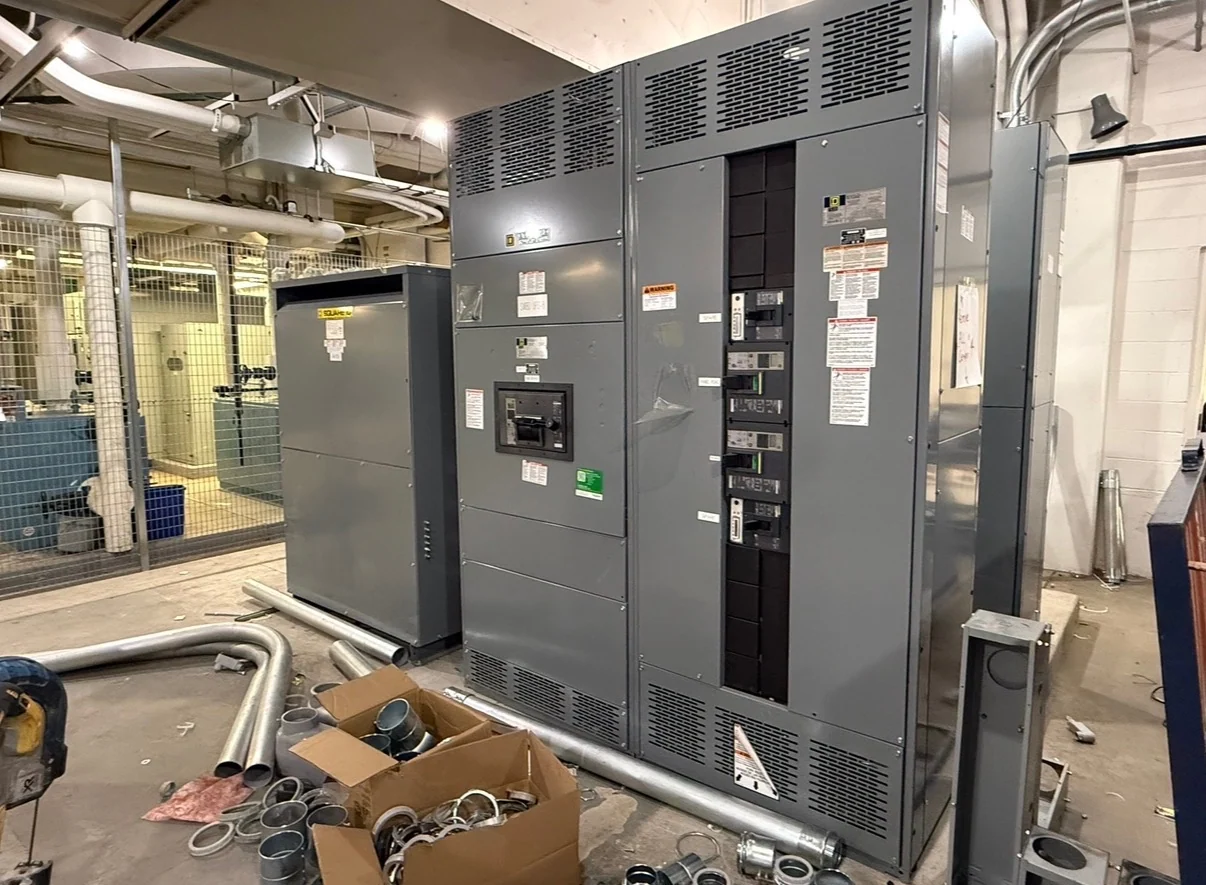
Start with the Arkansas Healthcare Electrical Narrative
Planning switchgear for an Arkansas healthcare facility begins with a clear picture of how normal and alternate sources serve essential electrical systems. Identify the utility service, generator sources, transfer equipment, emergency branches, life-safety loads, critical equipment, and legally required operating sequences shown on the project documents. A facility team, electrical engineer, and installing contractor should reconcile load schedules with actual renovation or expansion conditions before a manufacturer prepares new equipment. Arkansas switchgear projects may involve rural access, urban hospital campuses, or phased work inside an occupied building, so the equipment scope should state site constraints rather than assume a standard lineup.
Define Essential Loads and Source Separation
Healthcare backup power design depends on separating loads by their required function and transfer behavior, not merely adding generator capacity. Gather connected and calculated demand for life-safety, critical, equipment, and other project-defined branches, then document which loads share a source, transfer device, bus section, or distribution path. Review motor starting, inrush, nonlinear loads, medical equipment, elevators, ventilation, and future capacity with the responsible engineer. A custom switchgear package can then be organized around the approved one-line diagram, feeder identification, protective devices, metering, grounding, controls, and physical interfaces instead of leaving those decisions to field interpretation.
Coordinate Transfer Sequences Before Fabrication
Transfer sequences should be written in operational terms that operators, controls specialists, and installers can all evaluate. Define what starts a transfer, which source is preferred, how an alternate source becomes acceptable, whether loads transfer in groups, how retransfer occurs, and what happens during a source failure or maintenance condition. Coordinate automatic transfer switches, generator controls, main devices, bus ties, interlocks, protective settings, and alarm points with the complete distribution design. For an Arkansas healthcare project, the request for quotation should include the sequence narrative and control points so new switchgear is built to an agreed interface rather than a vague backup-power description.
Plan Outages, Access, and Installation Phases
Outage planning is as important as electrical ratings when equipment serves an occupied healthcare facility. Map temporary power, shutdown boundaries, infection-control coordination, crane or rigging access, door and corridor dimensions, delivery routes, floor loading, cable entry, and the sequence for removing existing distribution equipment and installing the new lineup. The project team should identify testing windows, utility coordination, generator availability, and contingency steps, then confirm the schedule during engineering and production review. Switchgear Builders manufactures new equipment in the United States, can build custom to specification with American components, and offers nationwide shipping; destination and receiving conditions should be supplied for a project-specific logistics plan.
Specify Ratings, Enclosure, and Documentation
A useful Arkansas switchgear specification records nominal voltage, phase and frequency, grounding method, continuous current, available fault current, interrupting duties, bus bracing or withstand requirements, enclosure environment, dimensions, cable terminations, control voltage, metering, and protective-device coordination inputs. Healthcare rooms may impose access, ventilation, corrosion, seismic, or housekeeping constraints that need project review rather than generic assumptions. Request submittal drawings, device data, wiring diagrams, terminal schedules, bills of material, and agreed inspection or test records. If UL 891 is cited, confirm its applicability, construction requirements, and any project-specific listing expectations before design approval; do not treat the standard as automatic coverage for every assembly.
Prepare a Complete Manufacturer Inquiry
When you buy new switchgear for an Arkansas healthcare project, send the manufacturer the latest one-line diagram, load and short-circuit information, transfer sequence, floor plan, equipment schedule, site address, receiving limitations, installation responsibilities, and requested documentation. Explain whether the work is new construction, an addition, a service replacement, or a phased renovation, and identify the outage constraints that influence shipping splits and field connections. Ask the manufacturer to identify assumptions, exclusions, required approvals, and unresolved interfaces in the quotation. Comparing proposals is meaningful only when each supplier prices the same ratings, lineup arrangement, controls, testing scope, documentation, and freight basis.