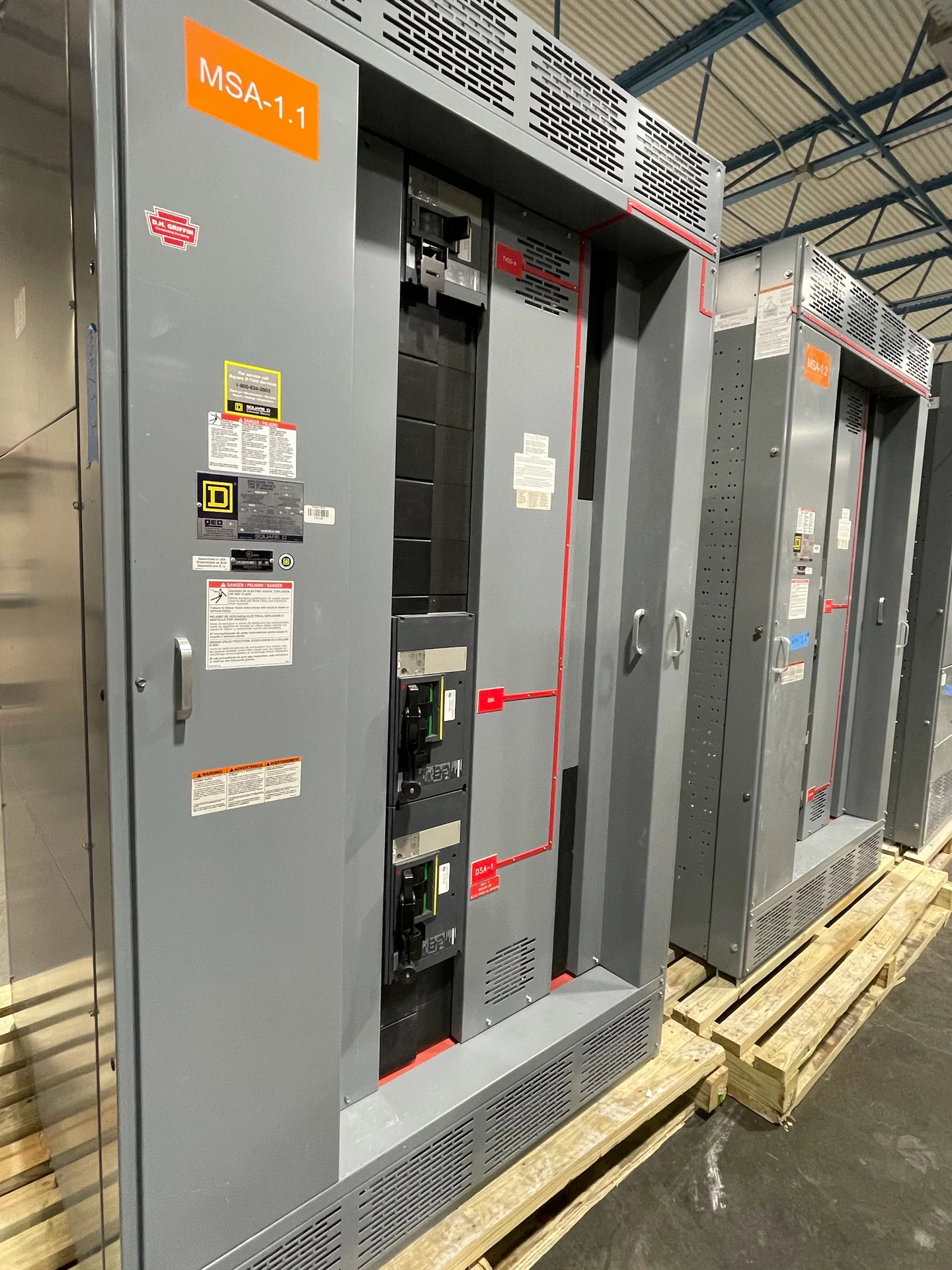
Plan the Fayetteville Project Around the Load
A Fayetteville, Arkansas electrical distribution project should begin with the loads that must remain energized, the sources available to serve them, and the operating conditions at the particular site. Critical facility loads might include life-safety systems, communications, process controls, pumps, refrigeration, or other functions defined by the owner and engineer. A useful equipment scope identifies normal and alternate sources, phase and frequency, calculated demand, available fault current, grounding method, environmental exposure, and the desired sequence when a source changes. Switchgear Builders manufactures, builds, and supplies new switchgear in the United States, custom to specification, with American components and nationwide shipping for projects in Fayetteville and throughout Arkansas.
Coordinate Automatic Transfer Switches With the Sources
Automatic transfer switches do more than connect a load to another source; their sensing, control, bypass, and interlocking arrangements must fit the upstream and downstream system. The design team should establish which source is normal, which is alternate, how source availability is detected, and whether retransfer is automatic, delayed, or operator controlled. Generator applications also require coordination with generator starting, voltage and frequency stabilization, load sequencing, and protection. For multiple transfer switches, document priority, permissive signals, and the consequences of one transfer sequence overlapping another rather than relying on a generic arrangement.
Define Protection and Short-Circuit Inputs
Protection cannot be selected responsibly from load amperage alone. The project should provide the calculated available fault current at each relevant source and bus, protective-device interrupting requirements, transformer data, conductor information, grounding details, and coordination objectives. Engineers can then review breaker or switch-fuse choices, time-current behavior, settings, and selective coordination where the application requires it. A custom lineup may also need metering, alarms, remote indications, or control power provisions. Those interfaces should be shown on the one-line diagram and control schematics before fabrication so the equipment matches the electrical study and installation plan.
Make Maintenance Access Part of the Layout
Critical distribution equipment needs a practical maintenance strategy, not merely a compact footprint. Confirm working clearances, door swing, cable-bending space, ventilation, lifting and movement paths, access to transfer-switch mechanisms, and room interfaces before approving dimensions. The owner and installer should identify how sources will be isolated, how test operations will be controlled, and what indications or labels are needed for operators. Fayetteville site conditions can differ by building, so equipment dimensions, enclosure selection, environmental exposure, and anchorage should remain project-specific. Review the arrangement with the authority having jurisdiction and qualified electrical personnel as applicable.
Build a Complete Manufacturer Quote Package
A detailed request helps a manufacturer develop a meaningful quote for new switchgear rather than an assumption based on a short product name. Include the one-line diagram, equipment schedule, source and load descriptions, ratings, enclosure location, dimensions or room constraints, transfer sequence, control voltage, metering requirements, cable-entry preferences, interlocks, documentation expectations, and destination in or near Fayetteville. State whether field coordination, witness testing, installation support, or freight handling is part of the requested scope. Switchgear Builders can manufacture custom-to-specification equipment using American components and coordinate nationwide shipment; project-specific scope, availability, testing, and delivery details must be confirmed in the quotation.
Review Drawings, Testing, and Delivery Interfaces
Before release, review the proposed lineup, one-line diagram, elevations, terminal schedules, labels, control logic, and transfer sequence against the approved design. Agree on inspection points and functional checks that demonstrate the documented operating sequence, with acceptance criteria and records defined for the project. If UL 891 is relevant to the assembly, confirm its applicability and any listing or construction requirements for this specific project rather than assuming a blanket status. For shipment to Fayetteville, coordinate shipping splits, weights, lifting points, packaging, receiving access, storage conditions, and responsibilities for unloading and placement before the equipment leaves the manufacturer.