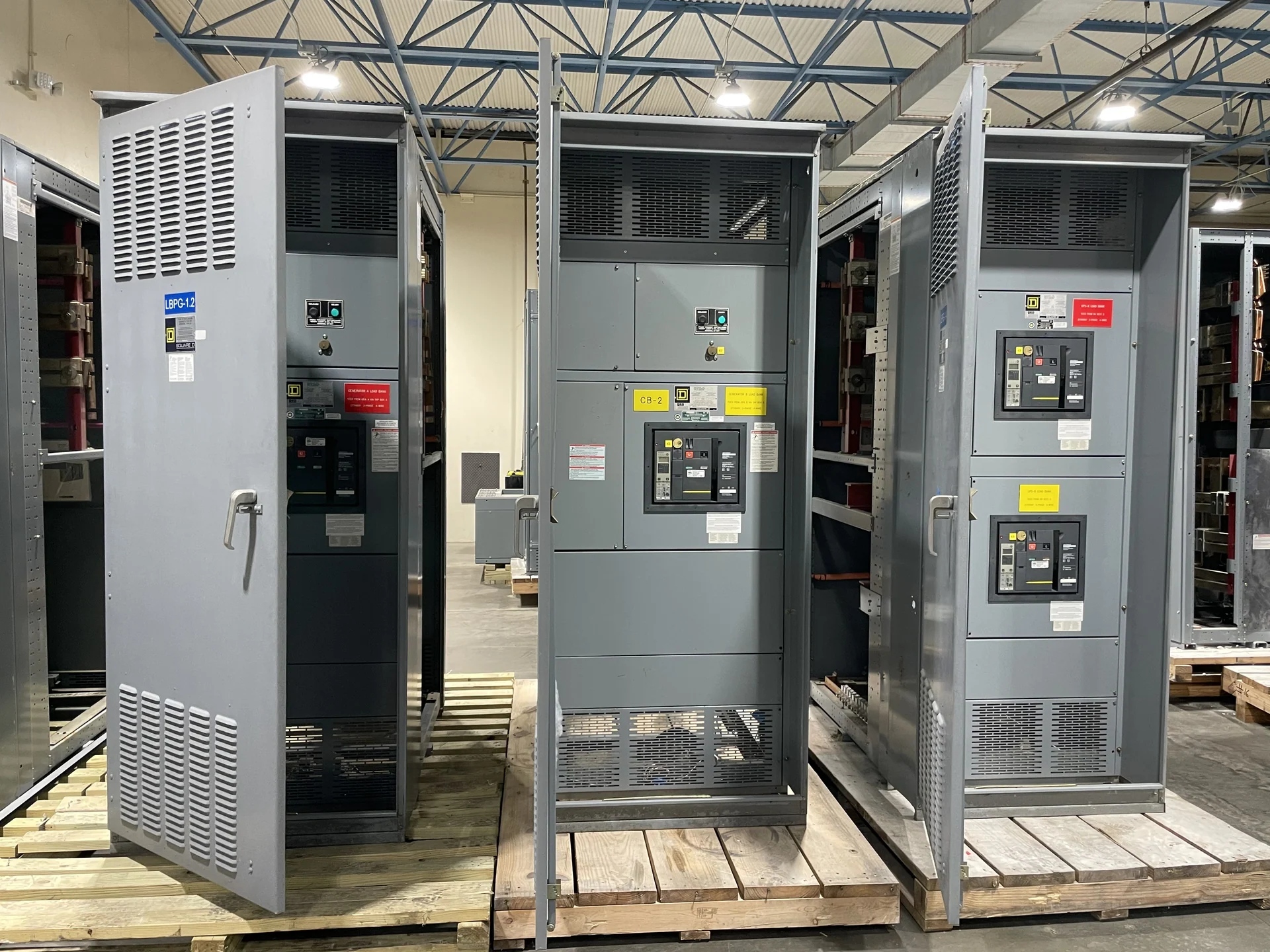
Start With the Wilmington Site and Process Loads
A Wilmington, Delaware water treatment project should begin with a clear description of the facility, incoming power, treatment stages, and motor-driven loads before anyone selects a lineup. List pump horsepower, voltage, phase, frequency, starting method, duty cycle, standby requirements, and whether motors operate individually or in coordinated sequences. A useful design package also identifies ambient exposure, washdown areas, corrosive agents, elevation, room dimensions, cable entry, access paths, and the separation needed between power and control equipment. Those details let an American manufacturer develop new switchgear or motor control center equipment around the actual process rather than forcing a generic arrangement into the site.
Choose Motor Starting and Drive Methods Deliberately
Motor starting choices affect feeder sizing, voltage behavior, controls, and maintenance planning. Across-the-line starters can provide a straightforward arrangement for suitable motors, while reduced-voltage starters may limit starting stress where the electrical study and motor application support that approach. Variable frequency drives can regulate speed and process output, but they introduce heat, harmonic, bypass, shielding, and programming questions that belong in the equipment specification. For each pump, identify the required operating range, acceleration profile, control source, fault response, local controls, and manual fallback. Final selection should be reviewed with the engineer, drive supplier, and controls integrator for the particular treatment process.
Coordinate Protection, Controls, and Interlocks
A practical motor control center specification connects protective devices with the operating logic of the plant. Define feeder continuous current, available fault current, breaker or fuse characteristics, overload requirements, ground-fault provisions where applicable, and coordination with upstream and downstream equipment. Then document permissives, lead-lag rotation, low-level cutouts, pressure or flow signals, emergency stops, alarm contacts, remote start commands, and the response to a communications failure. Interlocks should reflect the intended sequence without assuming that a control circuit can replace required protection. Drawings should identify terminals, wire numbers, device tags, and interface boundaries so installers can connect the new assembly without guessing.
Account for Water Treatment Environmental Conditions
Water and wastewater environments can place unusual demands on enclosures, wiring, and access. Confirm whether the equipment room is conditioned, damp, corrosive, classified, or exposed to outdoor temperature swings; also identify condensation risk, ventilation, chemical storage, washdown practices, and the route for incoming and outgoing conductors. Enclosure selection, finish, gasketing, spacing, and heat management should follow the documented installation conditions and applicable project requirements. Wilmington electrical distribution planning should also include working clearances, door swing, lifting access, maintenance space, and a practical path from receiving to the final room. These physical details can change lineup dimensions and shipping splits.
Define a Buildable Package for a Manufacturer Quote
When requesting a custom package, provide the one-line diagram, motor schedule, load list, control narrative, fault study inputs, equipment location, desired dimensions, network requirements, and project documentation standards. Include whether the lineup is new construction, an expansion, or a replacement interface, while identifying field connections and outage constraints without presuming a manufacturing schedule. Switchgear Builders manufactures and supplies new electrical switchgear in the United States, custom to specification with American components and nationwide shipping. A quote can be evaluated more effectively when it states included devices, drawings, testing expectations, shipping responsibility, and approval milestones. UL 891 applicability, if relevant, must be confirmed for the specific project and assembly rather than assumed. Ask whether the specification requires a main disconnect, feeder sections, bypass arrangements, metering, surge protection, or communications gateways, and identify which functions belong in the motor control center versus a separate panel or automation system. State the intended sequence for normal operation, cleaning cycles, pump alternation, alarm acknowledgment, and return after a power interruption. A coordinated review of submittal drawings should resolve door-mounted devices, terminal locations, spare capacity, nameplates, and field-test responsibilities before release. Those decisions reduce ambiguity for the electrical contractor and help keep process controls aligned with the distribution design.