Plan Atlanta Industrial Distribution Around the Process
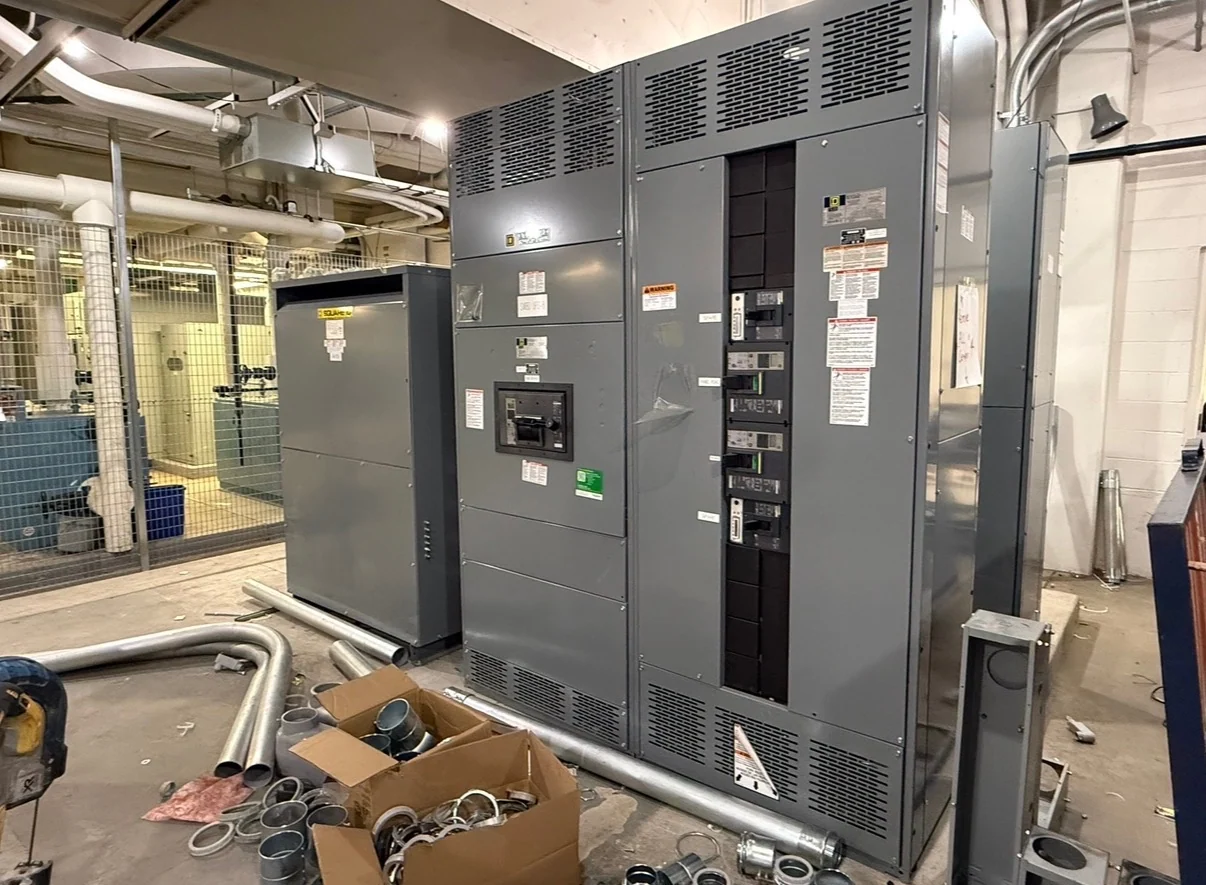
Atlanta Georgia switchgear projects can range from a pump station or warehouse conveyor system to a larger process facility with several motor groups. The right equipment begins with the process description rather than a preferred enclosure or starter. Identify incoming sources, voltage and phase, motor horsepower, starting method, duty cycle, simultaneous loads, fault-current information, ambient conditions, and the operating sequence. A manufacturer can then develop new custom electrical distribution equipment around the one-line diagram, load schedule, available space, cable routing, and installation responsibilities. Switchgear Builders manufactures, builds, and supplies new switchgear in the United States, using American components and shipping nationwide; project-specific engineering determines the suitable arrangement.
Choose Motor Starters and Drives by Operating Duty
Motor control centers for industrial pumps, conveyors, and process loads should reflect how each motor actually starts, runs, stops, and responds to abnormal conditions. Across-the-line starters may suit some straightforward motors, while reduced-voltage starting or variable frequency drives may be considered where acceleration, speed control, mechanical stress, or process control warrants review. A drive can introduce heat-management, harmonics, bypass, programming, and maintenance questions; a starter may require different coordination and control provisions. List each motor, its load characteristics, control mode, disconnect needs, protection requirements, and intended interface so the lineup is not designed from horsepower alone.
Coordinate Protection With the Atlanta Site System
Motor protection must be coordinated with feeder protection, branch-circuit requirements, transformer characteristics, and the available fault current at the equipment location. Review overload protection, short-circuit protection, ground-fault functions where applicable, interrupting or withstand duties, conductor sizing, and selective coordination objectives with the responsible electrical engineer. For a facility in Atlanta, site utility information and local installation requirements still need confirmation; a city name does not establish voltage, grounding, environmental exposure, or code conditions. The equipment specification should identify desired settings, trip-unit functions, control voltage, and study inputs while leaving final selections to qualified project review.
Define Controls, Interlocks, and Communications
A motor lineup becomes practical when its control interface is defined clearly. Document whether operators use local stations, a supervisory system, programmable controls, or a combination; then map permissives, run feedback, fault status, emergency stops, HOA selections, trips, resets, and remote commands. Interlocks may prevent unsafe or damaging sequences, such as starting a pump without a required valve condition, but the actual logic belongs in the approved control narrative. Specify terminal blocks, wire numbers, separation of power and control conductors, network interfaces, spare points, and preferred documentation. These details help the manufacturer build a coherent assembly instead of leaving critical behavior to field interpretation.
Resolve Layout, Environment, and Maintenance Inputs
Atlanta-area project conditions should be described with the same care as electrical ratings. Confirm whether the lineup is indoors or outdoors, the room dimensions, working clearances, access path, ventilation, moisture or corrosive exposure, elevation, housekeeping concerns, and cable-entry direction. For pumps and conveyors, consider where technicians need to isolate a motor, read status, test controls, or remove a component without obstructing adjacent equipment. Provide enclosure expectations, bus arrangement, feeder locations, lifting or shipping splits, and foundation or housekeeping-pad interfaces. The manufacturer can use those inputs to develop drawings for review; the installer and engineer remain responsible for site verification and installation planning.
Prepare a Complete New Equipment Inquiry
A useful inquiry for Atlanta electrical distribution should include the one-line diagram, load list, motor schedule, control schematics, available fault-current data, utility or service information, physical drawings, environmental description, desired protective functions, communication requirements, and documentation expectations. Identify whether the project is new construction, an expansion, or a planned replacement without assuming that a prior arrangement can be reproduced without measurement and review. Ask for a quote that separates equipment scope, included devices, drawings, testing, shipping basis, and customer responsibilities. Switchgear Builders can review a request for a new custom build, clarify open technical points, and coordinate nationwide shipment after the project configuration and commercial terms are defined.