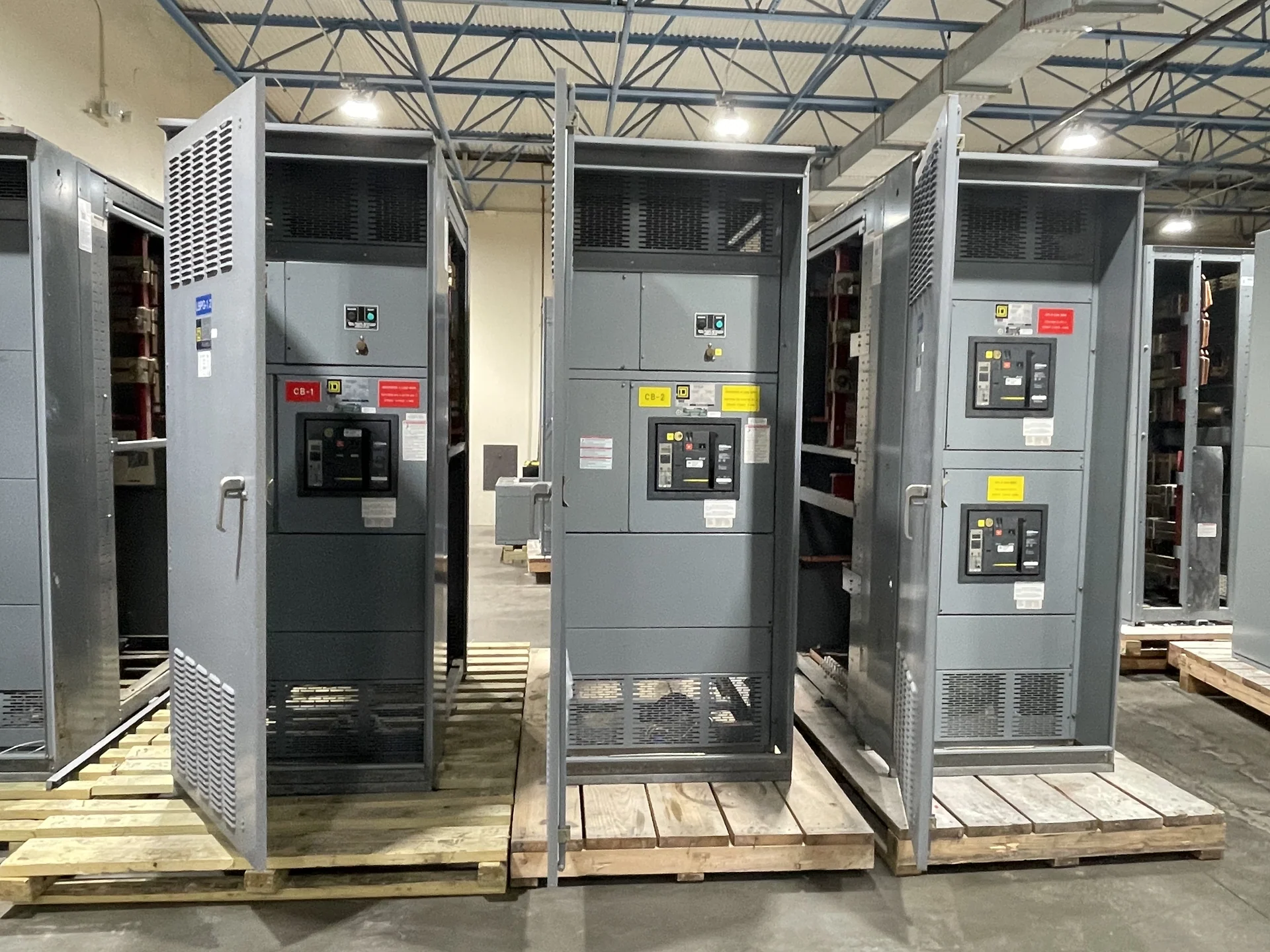
Start With the Boise Project’s Distribution Architecture
A Boise data-center distribution project should begin with the electrical architecture rather than a catalog label. Map utility service, generator sources, transfer equipment, UPS systems, distribution buses, and the loads each path serves. Identify normal and alternate operating states, planned maintenance states, and the consequences of losing a source or bus section. A useful design package includes the one-line diagram, nominal voltage and phase, continuous load calculations, available fault current, grounding method, environmental conditions, equipment-room dimensions, cable-entry direction, and the owner’s operating sequence. Those inputs let a manufacturer evaluate a new custom switchgear lineup around the actual site interfaces instead of assuming a standard arrangement fits.
Plan Redundant Sources Without Creating Ambiguous Operations
Redundancy is more than adding a second feeder. The project team should define whether sources are normally open, normally closed, or available through an automatic transfer sequence, and specify which combinations must be prevented by mechanical or electrical interlocking. For a hypothetical dual-path data-center design, the sequence might distinguish utility failure, generator start, transfer authorization, bus-tie operation, and return to normal service. Reviewers should also document whether maintenance bypasses, tie breakers, synchronizing functions, or load-shed steps are required. Switchgear engineering can then reflect source capacity, breaker duties, control power, metering, annunciation, and field termination needs while leaving final settings and logic to the responsible electrical engineer.
Coordinate Generator Interfaces and Backup Distribution
Generator interfaces deserve a coordinated review of switching, protection, grounding, and control boundaries. Provide generator voltage, frequency, phase sequence, fault contribution information when available, neutral and grounding arrangements, synchronization requirements, and the intended connection point for each source. The switchgear specification should state whether the generator breaker is a main, feeder, tie, or dedicated source device, and how protective relays or trip units interact with transfer controls. For Boise installations, weather, seismic, transportation, and room-access conditions should be treated as project inputs rather than guessed from geography. A new lineup can be custom-built by an American manufacturer with American components and shipped nationwide, subject to approved drawings and project requirements.
Make Maintenance Access Part of the Layout
Data-center availability planning should account for how technicians will inspect, isolate, test, and return equipment to service. Confirm front, rear, and side access requirements; door swing; breaker removal path; lifting provisions; cable bending space; control-panel access; and the route from the receiving area to the electrical room. A compact footprint may conflict with working clearances or future replacement access, while generous spacing can affect room construction and bus or cable lengths. Define which path remains energized during each planned maintenance state, what barriers or isolation points are needed, and how labels and documentation support the operating procedure. The manufacturer can use these constraints to develop a practical enclosure and lineup arrangement for review.
Review Protection Across Utility, Generator, and Load Paths
Protective coordination should be evaluated across the complete distribution system, not only within the switchgear lineup. Gather utility fault data, transformer impedance, generator contribution, feeder lengths, downstream device information, motor or UPS characteristics, and the study assumptions used for each operating mode. Compare available fault current with breaker interrupting ratings and the assembly’s specified short-circuit duty as applicable. Time-current curves, instantaneous functions, ground-fault protection, relay logic, and transfer sequences may behave differently on utility and generator sources. The equipment specification should identify required protection functions and study deliverables, while the engineer of record confirms settings, coordination objectives, arc-flash analysis, and applicable local requirements for the Boise project.
Prepare a Complete Manufacturer Quote Package
A clear quote request for Boise electrical distribution should combine technical, physical, and commercial information. Include the latest one-line and control schematics, equipment schedule, bus and feeder ratings, short-circuit data, enclosure environment, dimensions, finish expectations, metering, communications, interlocks, cable locations, shipping destination, unloading limits, and required submittal documents. Identify whether the project requires a particular construction standard or whether UL 891 is applicable; its applicability and any project-specific listing must be confirmed for the actual assembly rather than assumed. Switchgear Builders manufactures new custom electrical switchgear in the United States, uses American components, and supports nationwide shipping. Final scope, drawings, testing, freight terms, and delivery estimates remain subject to project review and quotation.