Start with the Boise Service and Load Picture
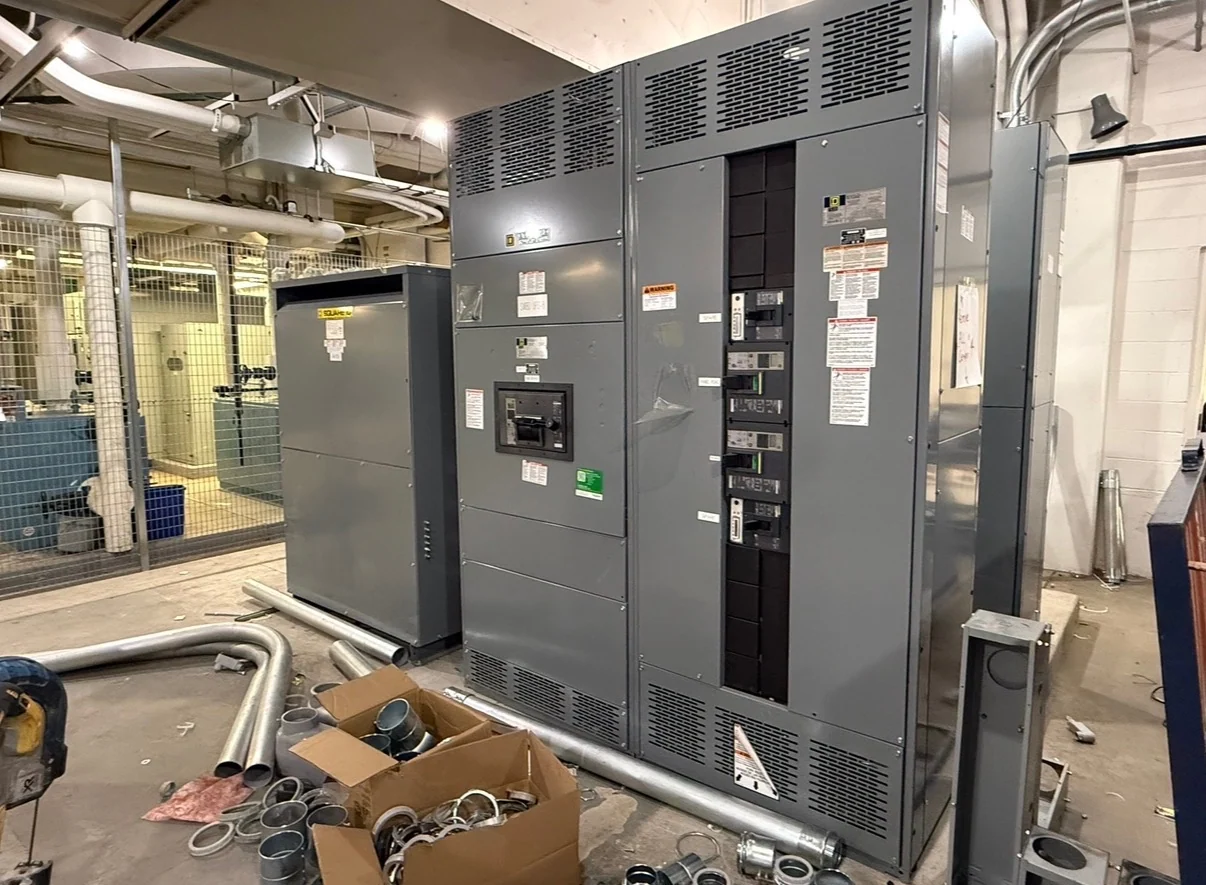
A service-entrance switchboard for a Boise, Idaho project should begin with the electrical system rather than a catalog label. The design team should identify the utility service arrangement, nominal voltage, phase and wire configuration, calculated demand, continuous loads, future capacity, and the building or process loads that each feeder will serve. Commercial offices, warehouses, manufacturing spaces, and mixed-use facilities can impose very different distribution requirements. A current one-line diagram, load summary, site voltage information, and available fault current study give a manufacturer a workable basis for discussing new equipment. Switchgear Builders manufactures custom new electrical switchgear in the United States, using American components and shipping nationwide, including project-directed shipment to Boise when the scope is defined.
Define the Service Entrance Interface
The service entrance is the boundary where utility requirements, owner needs, and the facility distribution system meet. Before requesting service-entrance switchboards in Boise, document the utility metering arrangement, utility-owned versus customer-owned equipment, service disconnecting means, conductor entry, grounding and bonding interfaces, and any required provisions for inspection or field connection. Meter compartments, instrument transformers, barriers, termination space, and access must be coordinated with the responsible utility and electrical engineer rather than assumed from a generic layout. A manufacturer can use those inputs to develop a custom arrangement with main and feeder devices, enclosure dimensions, bus configuration, labels, and connection points suited to the approved project documents.
Match Protection to Available Fault Current
Available fault current is a fundamental selection input for a service-entrance switchboard because the assembly and its protective devices must be evaluated against the electrical duty identified for the project. Provide the latest utility data or study, transformer information, conductor lengths and sizes, grounding method, and downstream equipment details when seeking project-specific equipment information. The engineer should coordinate interrupting ratings, short-circuit ratings, protective settings, selective coordination objectives, and arc-flash study assumptions across the distribution system. These values are not interchangeable, and a higher ampere rating alone does not resolve fault-duty questions. The final configuration should follow documented engineering review and the requirements adopted for the Boise project.
Plan Feeder Circuits and Physical Fit
Feeder planning connects the electrical schedule to the physical switchboard. List every intended outgoing circuit, its load category, conductor termination method, protective device type, control or metering need, and allowance for clearly defined future circuits. Then confirm lineup width, depth, height, front or rear access, cable bending space, working clearances, equipment-room entrances, housekeeping pad or anchorage interfaces, and the route from unloading point to final location. Boise construction sites can have different access and staging constraints, so the project team should provide drawings and field dimensions rather than relying on a presumed standard footprint. Early coordination reduces conflicts between the switchboard, raceways, structural work, and installation sequence.
Coordinate Documentation and Project Review
A useful manufacturer inquiry should identify the required submittal package as well as the electrical hardware. Include the one-line diagram, elevations or room plans, feeder schedule, utility comments, protection study inputs, enclosure environment, control schematic, metering requirements, labeling conventions, and any owner or engineer specifications. Ask the manufacturer to clarify assumptions, exclusions, component selections, drawing revisions, inspection points, and factory test documentation before the order is finalized. If a specification references UL 891, determine whether that standard applies to the particular assembly and confirm any project-specific listing or verification requirements; applicability should not be presumed for every switchboard or switchgear arrangement.
Buy New Switchboards with a Complete Scope
When a Boise owner, contractor, or engineer is ready to buy new service-entrance switchboards, compare manufacturer proposals on equivalent technical scope instead of headline price alone. Check the stated ratings, main and feeder configuration, metering provisions, enclosure details, bus material, control wiring, drawings, testing, packaging, freight responsibilities, and site delivery assumptions. Switchgear Builders supplies new custom electrical switchgear directly from the manufacturer, with American components and nationwide shipping; project-specific availability, scope, and transit details still need confirmation. A complete request should name the destination, desired delivery coordination, receiving limitations, and responsible contacts so the quote addresses the actual commercial and industrial installation rather than an underspecified equipment category.