Start With the Kansas Project Interface
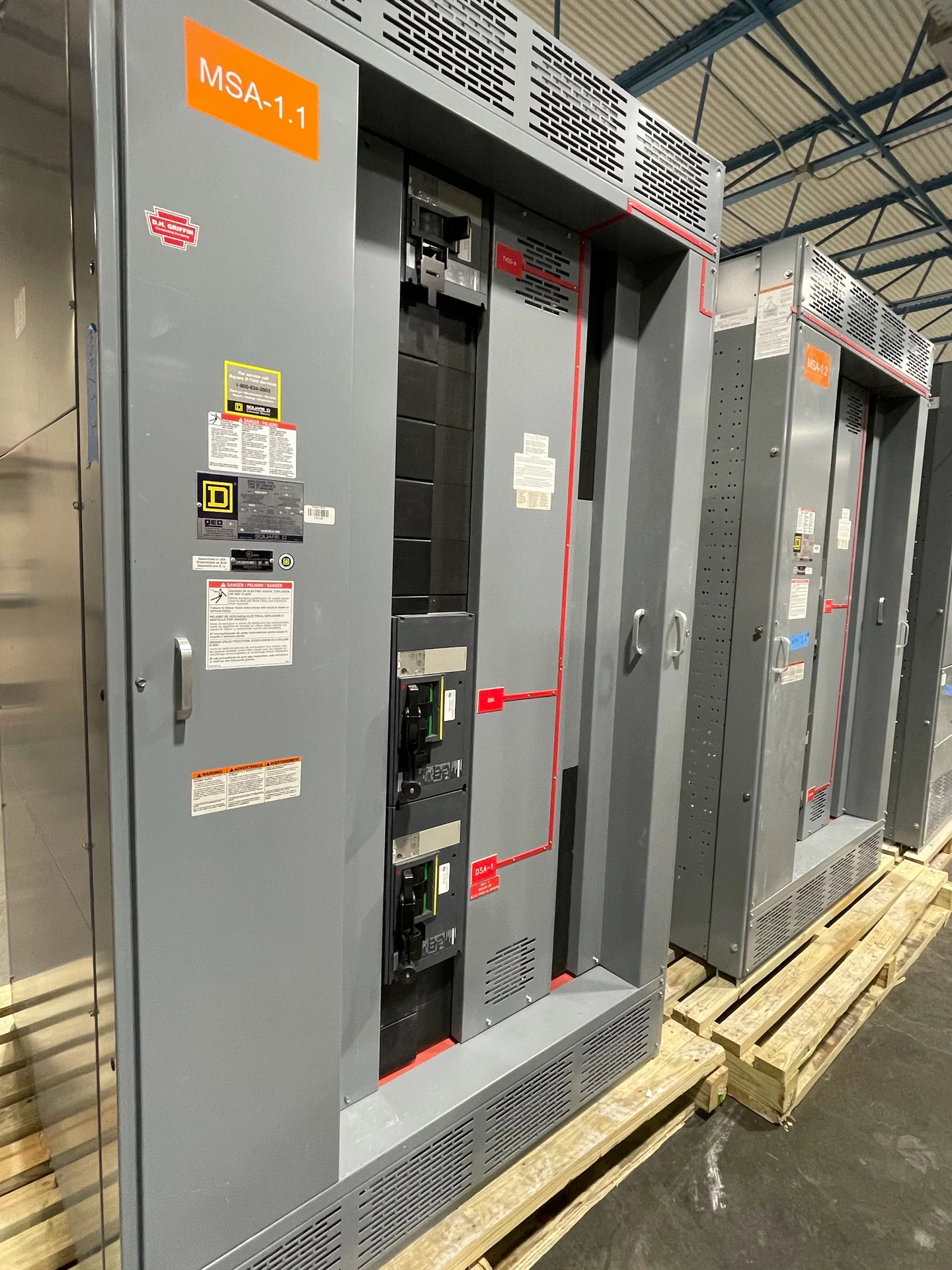
Planning service-entrance switchboards for a Kansas commercial or industrial project begins with the electrical service interface, not a generic equipment catalog. Identify the serving utility, service voltage, phase and wire arrangement, transformer connection, metering method, service disconnect requirements, and point where utility ownership ends. The design team should also establish the building use, calculated demand, expansion allowance, feeder count, and installation environment. These inputs let a manufacturer develop new equipment around the actual project rather than an assumed local standard. Switchgear Builders manufactures custom electrical switchgear in the United States, uses American components, and can coordinate nationwide shipping for a defined Kansas destination.
Define Service-Entrance Ratings Before Quoting
A useful switchgear quotation needs more than an ampere number. Provide nominal system voltage, frequency, available fault current at the service, continuous-load calculations, main and feeder protective-device requirements, grounding method, conductor entry and exit locations, and any selective-coordination objectives. For a commercial building, tenant feeders and metering compartments may drive the layout; for an industrial facility, motor loads, process feeders, standby sources, or future production capacity may change the main and bus arrangement. Available fault current should be confirmed at the applicable service point, while interrupting and short-circuit ratings are checked against the engineered study and utility information.
Coordinate Utility Metering and Disconnecting Means
Utility metering is a coordination item that can affect enclosure sections, barriers, instrument transformers, access, wiring, and the sequence for inspection or energization. Ask the serving utility and the project electrical engineer to identify accepted metering arrangements, meter space, sealing expectations, CT orientation, test-switch provisions, and service-disconnect details before drawings are finalized. Requirements can differ by service configuration and project jurisdiction, so a Kansas address alone does not establish the correct arrangement. The equipment package should clearly distinguish utility-side provisions from owner-side distribution, and the manufacturer should receive the latest one-line diagram and utility comments for review.
Build the Lineup Around the Site
Physical planning is as important as electrical selection for a new service-entrance switchboard. Confirm the available room length and height, working space, equipment access route, door swing, housekeeping pad, cable-bending space, ventilation conditions, wall or floor penetrations, and lifting or handling limits. Kansas projects may involve different indoor rooms, exterior service areas, or agricultural and industrial environments, so enclosure selection and environmental assumptions must follow the actual site conditions rather than the state name. A custom builder can use approved dimensions, connection locations, device arrangement, and shipping splits to coordinate the assembly with structural, architectural, and installation drawings.
Review Protection, Grounding, and Documentation
Before release, the engineer, contractor, utility, and equipment manufacturer should reconcile the one-line diagram, equipment schedule, protection settings, grounding and bonding details, feeder identifiers, metering information, and control requirements. The review should also address arc-flash study inputs, maintenance access, labeling, field connection points, and the records needed for installation and commissioning. If UL 891 is relevant to the proposed assembly, its applicability, construction requirements, and any project-specific listing or verification must be confirmed for that project; it should not be assumed from a product name. Drawings and technical submittals should capture decisions and open questions so changes do not migrate unnoticed into fabrication.
Plan Delivery to the Kansas Site
A complete delivery plan connects the approved design to the destination and installation team. Share the Kansas ship-to address, receiving hours, unloading equipment, site restrictions, requested shipping sections, lift points, packaging needs, freight responsibilities, and whether the contractor or a qualified rigging partner will move the lineup into position. Confirm project-specific manufacturing and transit details with the manufacturer rather than assuming inventory or a fixed schedule. Switchgear Builders supplies new custom electrical switchgear from the United States and supports nationwide shipping coordination; the final freight plan should match the approved dimensions, weights, access route, and installation sequence.