Start with the Commercial Building Distribution Plan
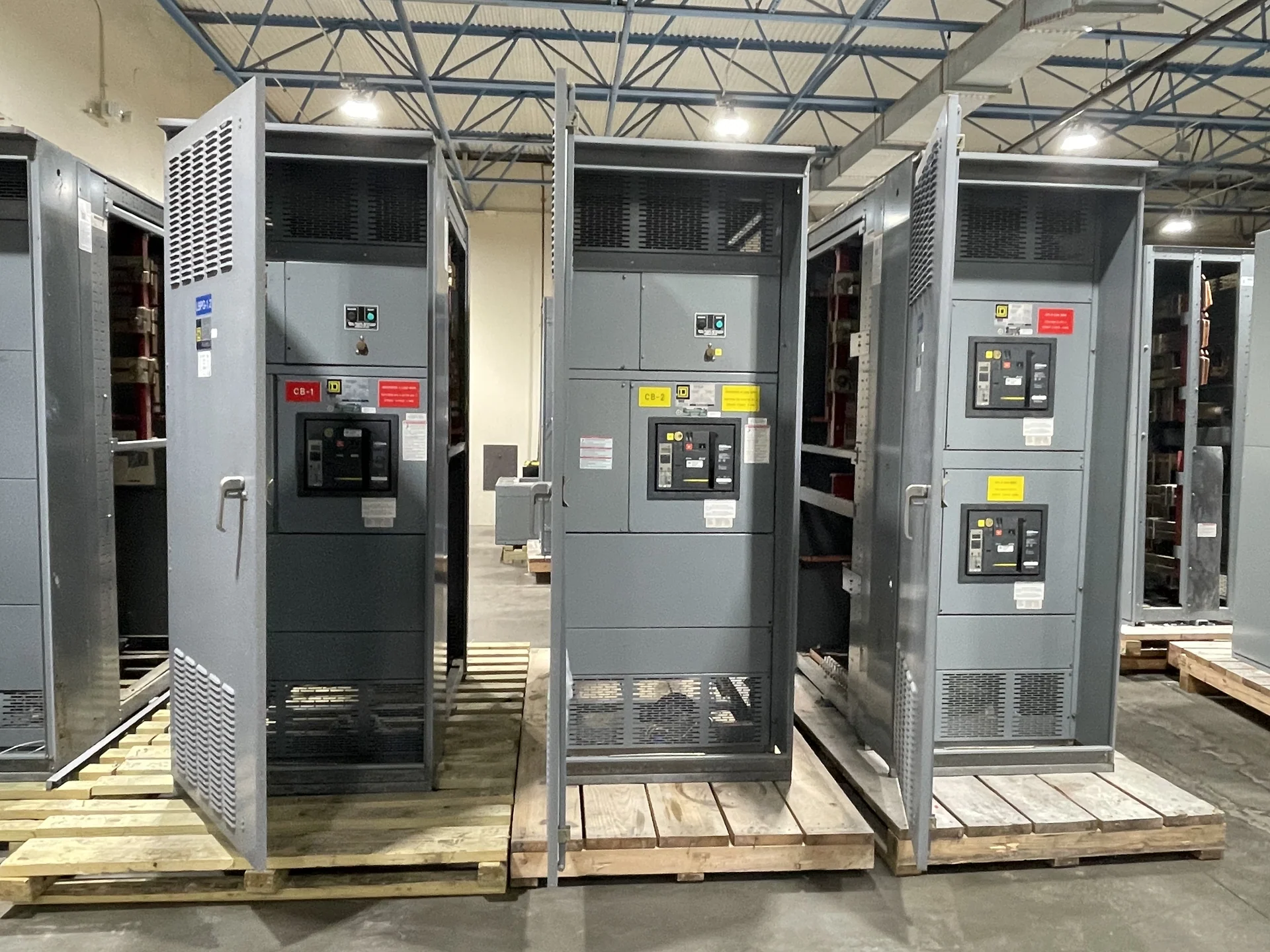
A Wichita commercial building project should begin with a clear description of how power enters, branches through, and leaves the facility. Identify the service arrangement, transformer relationship, normal source, major feeders, tenant or process loads, and any planned standby source before selecting low-voltage switchgear. A one-line diagram, load summary, site voltage, frequency, phase, grounding method, and available fault current give the manufacturer a practical basis for a custom design. Switchgear Builders manufactures new electrical switchgear in the United States, builds equipment to project specifications, uses American components, and can coordinate nationwide shipping for a Wichita destination. The project engineer remains responsible for establishing the applicable design criteria for the particular building.
Confirm Service Ratings and Fault Duty
Service ratings should match the calculated demand and the way the building will operate, not simply the size of a nearby panel or an early budget allowance. Review continuous current for the main and feeders, nominal system voltage, interrupting ratings for protective devices, and the assembly's specified short-circuit duty. Available fault current can change when a utility service, transformer, generator, or parallel source changes, so the design team should provide current study inputs and identify assumptions. For Wichita electrical distribution, the quote package should also distinguish service equipment from downstream distribution and state whether future capacity is a requirement or only a possibility. The manufacturer can then evaluate a new lineup around documented electrical interfaces rather than guessing at ratings.
Shape the Lineup Around Feeder Protection
Feeder protection affects both the electrical schedule and the physical arrangement of a commercial switchgear lineup. List each feeder's destination, conductor arrangement, protective device type, anticipated load, and coordination requirements; include metering, shunt trips, undervoltage functions, or communications only when the project documents call for them. A main-and-feeder arrangement may suit one building, while a main-tie-main concept may be appropriate for a defined operating sequence and source arrangement. Selectivity, arc-flash study inputs, maintenance access, and interlocking logic require review by qualified electrical professionals. A custom manufacturer quote should identify what is included in the power section, what belongs in controls, and which settings or studies remain engineering deliverables.
Reserve the Equipment Room and Delivery Path
Low-voltage switchgear has to fit more than a rectangle on a floor plan. Confirm lineup dimensions, door swing, working space, cable entry, rear or front access, ventilation, housekeeping pad or anchorage interfaces, and the route from the receiving point to the electrical room. Measure doors, corridors, turning areas, elevators, and loading access before finalizing shipping sections. For a Wichita project, provide the exact destination, site contact, receiving restrictions, unloading responsibilities, and desired shipping split so packaging and freight coordination can be discussed early. Nationwide shipping is available; confirm delivery timing and logistics responsibilities for the specific order.
Coordinate Drawings, Components, and Verification
A useful submittal package lets the owner, engineer, contractor, and manufacturer review the same assumptions. Request a lineup layout, one-line diagram, device schedule, nameplate information, control schematic, terminal plan, bus details, and shipping weights when those documents are relevant to the scope. Check component voltage and current ratings, physical clearances, conductor landing space, phase identification, and control power against the approved design. Inspection points and electrical or functional checks should be defined before fabrication, with acceptance criteria and records agreed by the project parties. If a specification references UL 891, confirm whether that standard applies to the proposed assembly and verify any project-specific listing or other required evidence rather than assuming blanket applicability.
Prepare a Complete Manufacturer Quote Request
A quote request for new switchgear should include the project location in Wichita, Kansas, equipment type, system voltage and phase, continuous current, fault-duty information, main and feeder schedule, enclosure environment, dimensions, access direction, cable entry, metering, controls, documentation, testing expectations, and shipping constraints. Attach the latest one-line diagram and identify open design decisions instead of hiding them in a general note. Tell the manufacturer whether the equipment is for new construction, an expansion, or a replacement interface, and state the requested review milestones without assuming a production schedule. Switchgear Builders can use that information to evaluate a custom American-built equipment package and provide scope, exclusions, commercial terms, and project-specific availability for consideration.