Plan the Annapolis Project Around the Electrical System
Annapolis Maryland switchgear projects often begin with a practical question: how can a facility add capacity without overlooking the equipment already serving the site? Expansion work may involve a new service, additional distribution feeders, a revised main-tie-main arrangement, or a lineup coordinated with transformers and downstream panelboards. Start with the one-line diagram, utility information, load calculations, available fault current, grounding method, system voltage, phase, frequency, and the intended operating sequence. Those inputs let a manufacturer distinguish a new lineup from a simple feeder addition and identify interfaces that require review before fabrication.
Define Load Growth and New Feeder Requirements
For facility expansion and new electrical feeders, describe both present demand and the loads the project is expected to add. Motor loads, electronic power supplies, heating equipment, elevators, emergency sources, and future tenant or process loads can affect bus capacity, protective-device selection, metering, and physical space. A useful inquiry identifies feeder count, conductor sizes or termination requirements, continuous-load assumptions, desired spare positions, and any selective-coordination or arc-flash study inputs. Future capacity should be an engineered decision rather than an informal promise that unused space will suit every later circuit. Identify whether loads are balanced across phases and whether any source transfer or generator interaction changes normal and emergency operating conditions.
Coordinate Existing Equipment Interfaces
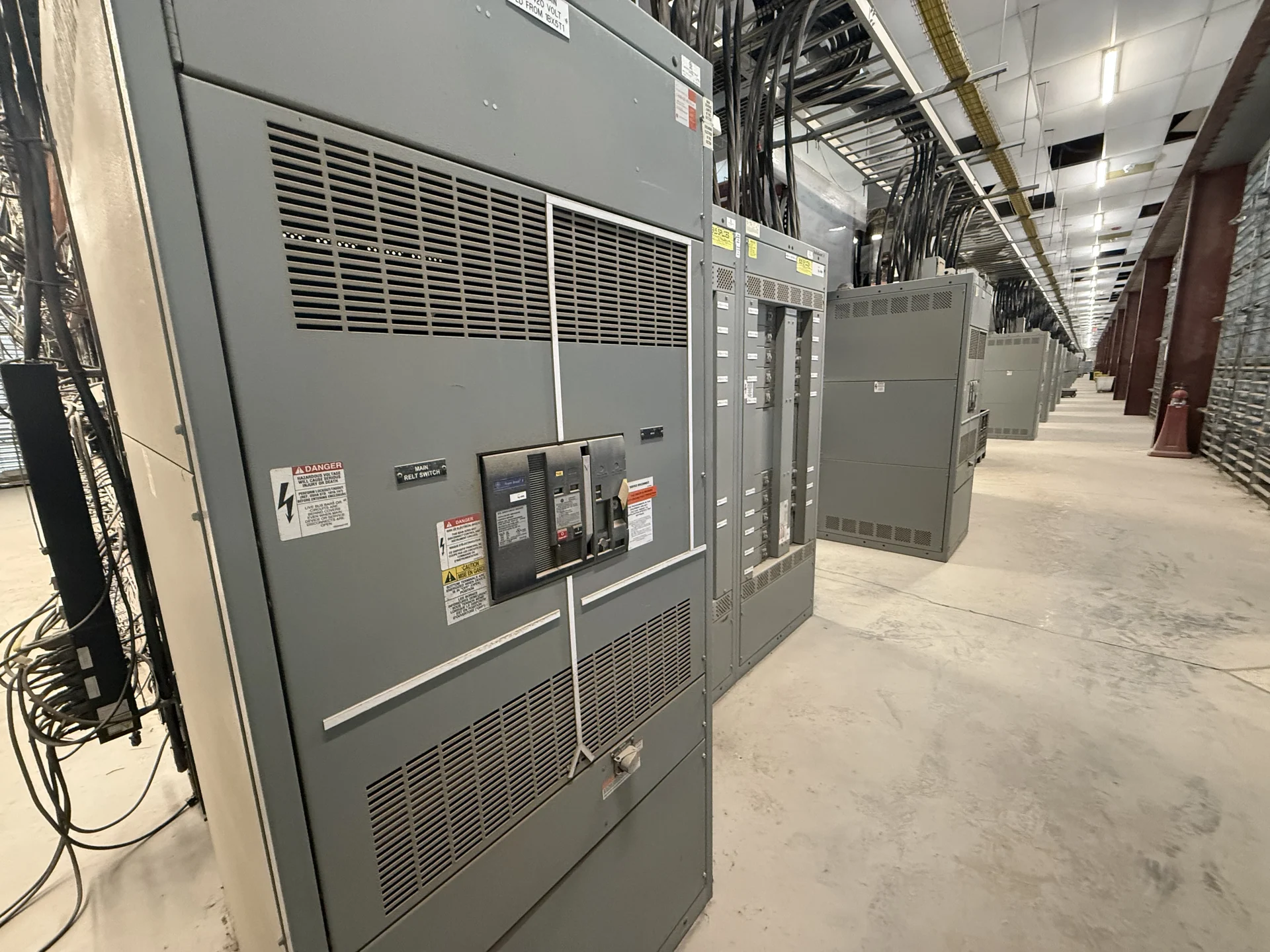
A new switchgear assembly must connect to something: utility service conductors, a transformer secondary, generator equipment, busway, underground duct, or an existing distribution lineup. Provide available drawings, photographs, dimensions, cable-entry direction, termination details, ground-bus expectations, and the location of nearby obstructions. The manufacturer can use that information to develop a custom arrangement with American components and clarify which dimensions must be field-verified. Interface review is especially important when an Annapolis electrical distribution upgrade has to align with equipment from another project phase or with an installation path that limits section size.
Account for Space, Access, and Outage Windows
Room conditions and construction logistics belong in the equipment discussion, not after the drawings are complete. Confirm available width, depth, height, working clearances, door swings, ventilation needs, floor elevations, housekeeping pads, and the route from receiving to the electrical room. Then identify outage windows, temporary power expectations, shutdown responsibilities, and the sequence for removing or isolating affected circuits. These details do not establish a delivery date; they help the project team evaluate shipping splits, lifting provisions, installation access, and coordination with qualified electricians and other site professionals. Include unusual restrictions such as narrow corridors, limited crane access, sensitive occupied areas, or a requirement to stage sections before final placement.
Build a Project-Specific Technical Package
A clear technical package reduces ambiguity when requesting new switchgear from a manufacturer. Include the specification, one-line diagram, schedules, enclosure environment, ratings, control schematics, communications requirements, metering needs, labels, paint or finish expectations, and the documents required for review. If the project specification references UL 891, first confirm that the standard applies to the proposed assembly and define the exact project requirements; applicability, construction details, and any listing or verification must be addressed for that specific project. Establish the engineering criteria from the actual electrical system and site requirements.
Request a Quote and Coordinate Delivery
When you request a quote for switchgear in Annapolis, provide the project location, requested scope, approval milestones, shipping destination, receiving constraints, and the people responsible for technical questions. Switchgear Builders manufactures new electrical switchgear in the United States, builds custom equipment to specification, uses American components, and ships nationwide. A quote should be compared on matching scope: equipment configuration, included devices, drawings, testing requirements, packaging, freight assumptions, exclusions, and payment terms. Confirm component availability and transit estimates for the specific project directly with the manufacturer. Ask which assumptions remain open so the engineering team can resolve them before an order is finalized.