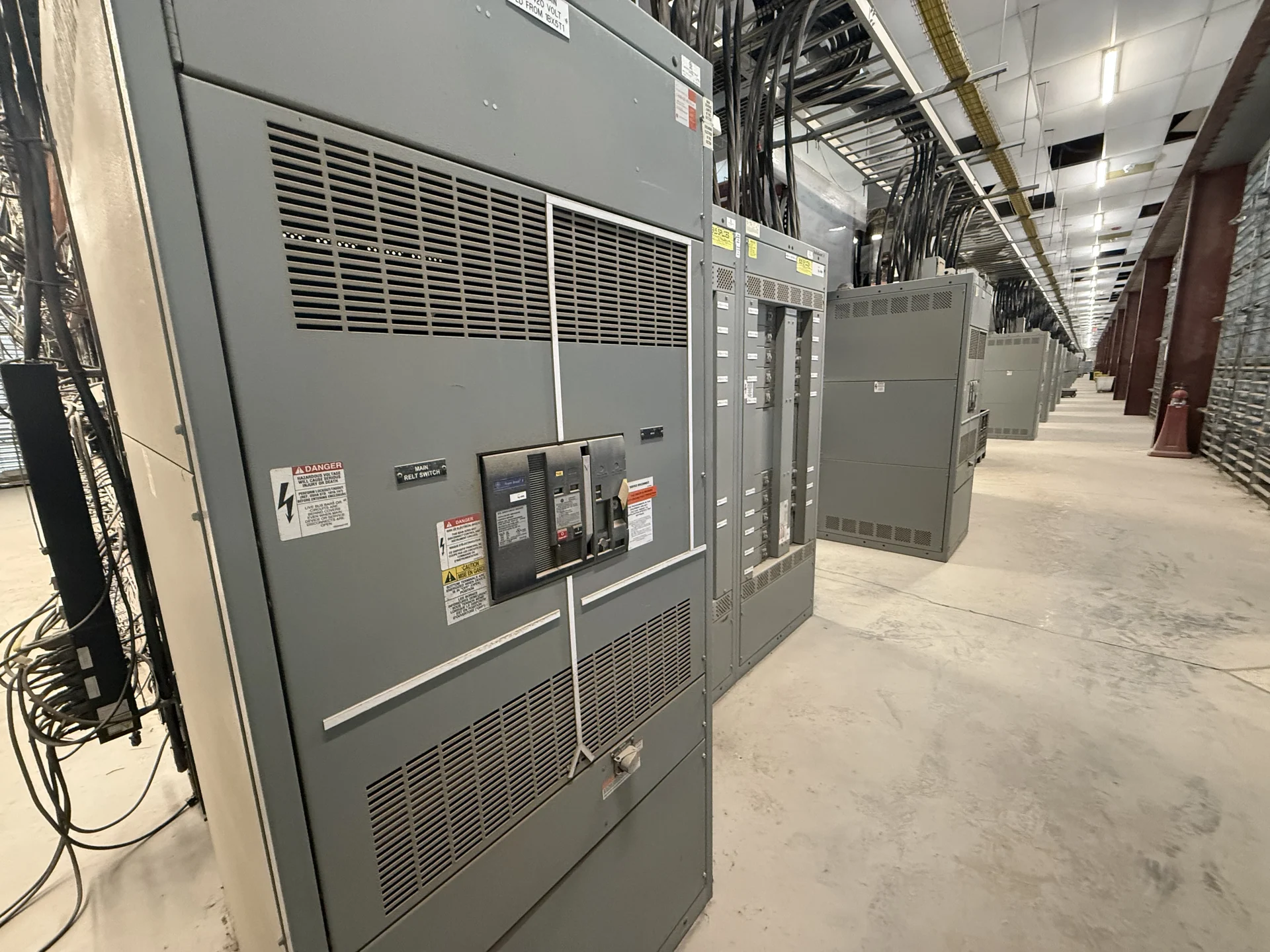
Start With the Expansion Load Plan
A facility expansion in Jackson, Mississippi should begin with a clear picture of what the new electrical feeders must serve. Identify added process equipment, HVAC, lighting, receptacles, fire protection systems, and other planned loads, then distinguish continuous loads from intermittent or starting loads. Record anticipated load growth rather than sizing only for the first phase. Note whether expansion loads are normal, emergency, standby, or separately metered, and identify any planned source transfer. A qualified electrical engineer can use that information to establish demand, feeder capacity, voltage, phase, grounding, and source requirements before a manufacturer develops project-specific new switchgear information.
Document the Existing Equipment Interface
Expansion equipment has to connect to the facility that already exists, so gather the current one-line diagram, equipment schedules, available fault-current information, feeder conductor details, bus arrangement, and protective-device data. Field-verify dimensions, cable entry direction, termination space, working clearances, housekeeping pads, and the route from receiving to the electrical room. Confirm whether existing gear can accept a new section, feeder, tie, or transition connection, and document connection elevations where relevant. Photos and marked-up drawings can reveal practical constraints, but they should supplement—not replace—qualified site verification. This record helps a manufacturer evaluate Jackson Mississippi switchgear interfaces without assuming undocumented conditions.
Plan New Feeders and Protection Together
New feeders should be considered as part of the complete distribution system rather than isolated additions. Define each feeder destination, conductor arrangement, expected load, protective-device type, interrupting duty, and coordination relationship with upstream and downstream devices. Identify whether feeder terminations enter from above or below and whether spare spaces, future sections, or maintenance isolation are needed. If the expansion introduces large motors, drives, generators, or other nonlinear or bidirectional sources, include their starting, harmonic, or operating characteristics in the engineering review. The resulting requirements can guide bus capacity, compartment layout, metering, control wiring, and settings documentation for a custom switchgear build.
Resolve Space, Access, and Outage Constraints
Available space often determines whether an expansion lineup can be installed without relocating adjacent equipment or disrupting operations. Measure the proposed footprint, front and rear access, doors, stairs, overhead obstructions, ventilation, cable paths, and lifting route. Check whether sections can be moved through the building as shipped or whether the project requires a planned split and field joining process. Then identify acceptable outage windows, temporary power needs, tie-in sequence, lockout procedures, and responsibilities for shutdown and commissioning. These details belong in the inquiry because a physically suitable lineup can still be impractical if the installation sequence conflicts with production or facility access.
Prepare a Manufacturer Quote Package
When requesting switchgear for facility expansion in Jackson, Mississippi, send the manufacturer a concise package: project location, single-line diagram, load schedule, system voltage and frequency, phase and wire configuration, available fault current, enclosure environment, dimensions, feeder schedule, control sequence, metering needs, drawings, and requested inspection or testing records. State which information is confirmed and which remains subject to engineering review. Switchgear Builders manufactures new electrical switchgear in the United States, builds custom to specification with American components, and can coordinate nationwide shipping details around the project scope.
Coordinate Delivery With the Installation Team
Before ordering, align the equipment design with the electrical engineer, contractor, facility representative, and qualified rigging resources. Confirm shipping sections, weights, lifting points, receiving hours, storage conditions, unloading equipment, final placement, field terminations, and the documents needed for installation. Ask the manufacturer to identify assumptions, exclusions, approval milestones, and information still required; do not treat a preliminary concept as a final design. For any project-specific standard or UL 891 question, confirm applicability, construction requirements, and any listing or evidence directly for that equipment package.