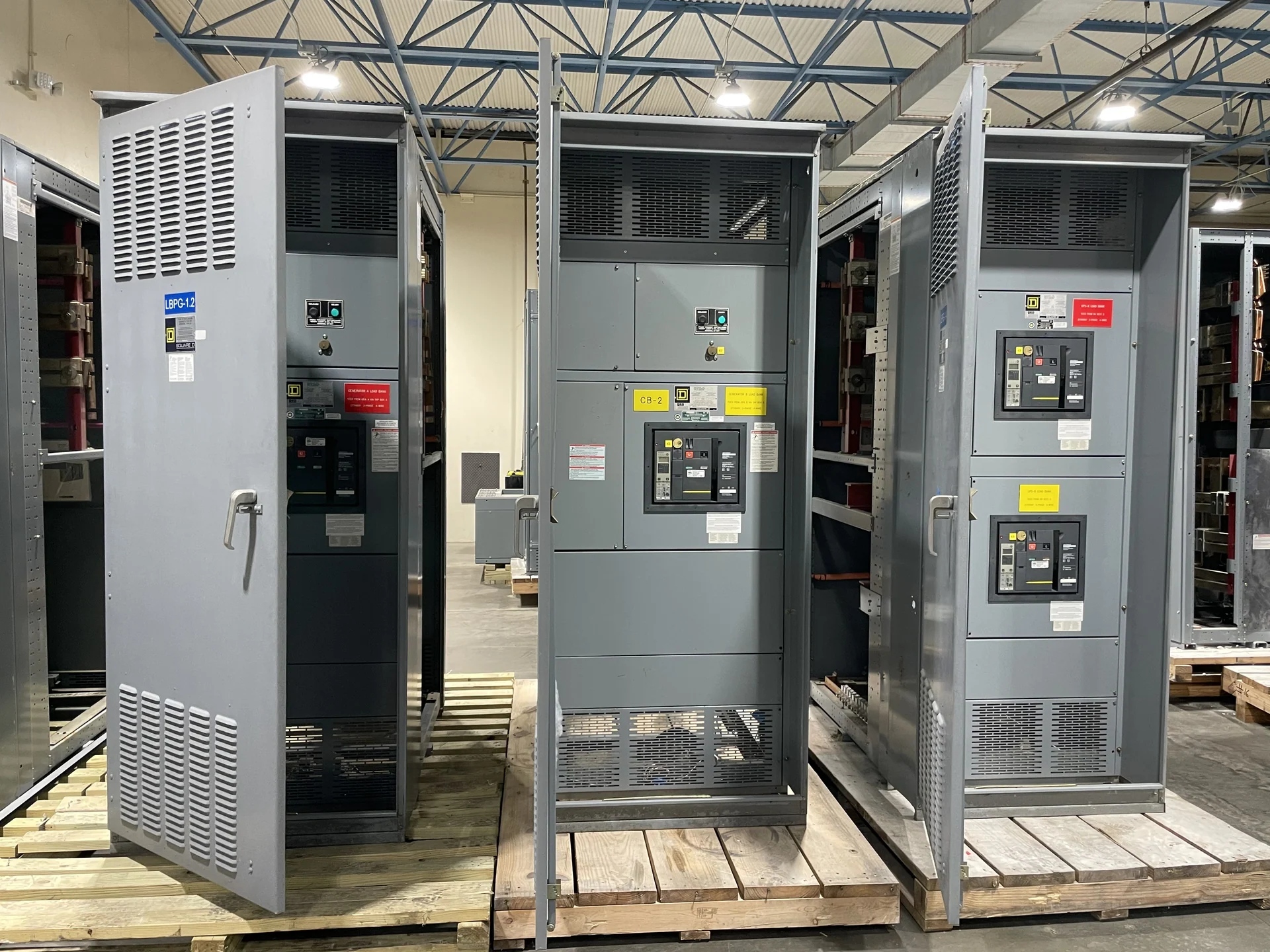
Start With the Jackson Project’s Distribution Duties
A Jackson, Mississippi distribution project should begin with the electrical duty, not with a generic enclosure label. Define the source arrangement, nominal voltage, phase, frequency, continuous current, available fault current, grounding method, and the feeders the pad-mounted assembly must serve. Identify whether the equipment will section a loop, supply a transformer, isolate a branch, or perform another switching function. A qualified engineer can then translate the one-line diagram and operating sequence into a manufacturer inquiry for new switchgear that fits the actual network rather than an assumed application.
Evaluate Pad-Mounted Enclosure Conditions
Outdoor placement near Jackson makes enclosure exposure and site interfaces central design questions. Document the planned location, grade, drainage, sunlight, humidity, dust, vegetation, vehicle activity, and any corrosive influences identified by the project team. Confirm the required enclosure construction, access arrangement, locks or operating provisions, cable entry direction, and clear space for operation and maintenance. The foundation, conduit banks, bending radius, and equipment orientation should be coordinated before fabrication so the new pad-mounted switchgear does not conflict with paving, fencing, traffic paths, or other site work.
Match Switching and Protection to the Operating Sequence
Switching duty is more than selecting a visible handle or compartment layout. Explain which circuits must be opened, closed, isolated, or sectionalized; which operations are routine; and which sources or feeders must remain separated. Provide protective-device information, coordination requirements, fault-duty calculations, and any interlocking or keying concepts that apply. A custom builder can use those inputs to develop a project-specific arrangement, while the engineer verifies that voltage class, interrupting capability, withstand requirements, grounding, and protection settings align with the distribution study and the utility interface.
Coordinate Cables, Access, and Installation Logistics
Cable entry and site access often determine whether an outdoor lineup is practical long before equipment arrives. Share cable sizes and types, termination preferences, entry elevations, phase arrangement, bend-space constraints, and the intended routing from the pad to upstream and downstream equipment. Also describe delivery restrictions in the Jackson area, including gate dimensions, road approach, crane or forklift planning, unloading responsibility, and the final movement path. The manufacturer can review shipping sections, lifting provisions, packaging, and nationwide freight coordination against the project’s confirmed handling plan.
Use a Complete Manufacturer Submittal Review
A useful quote and submittal package should make the proposed equipment understandable before release for fabrication. Request a clearly identified scope covering the lineup arrangement, ratings, enclosure details, devices, cable interfaces, control requirements, drawings, nameplates, inspection points, and project documentation. Compare proposals using the same technical basis instead of treating a lower initial number as proof of fit. If UL 891 is mentioned by the specification, confirm whether it applies to this particular assembly and verify any project-specific listing or capability during engineering review; never assume that the standard applies universally.
Buy New Jackson-Project Switchgear Directly From the Manufacturer
Switchgear Builders manufactures new electrical switchgear in the United States, builds equipment custom to specification, uses American components, and can coordinate nationwide shipping for a Jackson project. A quote request should include the single-line diagram, ratings, site conditions, layout constraints, switching sequence, cable information, documentation expectations, destination, and required project contacts. Those details help the manufacturer identify open design questions, prepare a project-specific response, and clarify availability, delivery expectations, and site responsibilities. Include the intended installation responsibility, field termination scope, inspection expectations, and the names of the engineer, contractor, owner, and utility contacts. When a project replaces or expands an existing distribution point, include available drawings and field-verified dimensions as reference information, then have the design team confirm every interface before approval. Clear inputs reduce avoidable clarification cycles and make the comparison between potential suppliers more meaningful, especially when outdoor access and cable routing vary across sites.