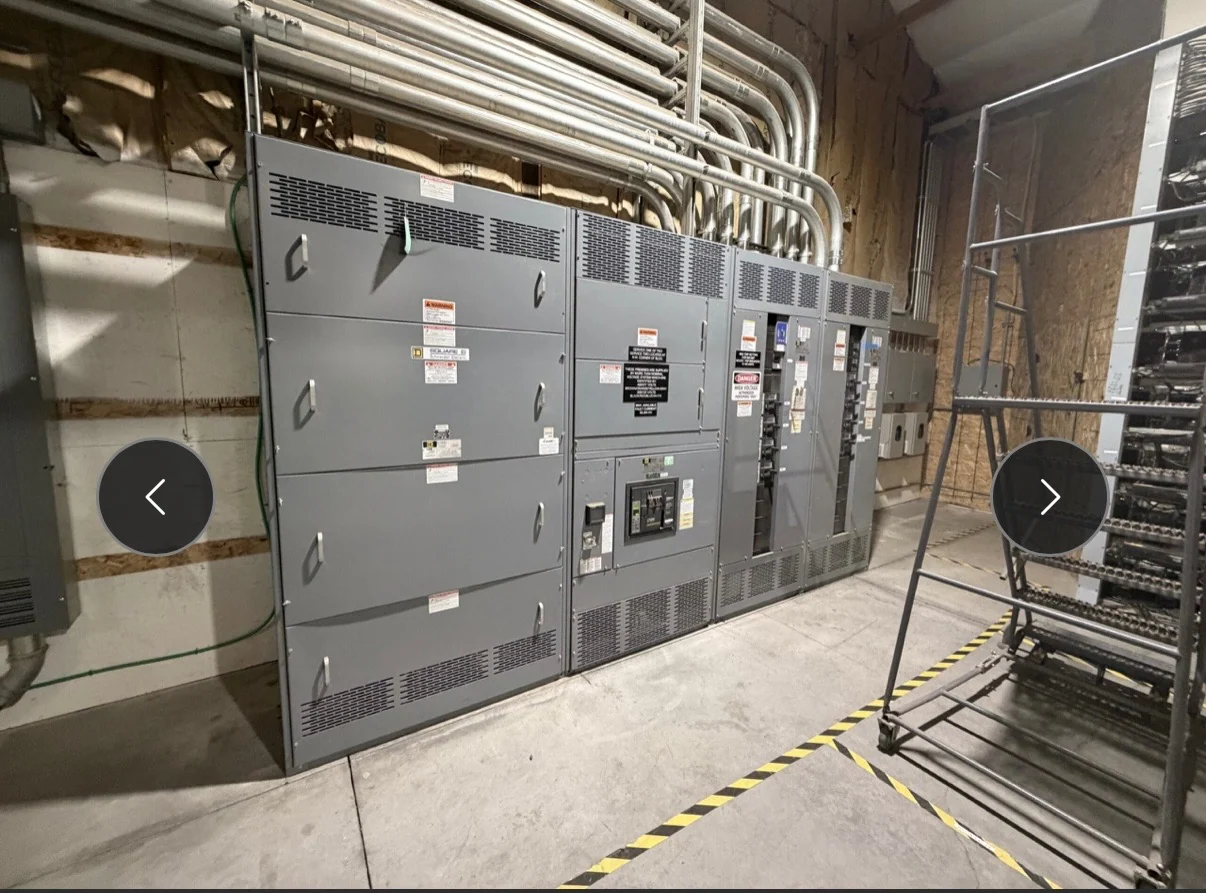
Start with the Gulfport Project Requirements
A Gulfport, Mississippi electrical distribution project should begin with the facility's actual one-line diagram, operating goals, and site constraints rather than a generic equipment label. Identify the normal source, alternate source, voltage, phase, frequency, grounding method, continuous load, motor load, available fault current, and expected growth. For critical facility loads, separate life-safety, legally required, mission-critical, and convenience circuits according to the engineer's design and applicable local requirements. Switchgear Builders manufactures new switchgear in the United States, custom to specification, with American components and nationwide shipping. A clear scope lets the manufacturer coordinate equipment interfaces, project contacts, delivery, and installation responsibilities for Gulfport.
Coordinate Automatic Transfer Switches with Sources
Automatic transfer switches should be treated as part of the complete distribution sequence, not as an isolated device selection. Define which source is normal, which is alternate, what starts the alternate source, and whether transfer and retransfer are open-transition, closed-transition, delayed, or otherwise project-defined. Confirm source capacity during starting and steady-state conditions, generator breaker coordination, neutral switching, bypass or isolation needs, and the controls or signals exchanged with upstream and downstream equipment. A custom lineup can be arranged around those interfaces, but the operating sequence belongs in reviewed drawings and functional test criteria for the particular Gulfport application.
Review Protection and Available Fault Current
Protection decisions require more than the nominal amperage shown on a schedule. The design team should provide calculated available fault current at each relevant point, main and feeder protective-device information, transformer data, conductor details, and coordination objectives. Breaker interrupting ratings, bus short-circuit duty, withstand requirements, ground-fault functions, and selective coordination should be evaluated by the responsible electrical engineer. For critical loads, settings and time-current relationships may affect transfer behavior and source clearing, so the automatic transfer switch sequence should be reviewed alongside protective coordination. Confirm UL 891 applicability, construction requirements, and any project-specific listing for the exact assembly.
Plan the Physical Arrangement and Maintenance Access
Gulfport equipment planning should account for the actual electrical room, outdoor exposure if applicable, access route, floor and foundation conditions, cable entry, ventilation, working space, and removal path. Show lineup dimensions, door swings, breaker or switch access, control compartments, metering locations, and lifting provisions on coordinated drawings. Critical facility operators also need a maintainable arrangement: identify which components require inspection, how isolation will occur, and whether bypass or alternate operating provisions are part of the design. Environmental conditions, enclosure selection, corrosion considerations, and site interfaces should be specified by the project team instead of inferred from the city or state alone.
Prepare a Complete Manufacturer Quote Request
A useful request for a Gulfport switchgear equipment distributor search can instead go directly to the manufacturer with the technical package attached. Include the one-line diagram, equipment schedule, preferred arrangement, source and load data, transfer sequence, control schematic, enclosure environment, dimensions, cable-entry direction, metering, communications, drawings, test documentation, and shipping destination. Identify what is furnished by others, installation responsibilities, required submittals, witness expectations, and commercial terms that matter to procurement. Asking for new equipment direct from Switchgear Builders keeps the scope centered on a custom build, American components, and nationwide shipment while leaving project-specific availability, freight details, and compliance questions open for confirmation.
Coordinate Delivery, Installation, and Acceptance
Before release, the owner, engineer, contractor, manufacturer, and qualified rigging or electrical personnel should agree on shipping splits, weights, lifting points, receiving inspection, storage conditions, placement, field connections, and energization responsibilities. Review approved drawings before fabrication and preserve a controlled record of changes to source logic, labels, settings, and terminal points. Acceptance criteria should identify visual inspection, wiring checks, continuity or insulation checks where applicable, transfer-sequence demonstrations, protective-device verification, and documentation turnover. Shipping to Gulfport is a logistics step, not evidence of local service; project contacts should confirm destination access, freight terms, and site readiness for the specific new lineup.