Plan Mississippi Healthcare Distribution Around Essential Loads
A Mississippi healthcare project needs a distribution plan that starts with the facility's essential electrical systems, not with a standard equipment label. Identify life-safety loads, critical equipment, legally required standby loads where applicable, clinical areas, communications, heating and cooling needs, and systems that must remain available during a utility interruption. An engineer should document normal and alternate sources, voltage, phase, frequency, feeder capacity, available fault current, grounding, and load priorities. Those inputs help a manufacturer develop new switchgear or associated transfer equipment around the actual healthcare project, rather than assuming that one lineup or sequence fits every hospital, clinic, or care facility.
Define the Transfer Sequence Before Selecting Equipment
Transfer equipment is part of an operating sequence, so write the sequence in plain language before comparing configurations. Establish how normal-source loss is detected, which alternate source starts or becomes available, which loads transfer, whether transfers occur in groups, and how retransfer is initiated after normal power returns. Address source interlocks, bypass or maintenance provisions when applicable, generator controls, emergency distribution segmentation, and conditions that inhibit a transfer. A Mississippi healthcare design team should coordinate the sequence among the electrical engineer, facility operations staff, generator provider, controls personnel, and switchgear manufacturer before drawings are finalized.
Match Ratings and Interfaces to the Healthcare System
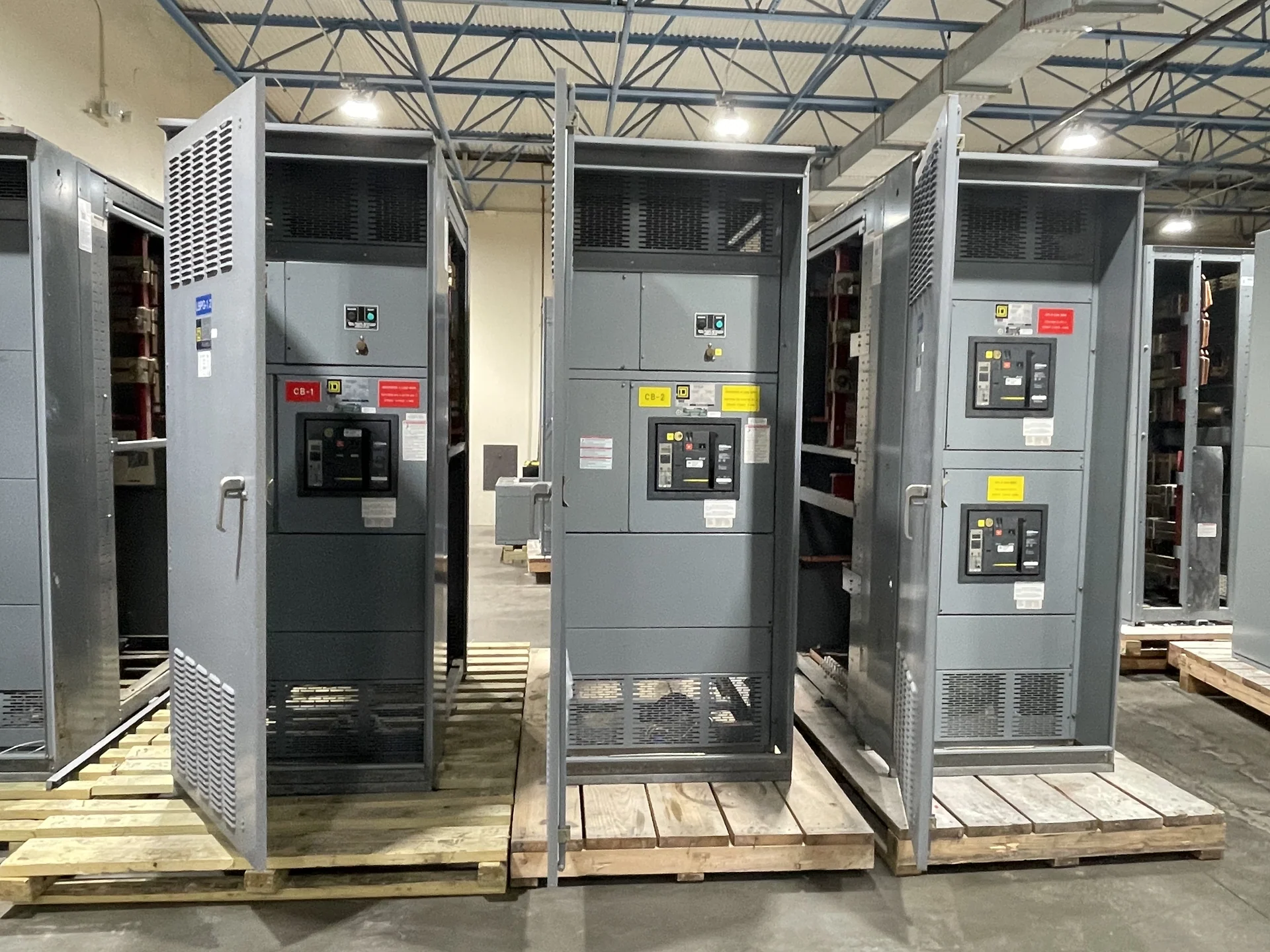
Specify each main, tie, feeder, transfer device, bus section, and protective device by its project-defined duty. Compare continuous current, interrupting capability, short-circuit withstand, voltage class, enclosure environment, conductor entry, control power, metering, and communications requirements. Healthcare projects may also require careful coordination with generators, automatic transfer switches, fire pumps, medical equipment, elevators, and downstream panels. Confirm selective coordination and protection settings through the applicable engineering study instead of assuming that a familiar device arrangement will meet the design. Switchgear Builders manufactures new electrical switchgear in the United States, custom to specification, with American components available within the defined scope.
Account for Mississippi Site and Room Conditions
Site information affects both the equipment design and the delivery plan for a Mississippi project. Provide the installation city, indoor or outdoor location, room dimensions, working clearances, access route, floor and wall conditions, ambient exposure, moisture concerns, corrosion considerations, elevation, seismic criteria if applicable, and restrictions on outage work. Confirm cable entry, conduit positions, transformer interfaces, generator location, and space for maintenance. These details help the manufacturer and project engineer resolve physical interfaces before fabrication and help the contractor plan receiving, movement, installation, and field connections.
Coordinate Outage Planning and Phased Work
Healthcare replacement or expansion work must be organized around the facility's continuity requirements. Map existing feeders, temporary power arrangements, shutdown boundaries, commissioning steps, and the sequence for moving loads from existing distribution to new equipment. Decide which work can occur without an outage and which steps require approval from facility operations, infection-control personnel, the authority having jurisdiction, or other project stakeholders. Include time for drawing review, component confirmation, factory inspection, shipping, site receiving, installation, field testing, and turnover documentation. A manufacturer can build to the approved scope, but outage decisions remain project-specific and require qualified local planning.
Confirm Requirements, Documents, and Delivery Details
Before requesting a quote for Mississippi switchgear, assemble the one-line diagram, load schedules, fault study information, control narratives, room drawings, equipment schedules, specifications, and desired submittal list. Ask for clear inclusions and exclusions covering drawings, testing, metering, controls, packaging, freight, unloading, and field responsibilities. If UL 891 is relevant, confirm its applicability and any project-specific listing or verification rather than assuming a blanket status. Switchgear Builders supplies new equipment with nationwide shipping; the destination, packaging, freight terms, transit estimates, and receiving responsibilities should be confirmed for the specific healthcare project.