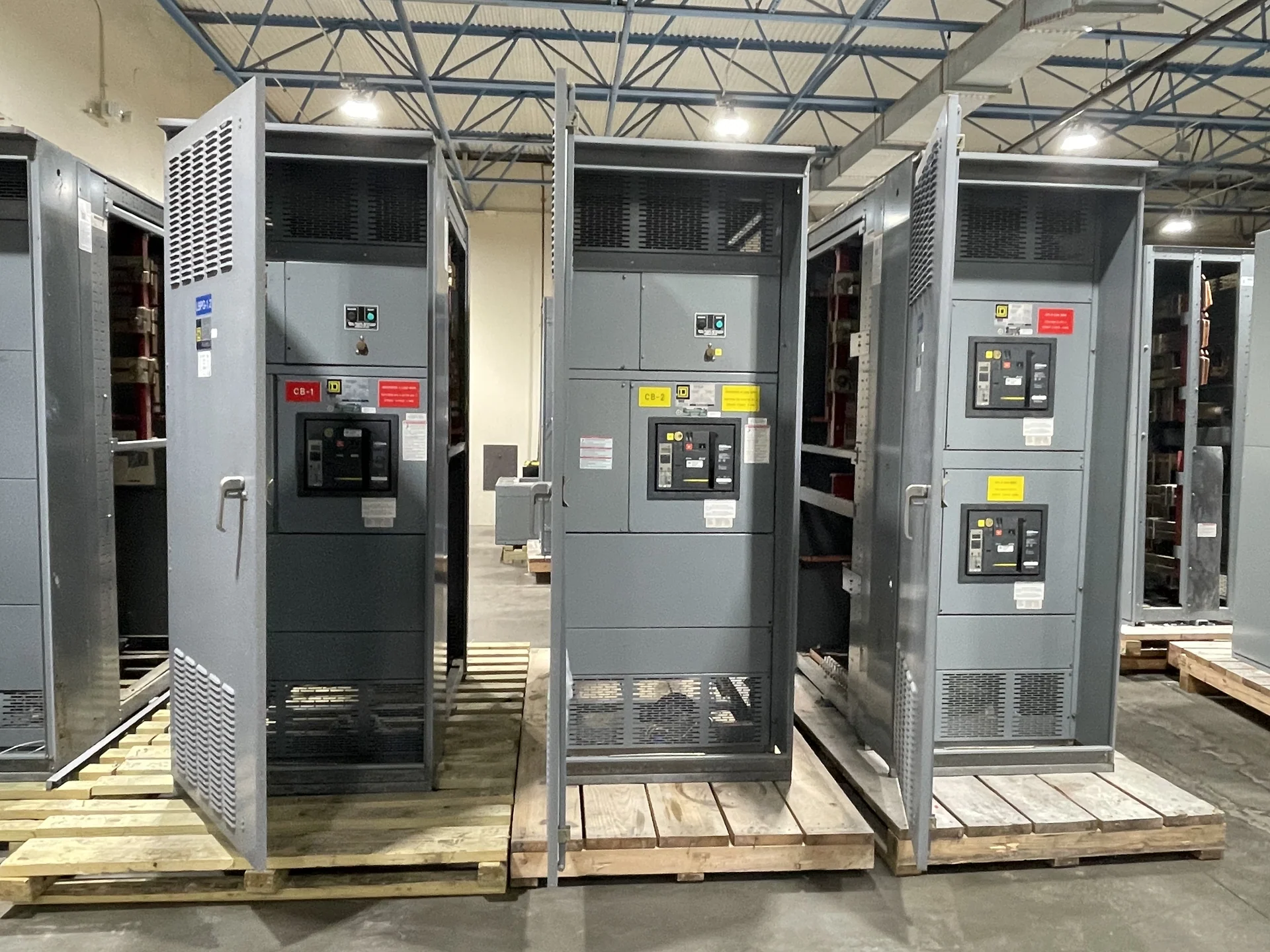
Planning St. Louis Electrical Distribution Projects
St. Louis electrical distribution projects often involve a practical combination of facility expansion, new feeders, and careful coordination with equipment already serving the site. The right starting point is not a product name but a documented electrical objective: additional capacity, a new source, revised feeder arrangement, replacement of an aging lineup, or a defined connection for a building addition. A manufacturer can develop new custom switchgear to that objective using the project single-line diagram, load information, voltage and frequency, available fault current, grounding method, physical dimensions, and installation constraints. Switchgear Builders manufactures new electrical switchgear in the United States, uses American components, and supplies equipment with nationwide shipping, while each design remains subject to project engineering review.
Inputs for Facility Expansion and New Feeders
For facility expansion in St. Louis, gather the information that determines both electrical duty and physical fit before requesting a manufacturer quote. Useful documents include one-line diagrams, panel and feeder schedules, load calculations, utility data, protective-device information, room elevations, cable-entry directions, equipment access dimensions, and the intended sequence for normal and alternate sources. Identify whether the new lineup must connect to an existing bus, transformer, generator, transfer system, or distribution section. The inquiry should also state continuous-current requirements, short-circuit information, enclosure environment, metering provisions, control voltage, communications needs, and any specified inspection or test documentation. Clear inputs reduce assumptions and make quote comparisons more meaningful.
Interfaces with Existing Site Equipment
A new lineup must be evaluated as part of the complete installation rather than as an isolated cabinet. Existing equipment interfaces may include bus connections, feeder conduits, cable bending space, grounding conductors, interlocks, protective-relay signals, metering circuits, and control wiring. Confirm field dimensions and identify conditions that cannot be inferred from an old drawing, such as obstructions, access routes, termination locations, or changes made during prior work. For a replacement or expansion, a qualified electrical engineer and installer should determine whether the proposed arrangement preserves required clearances, maintenance access, phasing, grounding continuity, and operating sequence. The manufacturer can use those confirmed interfaces to define a custom new assembly and its project documentation.
Load Growth, Fault Duty, and Protection Coordination
New feeders should be sized from the calculated load and the intended operating plan, not simply from spare physical space. Review present demand, anticipated additions, motor starting or other transient loads, continuous loads, diversity assumptions, and any future feeder positions that the design must reserve. Available fault current at the equipment location must be established for the relevant system condition, then compared with the specified interrupting, withstand, bus-bracing, and protective-device requirements. Coordination studies should address upstream and downstream devices, trip settings, source configurations, and selective operation where applicable. These engineering inputs help define a switchgear configuration and ratings for review against the St. Louis project requirements.
Outage Windows and Installation Logistics
An expansion or feeder project should describe its outage constraints early, even when the manufacturer is not responsible for field installation. State which loads are critical, whether temporary power is contemplated, how source isolation will be verified, and which parties control switching, permits, testing, and energization. The project team should compare the proposed equipment footprint with doorways, elevators, corridors, loading areas, rigging paths, and final placement points. Shipping sections, weights, lifting provisions, packaging, receiving inspection, and storage conditions should be coordinated before release. Switchgear Builders can supply new custom equipment for nationwide shipment; destination details, freight responsibilities, packaging needs, and project-specific availability must be confirmed for the particular order.
Building a Complete Manufacturer Quote Request
A useful quote request for St. Louis switchgear should combine technical scope with the commercial and documentation details needed for a fair comparison. Include the equipment type, lineup arrangement, voltage, phase and wire configuration, continuous current, fault-duty data, main and feeder devices, bus material, enclosure requirements, metering, controls, communications, cable entry, dimensions, and shipping destination. Attach the latest drawings and identify what is preliminary versus approved. Ask the manufacturer to identify assumptions, exclusions, required customer-furnished information, inspection points, test records, and submittal documents. If a specification references UL 891 or another standard, confirm its applicability and any project-specific listing or capability during engineering review rather than assuming it applies to every assembly.