Plan distribution around the water treatment process
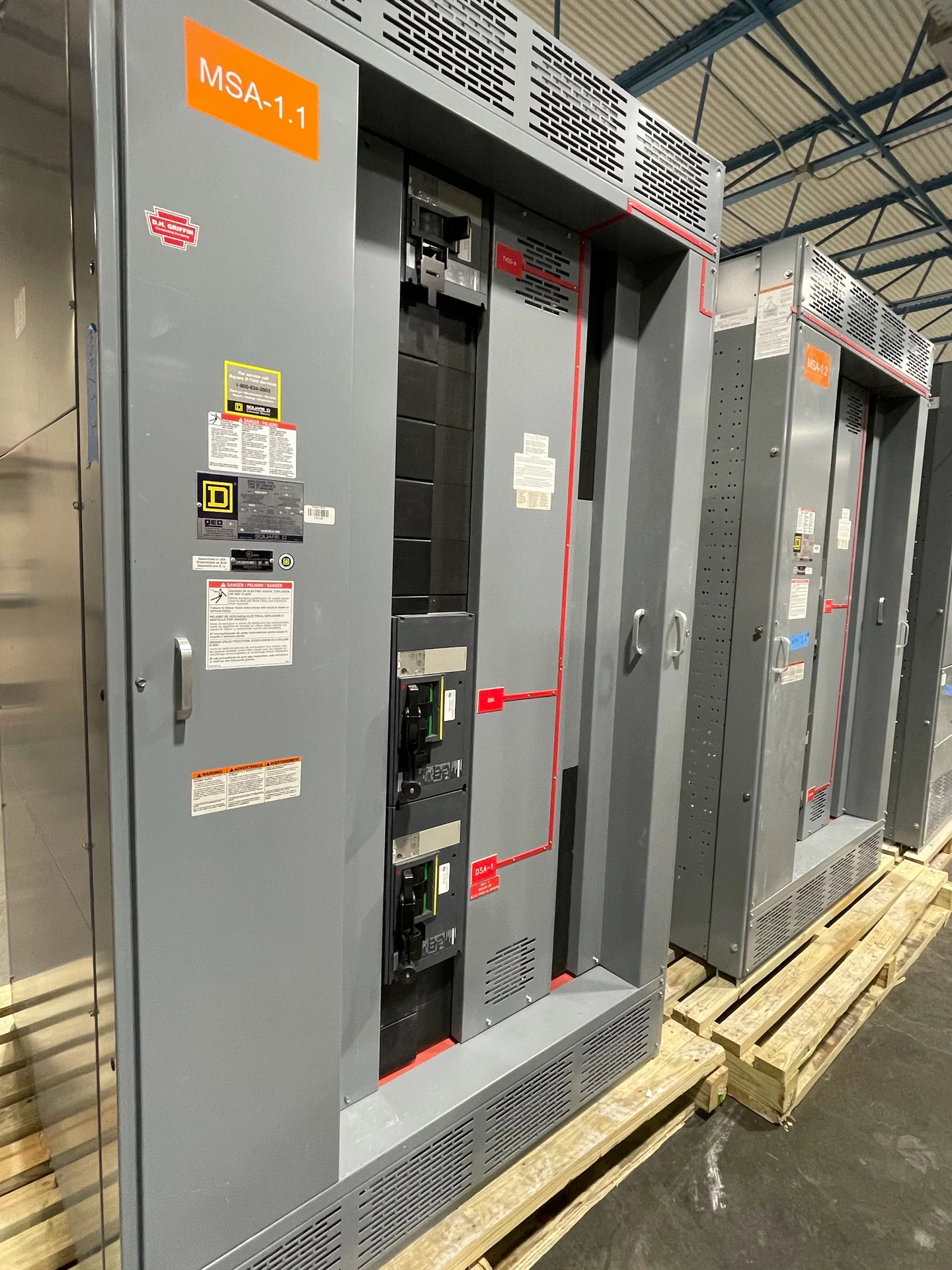
Missouri switchgear projects for water treatment begin with the process, not just an equipment name. List the incoming source, treatment stages, pumps, auxiliary motors, and other loads that must operate together. A motor control center organizes motor starters, protection, and associated controls, while upstream distribution equipment supplies and protects its feeders. For example, a hypothetical plant expansion may add a raw-water pump and chemical-feed equipment but retain its existing source. The design team should identify the available capacity, new operating demands, and physical connection points before selecting a new lineup. Switchgear Builders supplies new equipment; confirm the proposed scope and configuration for the particular project.
Match motor starting to pump duty
Starting method affects electrical demand and the way a pump accelerates. Across-the-line starting applies full voltage to the motor and may be appropriate where the motor, driven equipment, and electrical system can tolerate the starting duty. A soft starter can reduce starting stress, while a variable frequency drive can provide speed control when the process calls for it. Each choice needs review of the motor data, starting torque, pump characteristics, supply conditions, operating cycles, and control sequence. The engineer and process team should also consider water hammer, permitted pressure changes, and restart behavior instead of assuming that one approach suits every pump.
Coordinate drives, protection, and power quality
For drives serving treatment pumps, document the intended speed range, motor compatibility, cable lengths, heat rejection, and control signals. The design should consider harmonics and any mitigation indicated by the system study, as well as grounding and cable practices appropriate to the selected equipment. For each motor circuit, identify the applicable short-circuit protection, overload protection, and disconnecting arrangement. Share the available fault current and upstream protective-device information so the engineer can evaluate equipment ratings and coordination. Settings and component choices depend on the completed system design; an arrangement that works for one facility should not be assumed suitable for another.
Address moisture, chemicals, and installation access
Missouri electrical distribution equipment may be planned for an indoor electrical room or an outdoor installation, depending on the site. Describe actual exposure to washdown, condensation, temperature, dust, corrosive treatment chemicals, or flooding, rather than choosing an enclosure solely by appearance. The engineer should assess the environment and specify a suitable enclosure and any ventilation or corrosion protection requirements. Provide room dimensions, working and maintenance clearances, door swing, cable entry, and the path for moving shipping sections into place. If equipment is near chemical storage or dosing, coordinate its location with the facility team and applicable local requirements.
Define controls and continuity for essential loads
Motor control centers for water treatment pumps and process equipment often need to exchange status and commands with plant controls. Specify which signals are hardwired, which communication protocols are required, and who supplies the controller programming and field instruments. Describe permissives, alarms, local and remote control, loss-of-signal behavior, and the desired response after a power interruption. Where a backup source is planned, distinguish loads that must restart from those that require an operator decision, and identify the transfer and sequencing interfaces. Review the sequence with the process engineer and qualified electrical team so the equipment request reflects the actual operating strategy.
Prepare a useful request for new equipment
A clear manufacturer inquiry can start with a one-line diagram, motor schedule, system voltage and phase, grounding arrangement, calculated loads, and available fault current. Include each motor's nameplate information, proposed starter or drive, feeder quantities, control requirements, enclosure environment, and any space constraints. Identify the drawings, inspection records, and test documentation requested, as well as any standards or listing requirements that must be verified for the specific assembly. Note which details remain preliminary and who will resolve them. This gives Switchgear Builders a practical basis to review a new-equipment scope without treating an incomplete schedule as a final engineering design.
Coordinate Missouri delivery and field responsibilities
Before comparing proposals, define the Missouri destination, receiving access, unloading arrangements, allowable shipping splits, and any constraints on the route into the equipment space. Agree who handles rigging, installation, field wiring, startup, and site acceptance, and identify the documentation needed for each handoff. For a replacement or phased expansion, the owner and contractor should plan temporary power and outage sequencing with the utility and affected operations as appropriate. Request project-specific confirmation of delivery coverage, freight terms, availability, and schedule from the manufacturer. Dates and service responsibilities should be agreed in the quotation or order for the specific project.