Start With the Water-Treatment Process
A Las Vegas water-treatment project should begin with the process loads rather than a generic equipment label. Identify each pump, blower, mixer, chemical system, and auxiliary load; record horsepower, voltage, phase, starting method, duty cycle, and whether operation is continuous, intermittent, or standby. A motor control center can organize starters, drives, disconnects, protection, and control interfaces, but its lineup must follow the process sequence and the facility one-line diagram. The equipment schedule should also show which loads operate together, which require automatic alternation, and which must remain available during a source transfer or maintenance condition.
Coordinate Motor Starting and Feeder Capacity
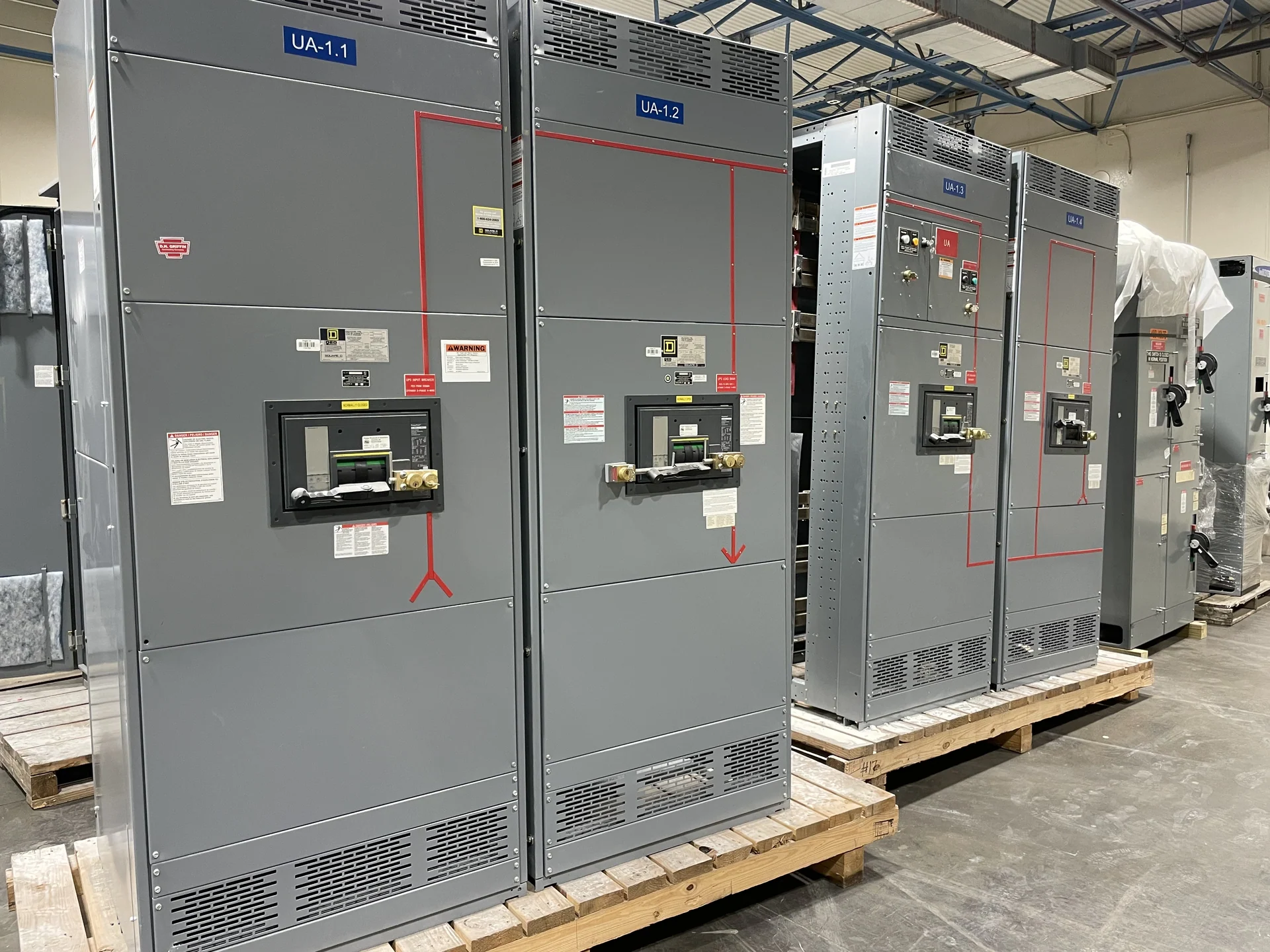
Pump starting can influence voltage drop, upstream transformer loading, generator response, and the available capacity of the distribution system. During design review, compare across-the-line starting, reduced-voltage methods, soft starting, and variable frequency drives against the motor's torque requirement, acceleration profile, process limits, and maintenance preferences. The calculation should consider simultaneous starts and restart logic, not only the largest individual motor. A custom manufacturer-built lineup can be arranged around the selected starters or drives, feeder protection, bus capacity, control power, and field cable terminations after the responsible engineer confirms the electrical study inputs.
Select Drives With the Process in Mind
Variable frequency drives may help match pump output to changing flow or pressure demands, yet drive selection involves more than horsepower. Review input and output characteristics, bypass requirements, harmonic effects, heat dissipation, enclosure arrangement, motor compatibility, fault response, communications, and access for service. A water-treatment control scheme may also need local hand-off-automatic functions, permissives, interlocks, alarm contacts, and coordination with a supervisory control system. These details should be defined on the control narrative and point list so the motor control center layout reflects actual operating behavior instead of leaving critical decisions to field installation.
Account for Desert Site Conditions
Las Vegas environmental conditions can affect enclosure and thermal design, even when the equipment is installed indoors. Project documentation should identify ambient temperature range, solar exposure if outdoors, dust, ventilation, altitude, moisture, corrosive treatment chemicals, washdown practices, and the electrical room's cooling strategy. Confirm the required enclosure type, component temperature limits, spacing, filters or ventilation approach, and cable-entry details with the engineer. The site plan should reserve working clearances, door swing, maintenance access, lifting paths, and a practical route from receiving to the final room without assuming a particular building layout.
Define Controls, Interlocks, and Documentation
Pump sequencing should be translated into an approved control narrative before fabrication. Define lead-lag rotation, low-level or high-level permissives, dry-run protection, overload response, emergency stops, remote commands, local overrides, alarm priorities, and what happens after a power interruption. Include terminal schedules, wire numbering, network requirements, device identification, and the boundary between factory wiring and site wiring. Switchgear Builders manufactures new custom electrical switchgear in the United States, using American components as specified for the project, so a quote request should include the one-line, motor schedule, control drawings, dimensions, and documentation requirements.
Plan the Purchase and Shipment
For a Las Vegas electrical distribution inquiry, provide the project location, service characteristics, fault-current information, equipment arrangement, environmental requirements, pump schedule, drive strategy, controls, drawings, and desired shipping split. The manufacturer can then clarify scope, exclusions, review points, and shipping assumptions for new equipment built to the approved design. Nationwide shipping should be coordinated around packaging, unloading access, rigging responsibility, receiving inspection, and the installation sequence. If UL 891 may apply to a switchboard or related assembly, identify it early and confirm applicability, listing requirements, and project-specific capability before the design is finalized.