Start with the Critical-Load Definition
A Las Vegas facility should begin an automatic transfer switch project by identifying which loads truly require an alternate source and what interruption each load can tolerate. Critical loads might include life-safety systems, communications, process controls, refrigeration, security, or selected building services, but the final list belongs in the project electrical design. Record normal voltage, phase, frequency, connected load, demand load, starting current, and any special harmonic or neutral requirements. Separating essential circuits from convenience loads helps size the transfer equipment and keeps the source capacity analysis focused.
Match Source Capacity to the Transfer Scheme
Automatic transfer switches for critical facility loads are only as useful as the sources connected to them. The design team should document the normal source, emergency source, available fault current, generator or alternate-source capacity, grounding arrangement, and expected voltage and frequency behavior during starting and recovery. A transfer switch may be configured for open transition or another project-defined sequence, while delayed transition, in-phase transfer, or load-shed logic may be relevant in certain systems. Each choice affects continuity, equipment compatibility, and operating procedures, so the sequence should be approved before a manufacturer prepares project-specific equipment information.
Coordinate Protection and Control Signals
Protection coordination must cover more than the transfer switch nameplate. Review upstream and downstream breaker settings, short-circuit duty, generator protection, selective coordination objectives, and the effects of motor starting or transformer energization. Define which signals initiate transfer, such as source failure, undervoltage, underfrequency, or an external emergency command, and identify how retransfer, inhibit, test, and remote indication will work. For a Las Vegas, Nevada project, the electrical engineer and equipment manufacturer should also reconcile the one-line diagram, control schematic, utility interface, and generator controller responsibilities so that no operating assumption is left implicit.
Plan Enclosure and Maintenance Access
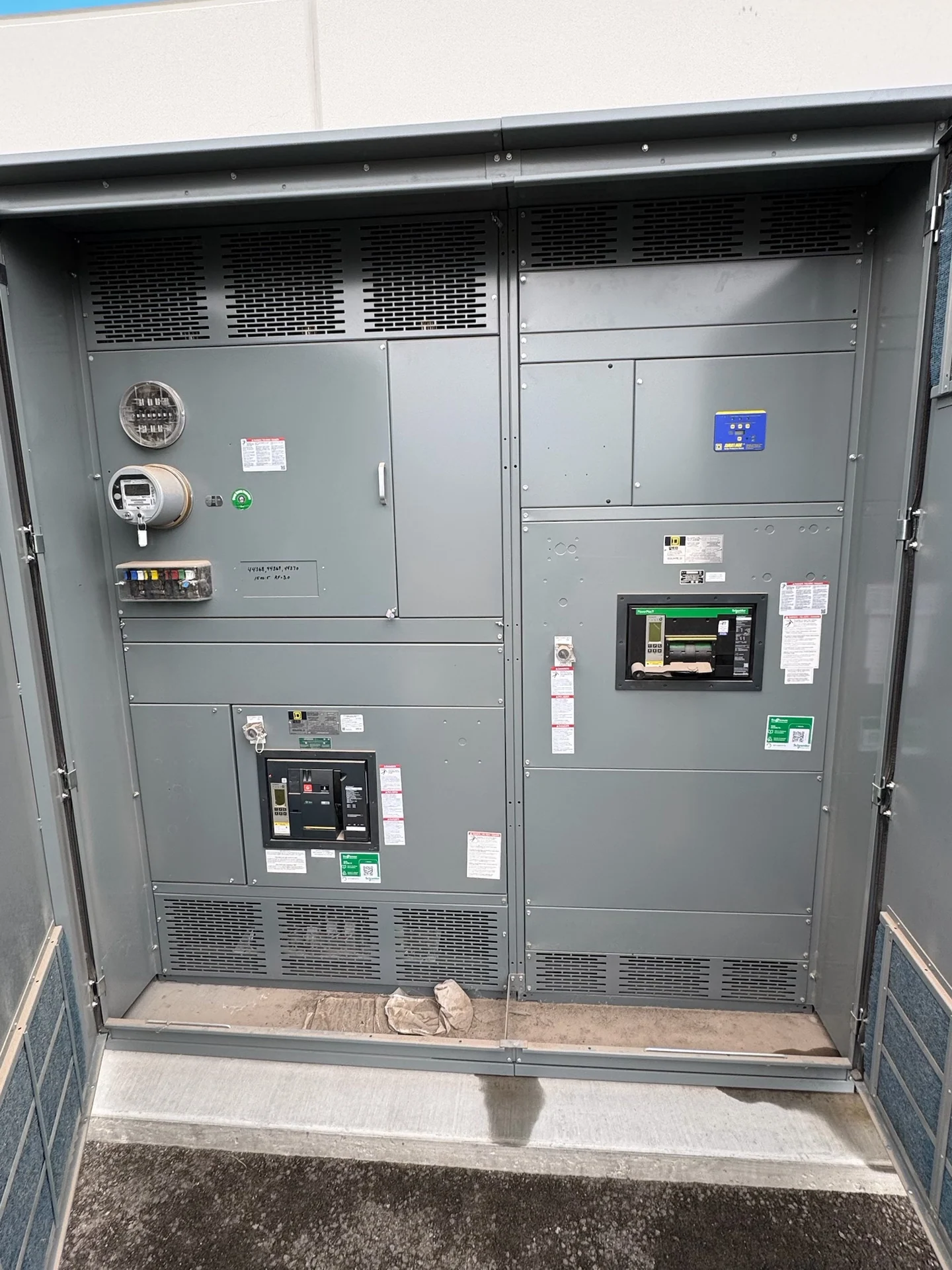
Physical planning is essential when an automatic transfer switch serves a critical load. Confirm indoor or outdoor installation, environmental exposure, enclosure requirements, cable entry, conductor bending space, ventilation, working clearances, door swing, lifting route, and room access. Maintenance personnel need a practical way to inspect connections, operate controls, test the transfer sequence, and isolate equipment under the facility's safety procedures. The layout should reserve space for service access and identify whether bypass or isolation provisions are required by the operating plan rather than assuming a particular configuration.
Prepare a Complete Manufacturer Inquiry
A useful inquiry for new automatic transfer switches should include the one-line diagram, load schedule, source ratings, transfer and retransfer sequence, control voltage, neutral treatment, enclosure location, cable information, metering or communications needs, drawings required for approval, and the destination in Las Vegas. Include environmental conditions and any facility-specific maintenance or witness requirements. Switchgear Builders manufactures new electrical switchgear in the United States, builds custom equipment to specification with American components, and supplies projects with nationwide shipping; final scope, configuration, documentation, and shipping terms remain project-specific.
Review Documentation Before Release
Before releasing an order or approving equipment information, compare the proposed transfer switch arrangement against the approved one-line diagram and control narrative. Check source identification, ratings, terminal points, interlocks, alarm contacts, time delays, test provisions, and maintenance instructions. Ask the engineer of record to resolve discrepancies between generator data, protective-device coordination, and the transfer sequence. Also confirm who supplies field wiring, commissioning inputs, and operator training materials so responsibilities are clear at handover. The final package should state what is included, identify exclusions, and define inspection or functional-test records expected for the project, without treating a general product description as a substitute for engineered review.