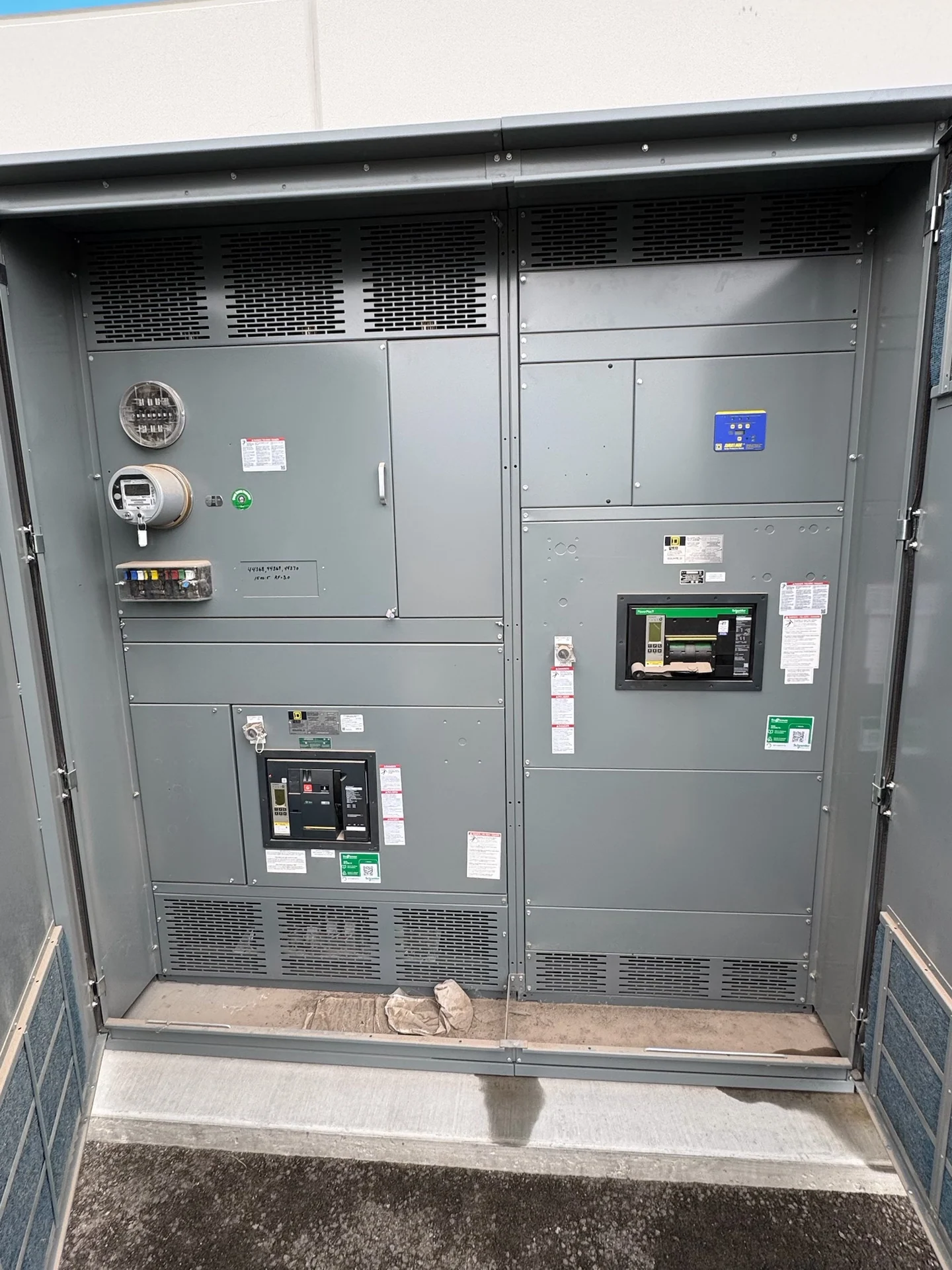
Start with the Providence Distribution Context
A Providence electrical distribution project should begin with the circuit purpose, source arrangement, connected load, and physical setting rather than a catalog label alone. Pad-mounted switchgear may serve an outdoor feeder, sectionalizing point, transformer connection, or other defined distribution function, but the correct arrangement depends on the one-line diagram and operating sequence. Identify nominal voltage, phase, frequency, grounding method, continuous current, fault duty, switching duty, and any planned expansion. Switchgear Builders manufactures new electrical switchgear in the United States, builds custom equipment to specification with American components, and supplies projects nationwide; the equipment package should be developed from the particular Rhode Island site requirements.
Define Pad-Mounted Switching Duty
Switching duty describes what the pad-mounted assembly must do during normal operation, feeder isolation, maintenance, or a defined fault-management sequence. A project team should state whether the equipment is intended for load interruption, sectionalizing, source selection, transformer protection, or another function, then coordinate switches, fuses, circuit interrupters, control power, and interlocks accordingly. Do not infer capability from enclosure size or a general product name. The engineer should confirm voltage class, continuous current, interrupting or withstand requirements, grounding, operating access, and protection coordination before the manufacturer finalizes a custom design and quotation.
Plan the Outdoor Enclosure and Site Interface
Outdoor exposure in Providence makes enclosure selection and site coordination central design inputs. Review rain, snow, ice, salt-laden air where applicable, drainage, condensation, solar exposure, landscaping, vehicle movement, and the possibility of water collecting around the pad. Specify the required enclosure construction, finish, access arrangement, locks, ventilation approach, warning markings, and separation of operating areas through the project documents. Civil and electrical teams should coordinate the pad, anchors, conduit banks, cable bending space, working clearances, and lifting path. These conditions affect fabrication dimensions, door swing, maintenance access, and how the completed assembly can be positioned safely.
Coordinate Cable Entry and Terminations
Cable entry can determine the practical layout of pad-mounted switchgear as much as the switching devices themselves. Provide cable type, conductor size and quantity, insulation details, phase arrangement, termination requirements, bending radius, entry direction, and connection elevations when requesting a design. Confirm whether incoming and outgoing circuits enter from below, whether spare ways are needed, and how grounding conductors and shields are handled. The manufacturer can then coordinate compartments, barriers, bus placement, termination space, and removable access features with the drawings. Field installers should review the proposed cable path against the actual trench, conduit, and pulling conditions before approval.
Account for Access, Operation, and Maintenance
A pad-mounted lineup has to fit the site while leaving personnel enough room to operate and maintain it according to the project design and applicable requirements. Map the approach from public or controlled areas, gates, fences, bollards, adjacent equipment, slopes, sidewalks, and traffic routes. Establish who operates the switching devices, which positions are permitted, how isolation is verified, and what interlocks or keying the sequence requires. Include lifting points, removable covers or panels, labeling, and access for future inspection. A clear operating concept helps prevent a physically workable enclosure from becoming difficult to use after installation.
Prepare a Complete Manufacturer Inquiry
For a useful Providence switchgear inquiry, send the one-line diagram, equipment schedule, site plan, available fault-current information, load summary, utility or owner requirements, environmental description, cable data, dimensions, control narrative, and requested drawings or test records. Switchgear Builders ships nationwide. State the destination and shipping constraints so packaging, shipping sections, receiving access, and freight responsibilities can be coordinated for the project. If a specification references UL 891 or another standard, ask the project engineer and manufacturer to confirm applicability, construction requirements, and any project-specific listing or verification rather than assuming it applies automatically.