Start with the critical-load operating case
A Houston facility should define what must remain energized, what may pause, and what can be shed before an automatic transfer switch becomes an equipment specification. Critical loads might include life-safety systems, process controls, communications, refrigeration, pumping, or data equipment, but the actual list belongs to the facility engineer. Record normal and alternate source voltages, phase and wire arrangement, frequency, grounding method, load categories, starting currents, and any sequencing constraints. This information lets a manufacturer develop new switchgear or transfer equipment around the real operating case rather than selecting a nominal device from a short description.
Define source capacity and transfer sequence
Source capacity is more than the nameplate current of the transfer equipment. Review utility service characteristics, generator output, available fault current, motor-starting effects, nonlinear loads, and the expected loading of each source under normal and emergency conditions. Then describe the desired sequence: source-failure sensing, engine start or alternate-source readiness, time delays, transfer permissives, retransfer behavior, and manual controls. Open-transition and other transition approaches affect momentary interruption and source interaction differently. A written sequence of operations gives Switchgear Builders a practical basis for a custom new assembly using American components and project-defined controls.
Coordinate protection and distribution interfaces
Automatic transfer equipment must fit the protection scheme on both sides of the source connection. Provide upstream breaker or fuse information, downstream feeder details, conductor data, grounding and bonding requirements, and the available fault-current study when requesting project information. Engineers should check interrupting duties, selective coordination objectives, protective settings, generator contribution, and any restrictions from the utility or authority having jurisdiction. The transfer switch does not replace a coordination study. Its terminals, bypass arrangements if specified, metering, and control wiring must be coordinated with the switchgear lineup, distribution equipment, and installation drawings for the Houston project.
Plan Houston site and environmental details
Houston project conditions should be described rather than assumed. Identify indoor or outdoor placement, room dimensions, working clearances, access routes, elevation, ventilation, ambient temperature range, moisture exposure, corrosion concerns, flood-related elevation requirements, and any enclosure or environmental requirements in the specification. Show cable entry locations, conduit paths, equipment orientation, anchorage interfaces, and the movement route from receiving to final position. These details influence enclosure layout, doors, lifting provisions, heat management, and shipping splits. A manufacturer can then build new equipment to the documented site interfaces instead of leaving field conflicts for installation.
Make maintenance and testing part of the design
Critical-load transfer is an operational process, so maintenance access and testing should be defined during design. Decide how operators will observe source status, initiate a permitted test, isolate equipment, and return the system to normal without creating an unintended outage. Identify control-power requirements, alarms, remote indications, communications points, spare terminals, and the people responsible for witnessing functional checks. The project test plan should state the simulated source conditions, time-delay checks, interlock checks, indication checks, and records required. Installation, commissioning, and operating procedures remain responsibilities of the qualified project team.
Request a manufacturer-built equipment package
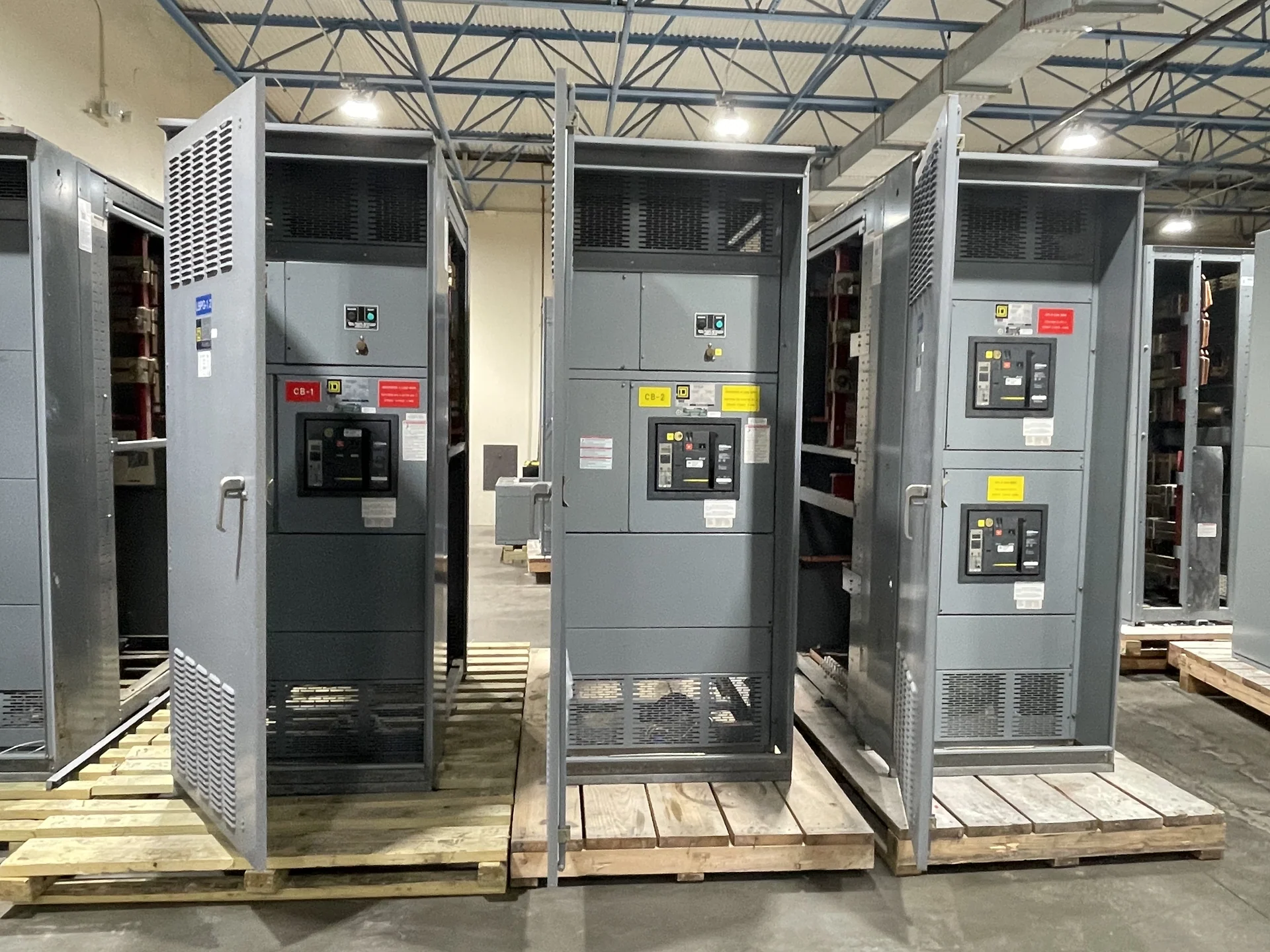
For a Houston inquiry, send the one-line diagram, load schedule, source data, sequence of operations, protection information, dimensional constraints, environmental requirements, desired controls, drawings, and documentation expectations. Switchgear Builders manufactures new electrical switchgear in the United States, builds custom equipment to specification, uses American components, and ships nationwide; the project-specific scope still determines the configuration and applicable requirements. Ask for a clearly defined equipment description, assumptions, exclusions, shipping destination, and review points. If UL 891 or another standard is relevant, confirm its applicability and any project-specific listing or verification before the design is finalized.