Plan the Burlington Distribution Scope Around the Process
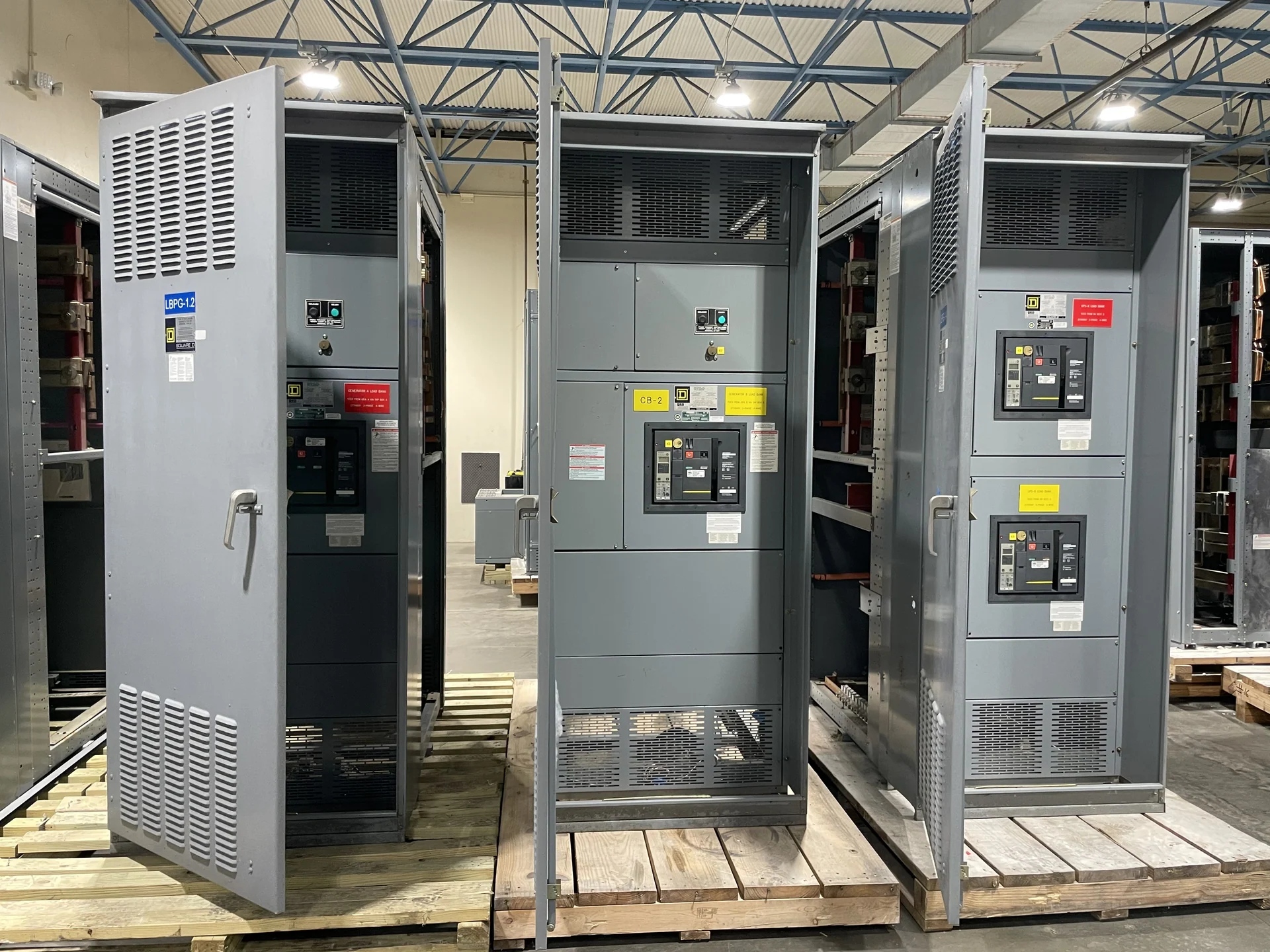
Industrial facilities in Burlington, Vermont may combine pumps, conveyors, mixers, heating equipment, and other process loads that do not share identical starting or operating characteristics. A useful switchgear or motor control center design begins with a current one-line diagram, motor schedule, voltage and phase information, load calculations, available fault current, and the intended operating sequence. Switchgear Builders manufactures new electrical switchgear in the United States, custom to specification, using American components and nationwide shipping. The final equipment scope should follow the project engineer’s design and the site’s installation requirements.
Select Motor Starters and Drives by Load Behavior
Motor protection and starting method should reflect what each Burlington-area process load actually does. Across-the-line starters may suit some motors, while reduced-voltage starting or variable frequency drives may be considered where acceleration, speed control, or mechanical stress matters. A drive introduces questions about heat dissipation, harmonics, bypass philosophy, shielding, and control signals; a starter requires its own overload, short-circuit protection, and control strategy. List motor horsepower, full-load current, duty, starting requirements, and sequence so the manufacturer can coordinate the lineup around defined engineering inputs rather than assumptions.
Coordinate Pumps, Conveyors, and Process Feeders
Pumps and conveyors can create different coordination challenges within one industrial lineup. A pump may need permissives tied to pressure, flow, level, or valve position, while a conveyor may require permissive chains, jam detection, sequential starting, or controlled stopping. Feeder sizing, motor branch protection, disconnect arrangements, and control power should be reviewed together so an isolated fault does not produce an unintended process-wide interruption. Provide the equipment list, feeder destinations, motor grouping, and shutdown philosophy for review with the consulting engineer, controls integrator, and installation team.
Define the Control Interface Before Fabrication
A motor control center or custom switchgear assembly is easier to coordinate when the control interface is documented before fabrication. Identify whether commands originate from local stations, a programmable controller, a supervisory system, or a combination, then define run status, fault indication, interlocks, permissives, emergency-stop behavior, and communication needs. Terminal plans, wire numbers, I/O lists, network requirements, and separation of power and control conductors help reduce ambiguity. The Burlington project team should also identify who supplies field devices, control transformers, network hardware, and final programming responsibilities.
Account for Vermont Site Conditions and Installation Access
Burlington project planning should document the actual installation environment rather than relying on a generic location assumption. Confirm whether equipment is indoors or outdoors, expected temperature and moisture exposure, enclosure requirements, elevation, corrosive conditions, seismic criteria if specified, and the available working clearances. Record room dimensions, door openings, floor loading, cable entry direction, lifting path, and shipping split constraints. These details affect enclosure layout and logistics. A manufacturer quote should identify assumptions and exclusions so the electrical contractor can coordinate foundations, conduit, terminations, rigging, and field testing.
Review Ratings, Protection, and Documentation
Before ordering new Burlington industrial distribution equipment, the design team should reconcile nominal voltage, frequency, continuous current, short-circuit duty, motor contribution, grounding method, interrupting ratings, and protective-device coordination. Confirm whether metering, surge protection, spare capacity, arc-flash study inputs, or special interlocking belongs in the scope. Drawings should show the lineup arrangement, device identification, control schematics, terminal details, and feeder information. If UL 891 is relevant to the proposed assembly, its applicability and any project-specific listing or verification must be confirmed for that project; it should never be assumed from a location or product label.
Request a Manufacturer-Built Equipment Quote
For a custom switchgear or motor control center inquiry serving Burlington, send the manufacturer the one-line diagram, load and motor schedules, specification sections, layout constraints, control narratives, environmental information, required documents, and delivery destination. State which items are design responsibilities and which are furnished by others. Switchgear Builders manufactures new electrical switchgear in the United States to project specifications, using American components and coordinating nationwide shipping. A complete inquiry makes it easier to compare scope, identify open technical questions, and coordinate shipment, availability, receiving responsibilities, and project timing.