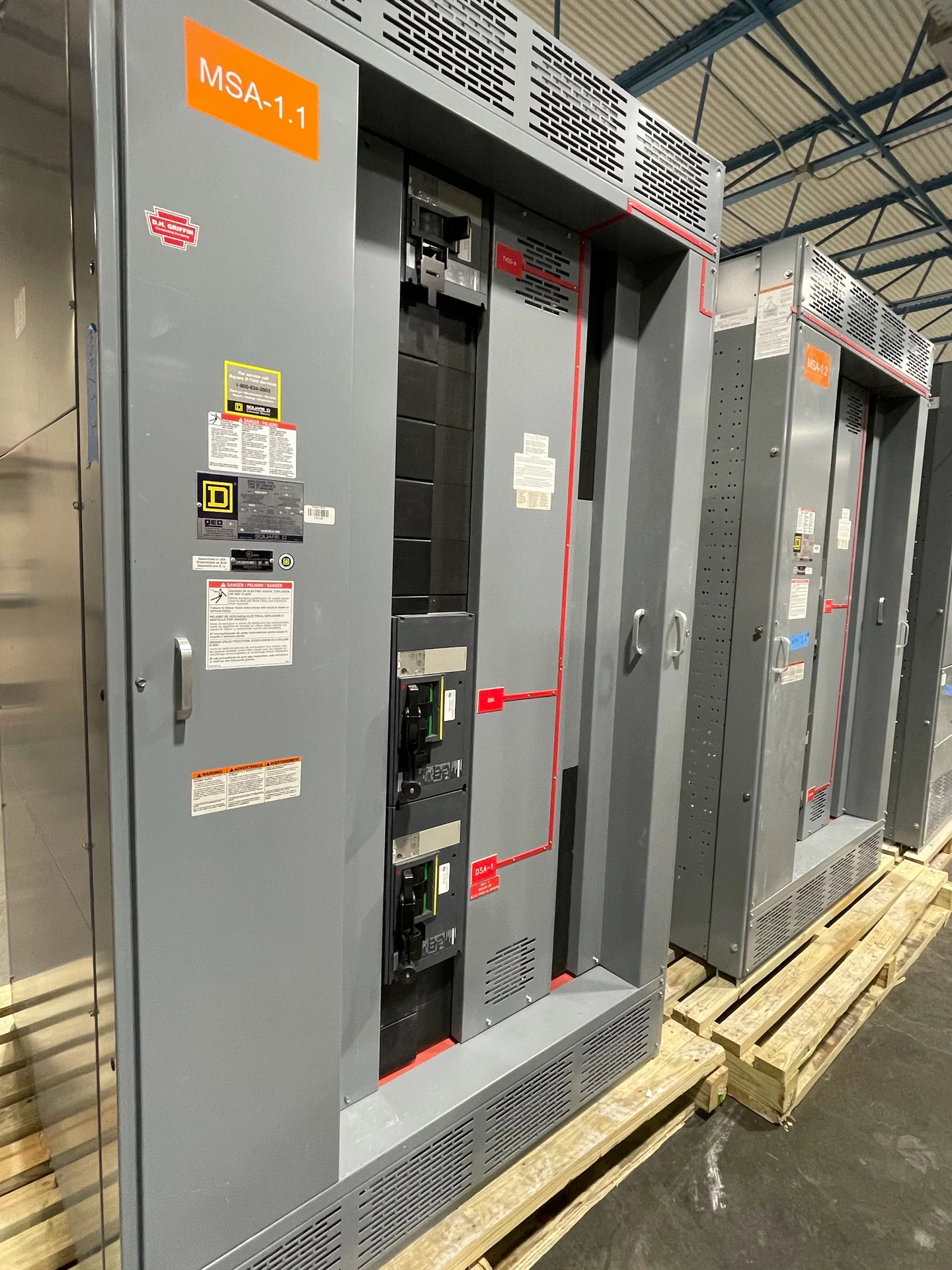
Start with the Seattle Project Interface
Service-entrance switchboards for a Seattle, Washington project should be defined from the electrical service interface inward, not selected from a generic equipment label. The design team should identify the serving utility requirements, nominal voltage, phase and wire arrangement, grounded conductor treatment, service disconnecting means, and the location of the service equipment. Commercial and industrial projects may also need to coordinate multiple services, emergency sources, tenant metering, or a distribution lineup that changes as the facility expands. Those inputs let a manufacturer understand what the new switchboard must connect, protect, and physically accommodate before preparing project-specific equipment information. For a Seattle service request, separate utility-owned metering components from customer-owned distribution equipment on the one-line and identify the handoff point.
Clarify Metering and Disconnecting Means
Utility metering can materially affect the front section, compartment arrangement, conductor access, and physical boundaries of a service-entrance switchboard. Before requesting a quote, gather the utility's current metering diagram or written requirements, meter socket or instrument-transformer provisions where applicable, sealing expectations, service disconnect arrangement, and preferred access direction. The engineer and electrical contractor should reconcile those requirements with the building's room layout and installation method. A manufacturer can then develop a new custom assembly around defined interfaces rather than making assumptions that could force drawing revisions or field changes. Note whether meters are grouped at the service section or arranged for separate tenants, and show who supplies CT cabinets, barriers, and field terminations.
Define Feeders, Fault Duty, and Protection
Feeder schedules should show each circuit's destination, calculated load, conductor arrangement, protective device type, continuous current requirement, and any planned spare capacity. Available fault current at the service entrance is equally important because it informs the interrupting or withstand duty of the applicable devices and the assembly design. Coordination studies may affect trip functions, settings, selective operation, and the relationship between the service main and downstream equipment. For a Seattle project, these values should come from the responsible electrical engineer and utility or study documents, then be reviewed against the actual proposed lineup before release for fabrication. Record available fault current at each service, not only the downstream panel, when multiple service sections or transformers affect the study boundary.
Plan the Physical Installation
A technically suitable service-entrance switchboard can still create installation problems if its footprint, shipping sections, cable entry, or access clearances are overlooked. Provide the available room dimensions, equipment orientation, wall and housekeeping-pad conditions, overhead restrictions, conduit approach, working space, maintenance access, and the path from unloading point to the electrical room. Seattle sites can involve constrained urban deliveries, renovations, or phased construction, so the project team should assign responsibility for rigging, receiving, temporary protection, and final placement. The manufacturer can use confirmed dimensions and handling information to coordinate a build that fits the documented site interfaces. Measure door swing, cable-bending space, and the route around existing tenants; a lineup that fits the room may still be impossible to land safely.
Coordinate a Custom Manufacturer Build
Switchgear Builders manufactures, builds, and supplies new electrical switchgear in the United States, custom to specification, using American components and nationwide shipping for customer projects. For service-entrance switchboards, a useful inquiry should include the one-line diagram, panel or feeder schedule, service voltage, available fault current, utility metering criteria, enclosure environment, dimensions, control or monitoring needs, and required submittal documents. The resulting review should distinguish confirmed project requirements from open design questions, giving the engineer, contractor, and manufacturer a clear basis for drawings, component selection, and approval. For a phased Seattle build, identify which sections must operate first and which feeders remain future provisions, so drawings distinguish active circuits from reserved space.
Review Documents Before Ordering
Before a Seattle-area project authorizes fabrication, compare the approved equipment drawings with the one-line diagram, feeder schedule, utility requirements, room plan, and installation responsibilities. Check device names, ratings, conductor entries, metering locations, access panels, bus arrangement, grounding provisions, shipping splits, lifting points, and the intended operating sequence. Confirm which project standards and construction requirements apply, including whether UL 891 is relevant to the specific switchboard and whether any project-specific listing or documentation must be confirmed. Clear review records reduce ambiguity without substituting manufacturer information for the engineer's design responsibility or the utility's approval.