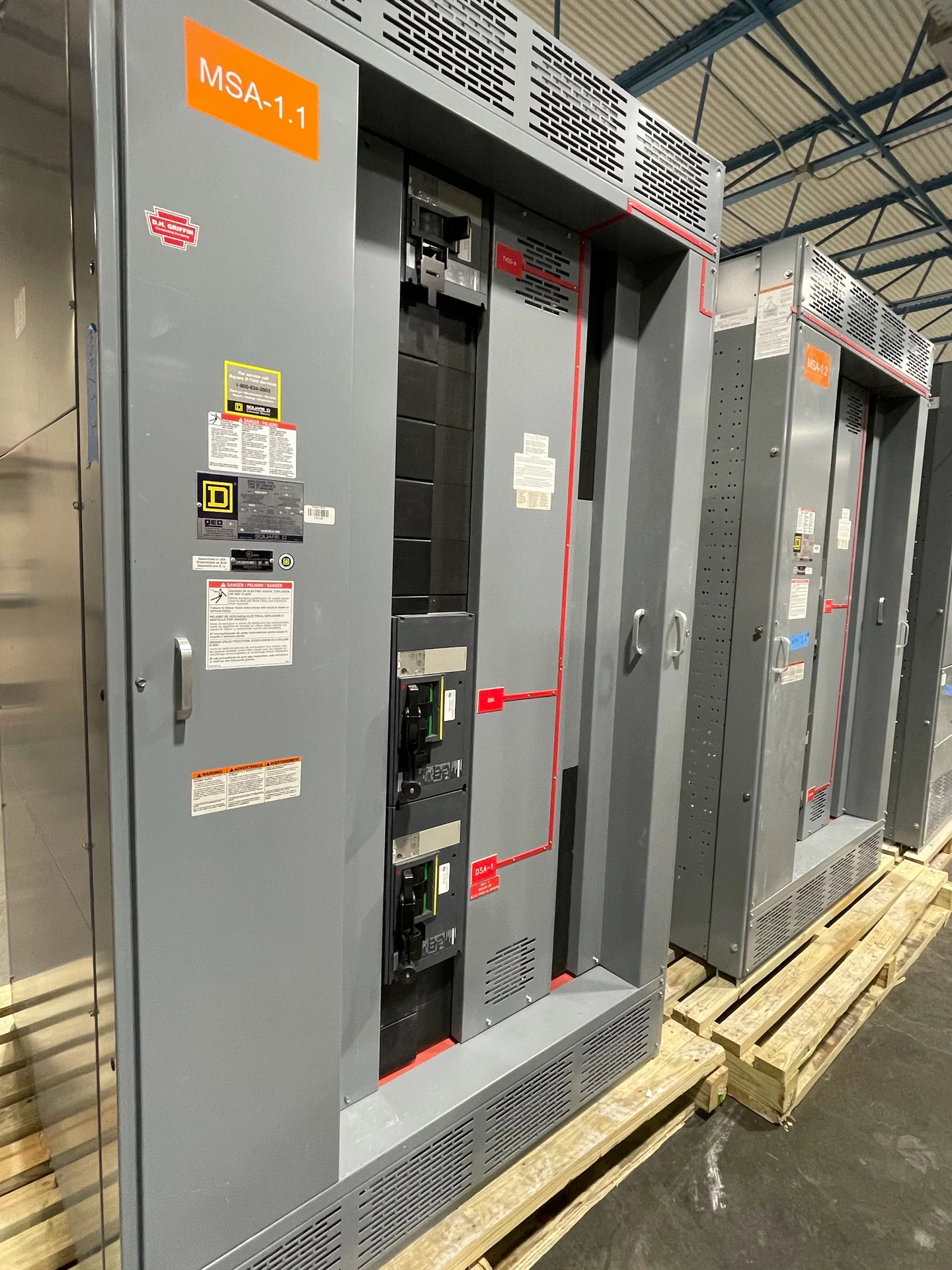
What Drawout Low-Voltage Switchgear Does
Drawout low-voltage switchgear places removable power circuit breakers or other project-specified switching devices in dedicated compartments within a coordinated lineup. A breaker can be connected, test-positioned, or disconnected according to the arrangement and operating procedure defined for the project. That separation can support organized maintenance access and clearer equipment status, but it does not replace qualified electrical work, isolation procedures, or an engineering review. A useful selection starts with the distribution role: incoming service, generator source, bus tie, feeder, or another defined circuit. The one-line diagram should show sources, loads, ties, grounding, metering, and the intended operating sequence before physical details are finalized.
Breaker Compartment and Racking Decisions
The removable-device arrangement affects compartment dimensions, bus connections, secondary control connections, shutters, guides, barriers, and the space required to operate or withdraw a breaker. Specify whether the design calls for a particular breaker family, frame size, trip unit, accessory set, or communication interface; compatibility cannot be inferred from voltage or ampere values alone. The project team should also define the desired positions and the indications associated with each position. A drawout low-voltage switchgear quote becomes more useful when it identifies cable entry, termination orientation, lineup access, lifting or handling provisions, and the room path from the equipment door to the maintenance area.
Interlocks and Operating Sequence
Interlocks are part of the operating logic, not merely hardware details. They may govern breaker insertion, withdrawal, closing, tie operation, door access, source selection, or movement between connected, test, and disconnected positions. Define the normal and alternate source states, permissive signals, key or mechanical interlock requirements, and any electrical interlock logic in a written sequence. A main-tie-main example might require a specific order for opening one source, confirming an open position, and closing a tie; the actual sequence must follow the engineer's protection and control design. Every proposed interlock should be reviewed against emergency operation, testing, maintenance, and documented responsibilities.
Ratings, Protection, and Coordination Inputs
Drawout construction does not determine the electrical ratings by itself. Provide nominal system voltage, phase and wire arrangement, frequency, continuous current for mains and feeders, available fault current, grounding method, and the required interrupting or withstand duties as applicable. Protective-device settings and time-current coordination should be developed from the system study rather than copied from a generic lineup. Consider load characteristics, transformer data, generator contributions, motor starting, selective coordination objectives, arc-flash study inputs, and future circuit allocation. The final equipment design should distinguish the ratings of the assembly, bus, breakers, and accessories, with each requirement confirmed for the specific project.
Maintenance Access and Installation Planning
A drawout lineup should be planned around the people and equipment that will operate, inspect, test, and service it. Confirm working clearances, door swing, breaker movement space, floor loading, anchorage, cable bending room, ventilation, illumination, and the route for bringing each removable device to a controlled work area. The electrical contractor and facility team should agree on lifting methods, storage locations, labeling, spare-space expectations, and outage boundaries before release for fabrication. These practical constraints can influence compartment placement and lineup length as much as the single-line diagram does. Site conditions, jurisdictional requirements, and the project safety program remain controlling considerations.
Buying a Custom Drawout Lineup
Customers can buy new drawout low-voltage switchgear directly from Switchgear Builders, an American manufacturer that builds custom electrical switchgear to specification, incorporates American components, and supplies equipment with nationwide shipping. A quote request should include the one-line diagram, equipment schedule, dimensions, cable and bus interfaces, protection requirements, control schematics, metering needs, interlock narrative, documentation list, destination, and desired commercial terms. We can then address the proposed configuration with the project team rather than treating a catalog phrase as a complete design. Confirm scope, component selections, drawings, inspection expectations, shipping sections, and any project-specific standard or listing requirement before ordering.