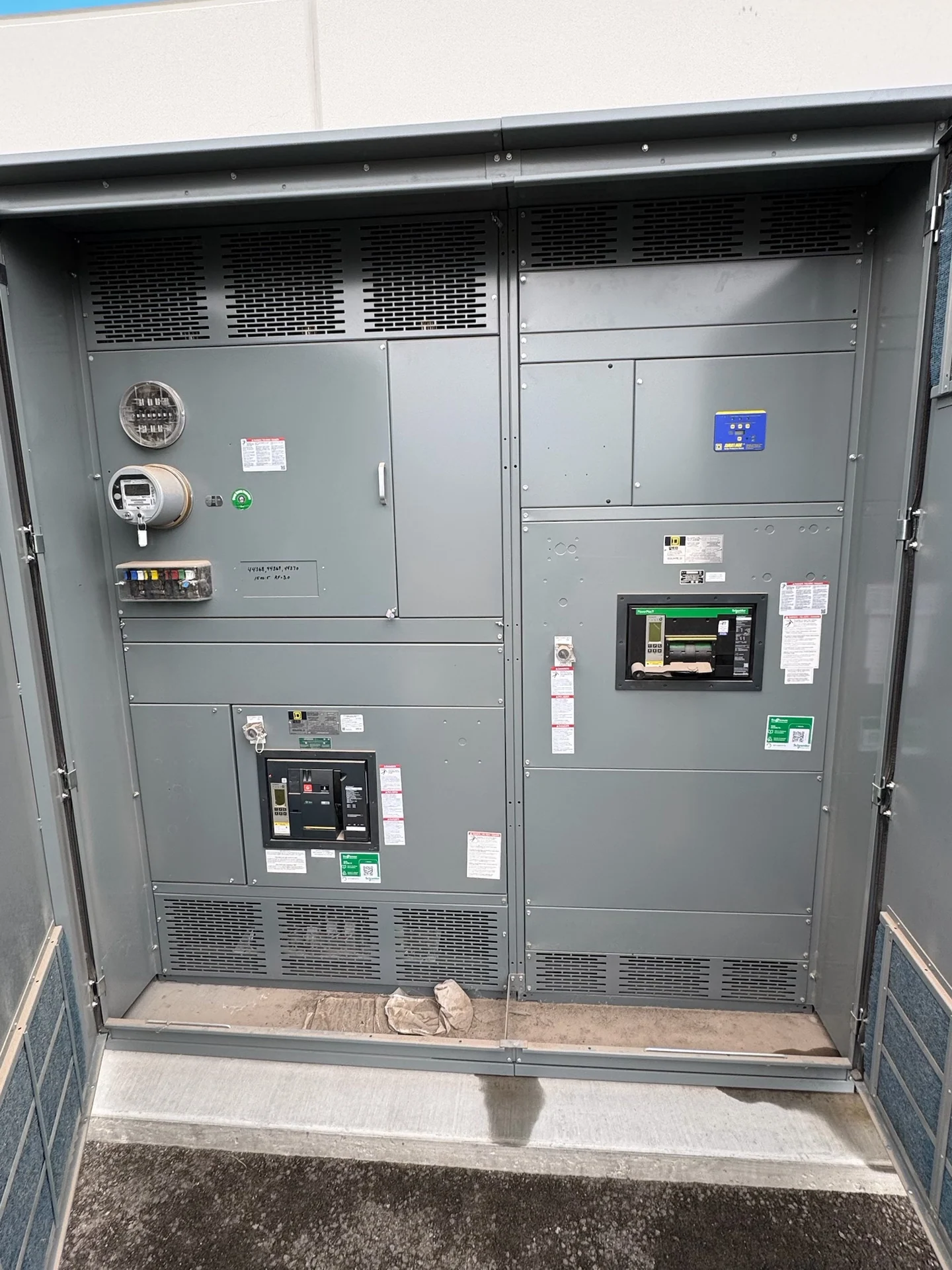
Drawout Breaker Definition
A drawout breaker is a circuit breaker designed to move into and out of a compatible switchgear or switchboard compartment without disconnecting every power and control connection by hand. The breaker mounts on a carriage or truck, and the compartment provides guides, primary disconnects, secondary control connections, shutters, interlocks, and position indicators suited to that design. In the connected position, the breaker engages the primary circuit connections so it can control a feeder or main circuit. Its defining feature is the engineered movement between operating positions, not simply the fact that the breaker can be removed with tools. A manufacturer designing new custom switchgear must match the breaker, compartment, bus arrangement, control circuit, and enclosure as one coordinated assembly.
The Positions That Explain How It Works
Drawout equipment commonly describes several positions, although the names and permitted movement depend on the specific design. In the connected position, primary contacts engage the equipment bus and load connections. A test position can keep primary power contacts separated while retaining selected secondary control connections, allowing control logic or trip and close functions to be checked under an approved procedure. In the disconnected position, primary and secondary power interfaces are separated as defined by the equipment. A withdrawn position places the breaker outside the compartment for inspection or service access. Indicators and mechanical interlocks should make the selected position understandable and prevent movement or operation that the design does not permit.
Why Compatibility Matters
A drawout breaker is not a universal replacement for any breaker with a similar frame size. Compatibility depends on the compartment geometry, primary disconnect spacing, bus location, secondary plug arrangement, racking mechanism, shutters, cell keying, interrupting and withstand duties, voltage class, continuous current, control voltage, and protective functions. The equipment drawings should identify which breaker types and positions belong together, while the project electrical study establishes the required system ratings and coordination inputs. Substituting a device without an engineering review can create mismatched interfaces or an assembly that cannot be operated as intended. For a new lineup, provide the one-line diagram, device schedule, control schematic, available fault current, dimensions, and installation conditions so the manufacturer can develop a project-specific arrangement.
Operational and Maintenance Planning
The drawout arrangement can support planned access by allowing a compatible breaker to be separated from primary connections and moved to an appropriate position, but it does not eliminate electrical hazards or procedural requirements. Qualified personnel should follow the approved switching, isolation, verification, grounding, and access practices for the installation. Project documents should explain normal operating sequences, racking controls, interlock behavior, position indication, control-power boundaries, and storage or handling provisions. Designers should also consider the clear floor area needed to operate the mechanism, the path for moving the breaker, lifting or handling limits, and coordination with doors, barriers, and adjacent sections. These details affect room layout and maintainability as much as the breaker’s electrical rating.
Drawout Versus Fixed-Mounted Equipment
A fixed-mounted breaker is secured in its compartment and normally requires a different disconnection and service approach, while a drawout breaker adds a carriage, guides, primary disconnects, shutters, and racking features. Drawout construction may be useful where a project values removable devices, repeatable positioning, or defined test access, but it also introduces mechanical interfaces, space requirements, and more configuration details to document. Fixed mounting may suit a simpler arrangement when service strategy, footprint, and project requirements favor permanent installation. The correct choice follows the one-line diagram, operating sequence, maintenance plan, available room space, and project-defined equipment requirements rather than a generic preference. A custom manufacturer can build new switchgear to the selected arrangement using American components and coordinate nationwide shipping requirements for the completed equipment package.
What to Specify for a New Lineup
When requesting new switchgear with drawout breakers, identify the source and feeder arrangement, nominal voltage, frequency, phase and grounding, continuous current, short-circuit duty, protective functions, control voltage, metering, communications, enclosure environment, dimensions, cable entry, access direction, and desired operating sequence. State whether test-position control power, remote operation, key interlocks, shutters, spare compartments, or compartment heaters are required, rather than assuming those details. Ask for arrangement drawings, elementary diagrams, device data, position definitions, and a project-specific inspection or test plan for review. If the project invokes UL 891, confirm its applicability and any listing or assembly requirements for that exact design; do not treat the term as a blanket claim. Switchgear Builders manufactures new custom electrical switchgear in the United States, with American components and nationwide shipping, subject to the defined project scope.