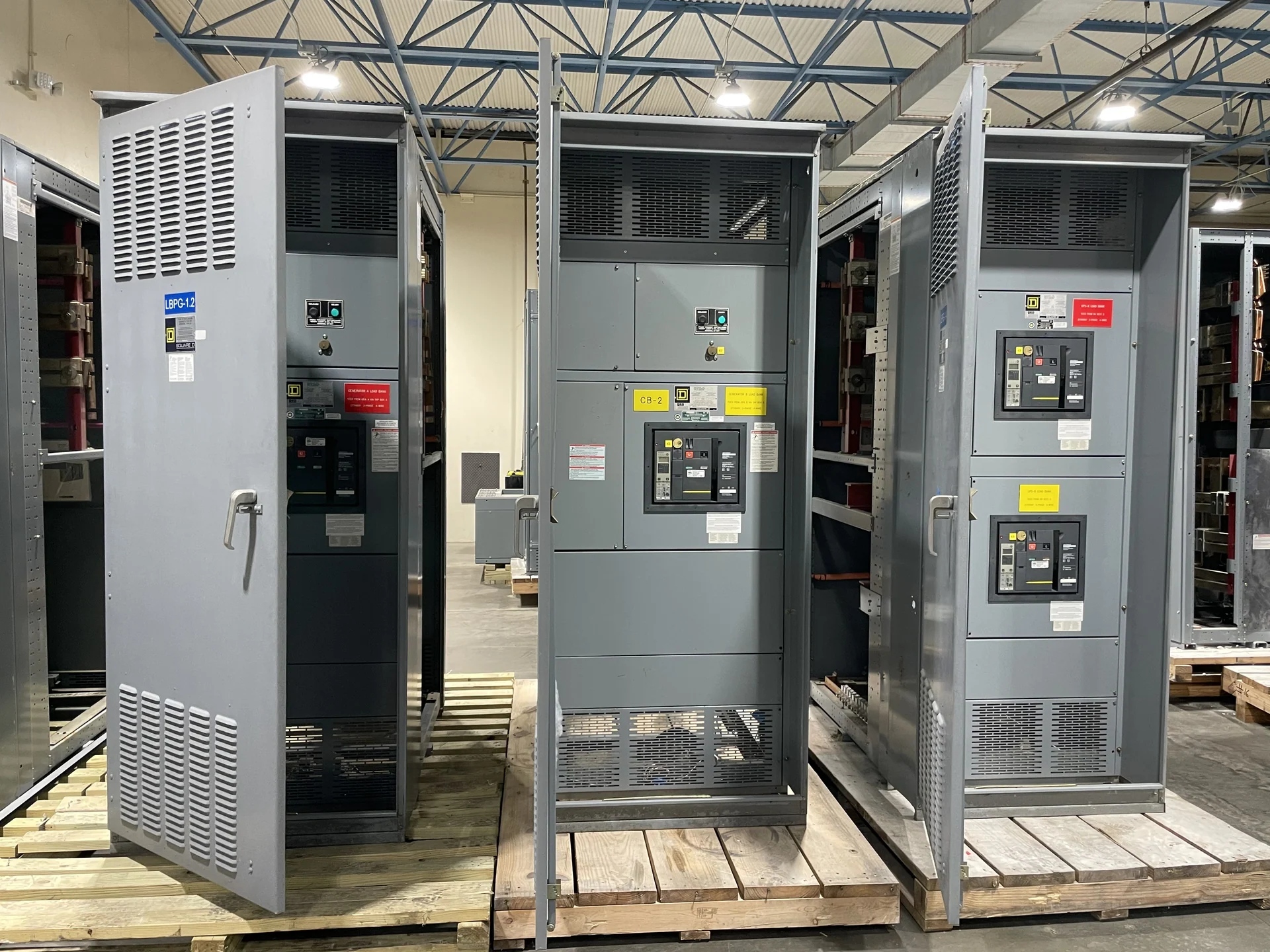
Start With the Electrical System
High-voltage switchgear is selected around the electrical system it must control, isolate, and protect, rather than around a label alone. Begin with nominal and maximum system voltage, frequency, phase arrangement, grounding method, source characteristics, feeder topology, and the role of the equipment in the distribution network. A utility interface, transformer primary, generation connection, and industrial feeder can create very different operating requirements. A one-line diagram, load information, fault study inputs, and site conditions give the manufacturer a practical basis for developing a new custom assembly. Switchgear Builders manufactures and supplies new electrical switchgear in the United States, custom to specification, with American components and nationwide shipping; the final configuration remains subject to project engineering review.
Match Voltage Class and Insulation
Voltage class is not interchangeable with the normal operating voltage printed on a project summary. The specification should identify the system voltage, highest voltage for equipment, grounding arrangement, insulation coordination approach, and any required impulse or power-frequency withstand values applicable to the design. Clearances, creepage paths, barriers, cable terminations, compartment dimensions, and environmental exposure can all influence insulation design. Altitude, humidity, contamination, outdoor weather, and indoor room conditions may alter the engineering questions that need answers. Ask for a documented review of the selected insulation levels and interfaces so the equipment design aligns with the actual installation, not a generic high-voltage switchgear selection.
Establish Interrupting and Withstand Duties
Available fault current determines more than the interrupting rating of an individual breaker or switch. The equipment specification should address short-circuit duty, momentary and close-and-latch requirements where applicable, bus and enclosure withstand, source contribution, transformer impedance, grounding faults, and the clearing behavior of connected protective devices. Changes in utility fault level, transformer size, generator operation, or parallel sources can change the study inputs. Provide the latest fault-current and coordination information, identify assumptions, and require unresolved values to be flagged before fabrication. Each protective device, bus section, and connection point should be checked against the project-defined duty by qualified electrical professionals.
Choose the Operating Arrangement
A useful high-voltage switchgear design describes how people and power systems are expected to operate it. Define incoming sources, outgoing feeders, bus sections, tie points, grounding switches if applicable, interlocks, key exchange logic, remote controls, metering, relaying, and required indication. Consider whether maintenance isolation, sectionalizing, transfer, or synchronized operation is part of the intended sequence, and distinguish normal switching from fault interruption. Physical access, cable entry, termination space, lifting provisions, equipment footprint, and working clearances should be coordinated with the electrical room or yard. Clear operating narratives and marked-up drawings reduce ambiguity between the owner, engineer, installer, and manufacturer.
Confirm Applicable Standards and Documentation
Applicable standards depend on equipment type, voltage class, installation, authority requirements, and the project specification. Identify the governing standards and edition during design review instead of assuming one standard applies to every high-voltage assembly. If UL 891 is mentioned, confirm with the project team whether it applies to the particular construction and whether any project-specific listing or verification is required; UL 891 applicability must be established for the individual project. Request drawings, device data, wiring diagrams, nameplate information, bills of material, testing procedures, and record documentation that match the approved design.
Prepare a Complete Manufacturer Inquiry
A strong inquiry for high-voltage switchgear selection includes the one-line diagram, equipment schedule, system study data, source and feeder details, environmental conditions, enclosure location, cable and termination requirements, control voltage, communications needs, dimensions, shipping destination, and requested documentation. State what is mandatory, what is preferred, and what remains open for engineering coordination. Ask the manufacturer to identify assumptions, exclusions, required owner decisions, and project-specific testing or witness points rather than filling gaps with generic options. Switchgear Builders can review a new custom equipment request for a United States project, build to the defined scope with American components, and coordinate nationwide shipping details after the equipment requirements and delivery terms are established.