Start with the Lighting Distribution Plan
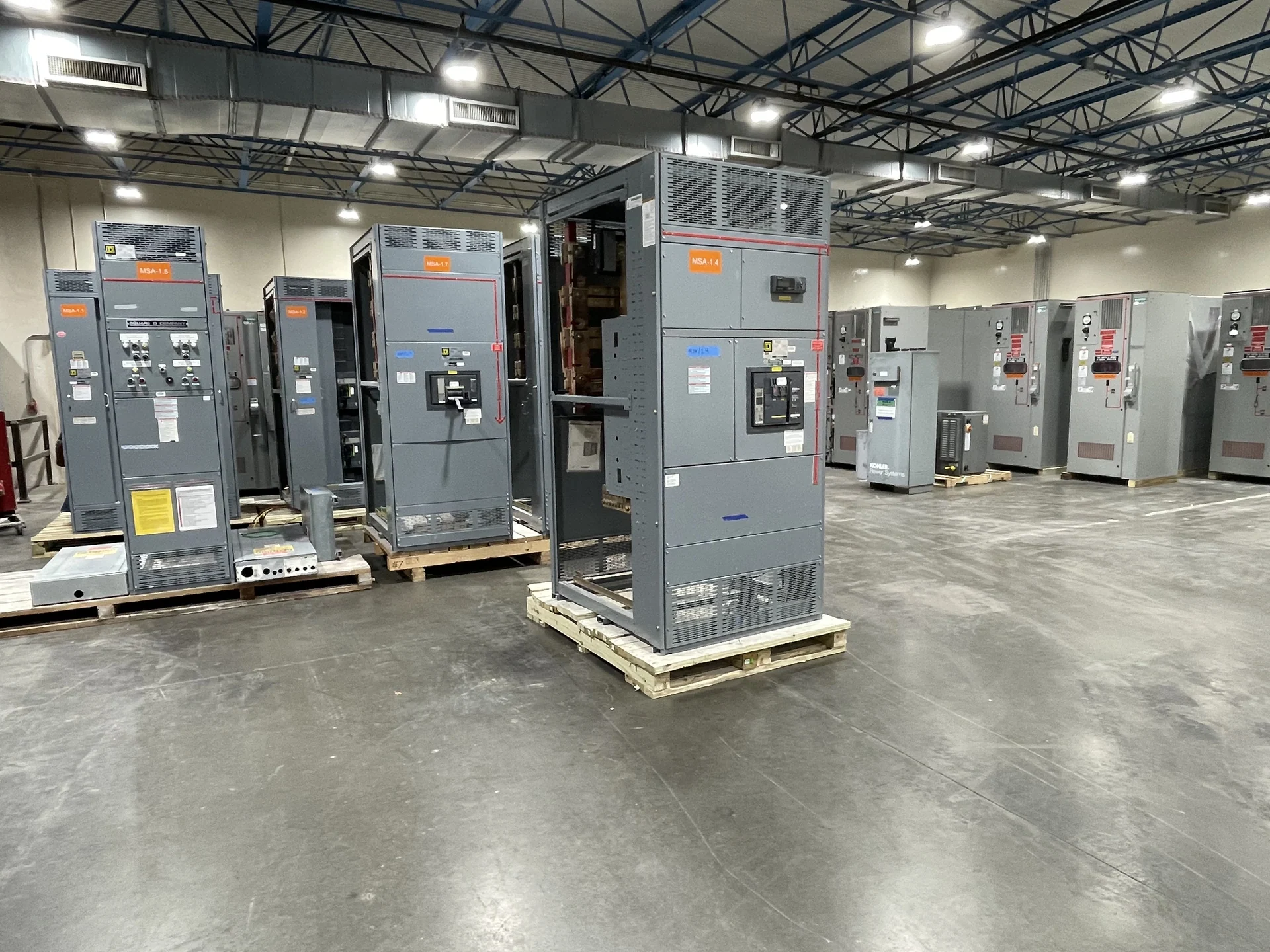
Lighting panelboards organize branch circuits and, where applicable, smaller feeders serving luminaires, controls, receptacles, and related building loads. A useful design begins with the one-line diagram, connected-load schedule, system voltage, phase and wire arrangement, grounding method, available fault current, and the physical location of each panel. Circuit count matters, but so do load diversity, operating hours, emergency or standby interfaces, and the way feeders will enter and leave the enclosure. Switchgear Builders manufactures new electrical distribution equipment in the United States, builds custom to specification, uses American components, and supplies equipment for nationwide shipping. A project review should confirm whether a lighting panelboard or another assembly is the appropriate equipment category.
Match Voltage and Circuit Arrangement
Voltage selection is not a label to infer from the building name; it must follow the electrical design and the connected loads. Confirm nominal voltage, frequency, phase, number of wires, system grounding, and whether line-to-neutral, line-to-line, or both load connections are required. Lighting circuits may include different voltage requirements within one facility, while controls can introduce separate power or signaling interfaces. The panel schedule should identify each circuit, its intended load, conductor arrangement, and protective-device requirements. When a new custom panelboard is requested, provide the governing drawings and schedules so the manufacturer can coordinate bus, enclosure, terminals, spaces, and device layout with the project engineer.
Choose Breakers and Feeder Protection Carefully
Breaker selection should reflect calculated load, conductor ampacity, available fault current, interrupting rating, pole arrangement, and the protection scheme shown in the approved design. Lighting systems can include inrush from drivers, controls, or other electronic equipment, so the engineer should evaluate operating characteristics rather than selecting devices from circuit descriptions alone. Consider whether main protection, feeder protection, shunt or auxiliary functions, metering, or coordination requirements affect the lineup. Protective-device settings and time-current relationships should be reviewed across upstream and downstream equipment. The final configuration remains project-specific; a quote should identify assumptions and exclusions instead of treating a generic lighting panelboard schedule as complete engineering information.
Reserve Space for Expansion and Maintenance
Available spaces can make a panelboard more adaptable, but spare capacity should be planned rather than added as an arbitrary percentage. Identify likely future circuits, physical breaker types, bus capacity, wire-bending needs, cable entry direction, and room for labeling and maintenance access. The enclosure also has to fit the wall, electrical room, or equipment lineup while preserving working clearances required by the project and applicable authorities. Door swing, trim, gutter, ventilation, environmental exposure, and routing for control wiring may influence the layout. A practical specification states which spaces are intentionally blank, which devices are installed, and what future additions the arrangement is expected to accommodate.
Coordinate Documents, Delivery, and Installation
Before ordering new lighting panelboards, align the equipment schedule with architectural dimensions, feeder routes, conduit plans, labels, grounding details, and the installer’s receiving and setting plan. Ask for submittal drawings that show the enclosure, circuit layout, device identification, connection points, and project-defined documentation. Confirm shipping destination, packaging expectations, access limitations, and whether the assembly will ship as one section or in coordinated sections; nationwide shipping can be arranged around the project’s stated requirements, without assuming a transit date. Switchgear Builders can review a customer’s scope for a custom manufacturer quote, while the project’s qualified electrical professionals remain responsible for final application decisions, installation, and field verification.