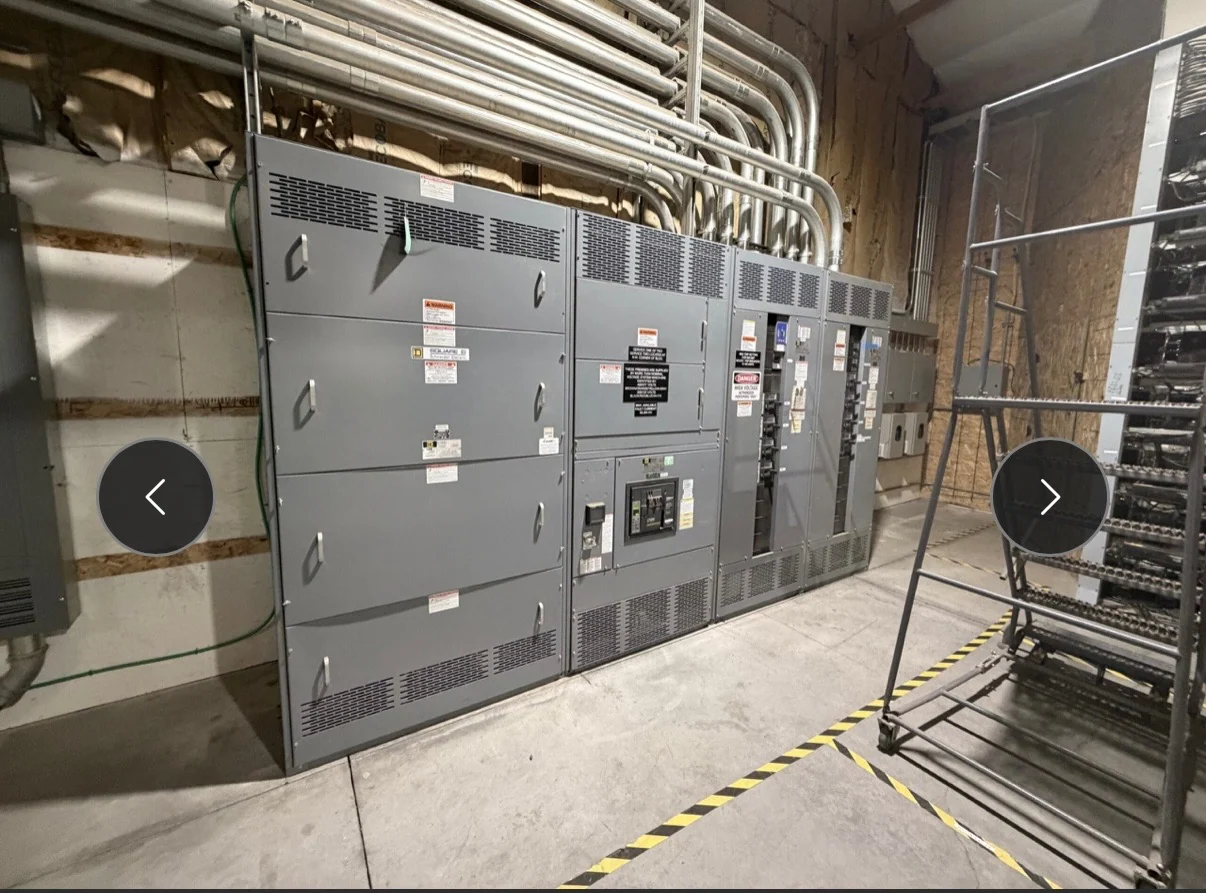
Start With the Distribution Role
Switchgear and panelboards can both distribute electrical power, but they occupy different points in a typical system. Switchgear is generally evaluated for a primary distribution lineup, where incoming sources, main devices, feeder protection, metering, ties, and operating clearances must work together as an engineered assembly. A panelboard is commonly applied farther downstream for branch circuits or smaller feeders. The correct choice depends on the one-line diagram, available fault current, system voltage, continuous load, physical environment, and the tasks operators must perform. The comparison should also account for whether a fault study, selective coordination review, or source-transfer sequence changes the physical and control requirements.
Why Main Distribution Often Calls for Switchgear
At a main distribution point, equipment must coordinate multiple sources and outgoing circuits rather than simply provide a collection of branch breakers. A custom switchgear lineup can be arranged around mains, bus sections, feeder compartments, transfer functions, protective devices, controls, and monitoring provisions defined by the project. That arrangement may support clearer isolation and maintenance planning, but every feature adds design questions about interlocking, cable entry, heat, working space, fault duty, and documentation. An electrical engineer should establish the operating sequence and protection requirements before a manufacturer finalizes the build. Project teams should distinguish the equipment name from the complete function: a panelboard does not become switchgear merely because it feeds a large load, and a switchgear lineup should not be specified without defined duties.
Where Panelboards Fit Downstream
Panelboards are often practical when a distribution point serves branch circuits or a limited group of feeders in a building area. Selection still requires more than counting breaker spaces: the specification should identify voltage, phase and wire arrangement, bus and main ratings, available fault current, enclosure conditions, circuit capacity, neutral and grounding provisions, and any metering needs. A panelboard may be unsuitable for a high-duty main distribution role if its construction, device arrangement, service access, or interrupting capability does not match the system. For renovation work, verify existing conduit, conductor terminations, room access, shutdown constraints, and field-measured dimensions rather than relying on a generic replacement assumption.
Compare the Engineering Inputs
A useful switchgear versus panelboard comparison begins with consistent project inputs. Provide the latest single-line diagram, load schedule, utility or source information, transformer data, fault-current study, protection and coordination requirements, room dimensions, cable routing, environmental conditions, and installation constraints. Then identify which circuits require switching, protection, metering, communications, or a defined operating sequence. These details help separate a true equipment choice from a premature product preference and allow a manufacturer to develop new equipment custom to specification with American components and nationwide shipping coordination. Clear division of responsibilities among the engineer, manufacturer, electrical contractor, utility, and qualified commissioning personnel makes the final scope easier to review and install.
Physical Access and Lifecycle Planning
The physical and operational setting can change the preferred arrangement. Main distribution equipment may require a lineup footprint, section-by-section access, lifting and delivery planning, and working clearances that affect the electrical room from the beginning. Downstream panelboards may fit closer to loads, yet access, circuit identification, spare capacity, and future renovations still matter. Review equipment movement paths, door swings, cable bend space, ventilation, ambient exposure, anchorage, and the responsibilities of the installer before drawings are approved. These checks reduce conflicts between the selected equipment and the building or plant interfaces.
Build a Project-Specific Specification
There is no universal rule that makes switchgear or panelboards correct for every installation. Define the equipment boundary, ratings, protective devices, enclosure requirements, controls, drawings, inspection points, electrical tests, and receiving documentation in the procurement package. If a switchboard-like arrangement or UL 891 requirement is being considered, confirm its applicability, construction requirements, and any project-specific listing or verification before commitment; do not assume the standard applies to every assembly. Switchgear Builders manufactures new electrical switchgear in the United States, custom to the approved scope, and can review the comparison through a quote inquiry grounded in the project documents.