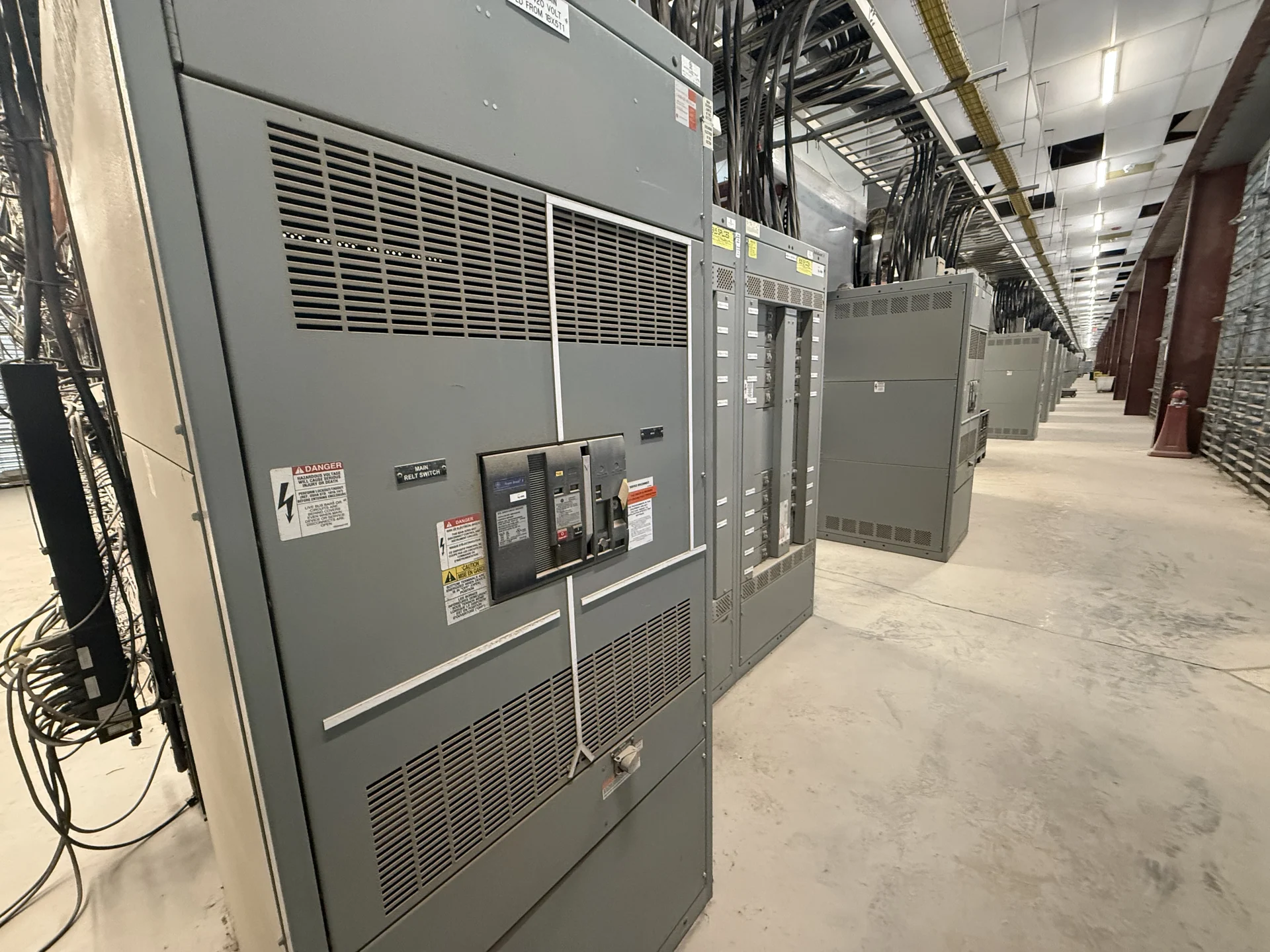
What Power Panelboards Do
Power panelboards distribute electricity from an upstream service or feeder to multiple branch circuits and larger connected loads. A practical selection begins by distinguishing the panelboard's role from a switchboard or switchgear lineup: the panelboard is typically organized around a cabinet, bus, main disconnect or main lugs, and branch protective devices. The design should identify nominal voltage, phase and wire arrangement, continuous current, available fault current, and the loads to be served. Switchgear Builders manufactures, builds, and supplies new electrical distribution equipment in the United States, custom to project requirements, with American components and nationwide shipping. Final suitability remains project-specific and subject to engineering review.
Start With the Electrical Schedule
An accurate circuit schedule gives the manufacturer a usable starting point for power panelboards selection. Provide each feeder or branch circuit's voltage, poles, ampere rating, load description, conductor information when known, and protective-device requirements. Identify continuous loads, motor or transformer inrush, sensitive equipment, spare spaces, and any planned future circuits instead of relying on a generic breaker count. The one-line diagram, panel schedules, coordination study inputs, and utility or engineer requirements should agree. When information is incomplete, clearly mark assumptions so revisions do not quietly change the enclosure, bus, main device, or branch-device arrangement.
Bus, Main Device, and Branch Protection
The bus and protective-device arrangement must match both calculated load and fault duty. Review the panelboard bus rating, main disconnect or main-lug arrangement, branch breaker frame and trip requirements, interrupting ratings, and any series-rating or coordination constraints permitted by the project engineer. A larger main does not automatically solve voltage drop, feeder capacity, or available-fault-current concerns. For motor, heating, or electronic loads, the schedule should identify operating characteristics that affect protection and conductor sizing. The manufacturer can build a custom arrangement around approved device information, but the responsible design professional must establish settings, coordination, grounding, and code-related requirements for the installation.
Enclosure and Installation Conditions
Enclosure selection connects the panelboard design to its physical environment. Confirm whether the equipment will be installed indoors or outdoors, the exposure to moisture, dust, corrosion, or washdown, the mounting orientation, cable-entry direction, available wall space, and required working clearances. Dimensions should account for bending space, gutter access, conduit routes, door swing, labeling, and maintenance access rather than only the number of circuits. The project specification should state the required enclosure type or ingress expectations and any seismic, utility, or architectural constraints. A site plan and room elevation can reveal conflicts before fabrication, shipment, and installation.
Documentation, Review, and Assembly Checks
A well-defined equipment package makes review more useful than a catalog-only comparison. Request a proposed one-line, enclosure layout, circuit schedule, device data, terminal or lug information, nameplate details, and connection points appropriate to the project. During assembly, checks can address identification, conductor routing, bus joints, hardware, clearances, device orientation, door operation, grounding provisions, and workmanship against approved drawings. Electrical or functional testing should follow an agreed project test plan, with acceptance criteria and records defined in advance. Any standard or listing requirement, including possible UL 891 relevance, must be confirmed for the particular construction and application rather than assumed from the product name.
Buying New Power Panelboards Directly
When a customer buys new power panelboards directly from the manufacturer, the quote request should include project location, required ship-to access, drawings, ratings, circuit count, device preferences, enclosure conditions, documentation, and desired commercial terms. Ask the manufacturer to identify included components, exclusions, assumptions, review milestones, packaging approach, and shipping responsibilities in writing. Switchgear Builders supports custom-to-spec manufacturing and nationwide shipping; actual configuration, project timing, freight details, and any applicable requirements must be confirmed for the individual order. Comparing quotes is meaningful only when the electrical scope, device basis, enclosure expectations, testing, and documentation are aligned.