Start With the Distribution System
Low-voltage power circuit breaker switchgear should be selected from the electrical system outward, not from a catalog label alone. Begin with the one-line diagram, nominal voltage, phase and wire arrangement, grounding method, available fault current, calculated continuous load, and the intended source and feeder topology. A new lineup can be custom built around these inputs, with the manufacturer coordinating enclosure dimensions, bus arrangement, breaker positions, metering, controls, and cable entry. Confirm whether the assembly serves service, distribution, emergency, or generator-related duties before equipment details are finalized.
Match Breaker Ratings to Actual Duty
Power circuit breaker selection involves more than choosing an ampere frame. Review the continuous current rating of the main, tie, and feeder devices; the interrupting rating required at each location; short-time withstand expectations; trip-unit functions; and the relationship between device ratings and the assembly bus. Available fault current must come from the project study or utility and system calculations. The selected breaker also needs suitable voltage, frequency, phase, and connection details. An electrical engineer should confirm that the proposed ratings and settings are appropriate for the system rather than relying on a generic low-voltage switchgear specification.
Coordinate Protection and Operating Logic
Protection settings determine how the lineup responds to overloads and faults, so the equipment package should preserve the intent of the coordination study. Gather time-current curves, upstream and downstream device data, ground-fault requirements where applicable, and any desired maintenance or instantaneous functions. For a main-tie-main arrangement, define source priorities, permissible tie operation, electrical or mechanical interlocking, and the operating sequence in plain language. The manufacturer can use approved settings and control requirements to configure the new assembly, while the responsible engineer verifies selectivity, arc-flash study inputs, and field commissioning procedures.
Plan Drawout Access and Maintenance
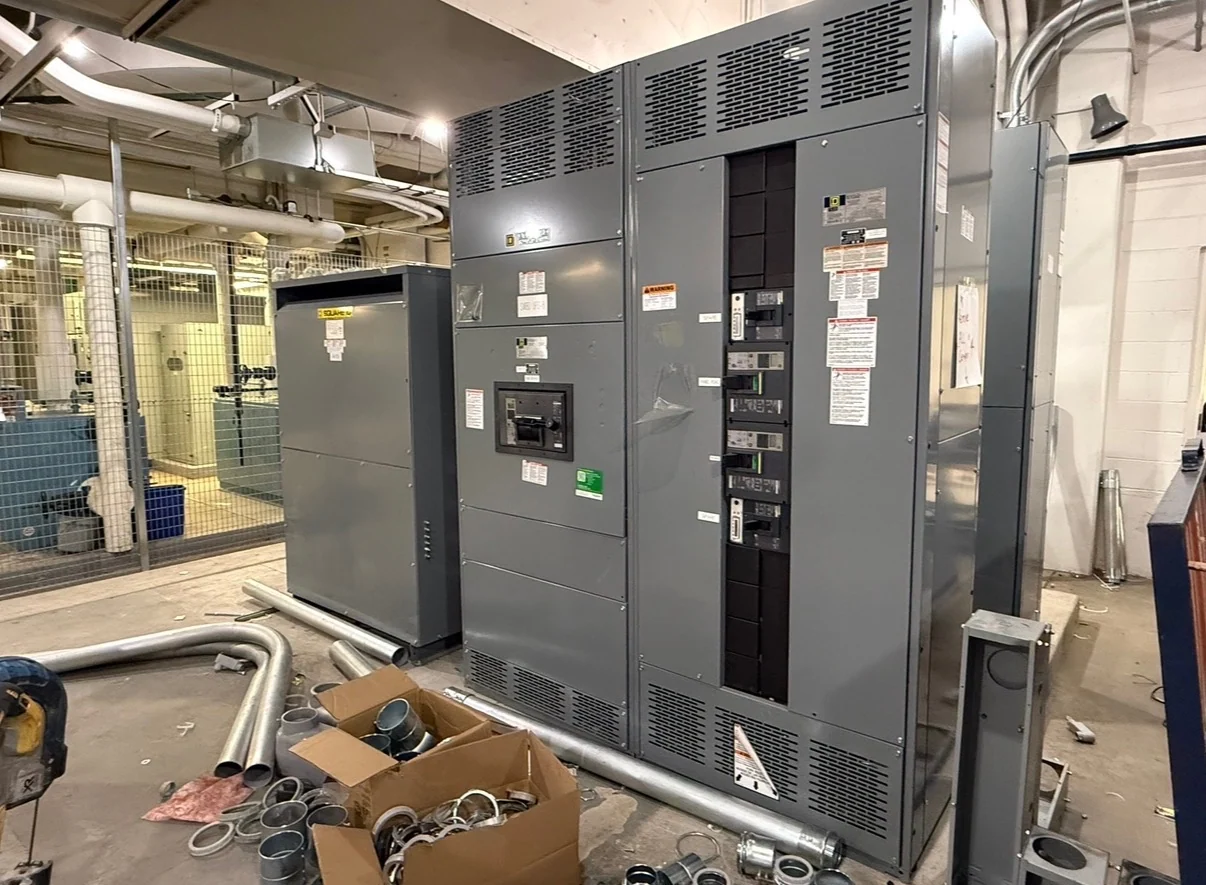
A drawout power circuit breaker arrangement can support inspection and servicing without treating every lineup as interchangeable. The project team should identify the required position functions, racking or shutter arrangements, key interlocks, secondary disconnects, lifting or handling provisions, and the clearance needed in front of the equipment. Consider how technicians will isolate sources, verify absence of voltage, access terminals, and restore the lineup under the facility's safety procedures. Layout drawings should show breaker compartments, cable spaces, barriers, and working space so the new equipment fits the room and the planned maintenance method.
Define Enclosure, Bus, and Interfaces
Physical construction affects installation as directly as the breaker data. Specify indoor or outdoor application, environmental exposure, enclosure requirements, finish expectations, bottom or top cable entry, conduit locations, shipping splits, lifting points, and anchorage interfaces. Bus conductor material, joint access, supports, neutral arrangements, and grounding connections should follow the approved design and the assembly's required duty. Existing room dimensions, door paths, slab conditions, and adjacent equipment must be checked before fabrication. When UL 891 may apply to a switchboard-type project, confirm applicability and any project-specific listing or verification requirements rather than assuming they apply to every switchgear lineup.
Prepare a Complete Manufacturer Quote Package
A useful request for low-voltage power circuit breaker switchgear includes the one-line diagram, equipment schedule, load and fault information, breaker frame and trip requirements, control schematics, metering points, dimensions, cable entry, environmental conditions, delivery destination, and documentation expectations. State whether drawings, inspection points, electrical checks, functional tests, or witness activities are required so the scope can be reviewed before ordering. Switchgear Builders manufactures new custom electrical switchgear in the United States, uses American components, and supplies nationwide; project-specific design details, component availability, shipping arrangements, and any standards requirements must still be confirmed for the individual order.