Circuit Breaker Definition
A circuit breaker is a resettable electrical switching device designed to carry current under normal conditions and open a circuit when commanded or when its protective mechanism detects an abnormal condition within its ratings. In a distribution assembly, it provides a controlled connection between a source, bus, or feeder and a load. Unlike a simple disconnect, a breaker is selected for both switching duties and interruption of fault current, subject to its voltage, continuous-current, interrupting, and installation requirements. A manufacturer builds the surrounding switchgear around those defined interfaces rather than treating the breaker as an isolated part.
What a Breaker Does During Normal Operation
During normal operation, the circuit breaker contacts remain closed so power can flow to the connected feeder or load. An operator, control circuit, or automation system may open or close the device according to the equipment's approved operating sequence. The breaker also provides a means of isolating a circuit when the project design requires it, but isolation procedures, visible indication, interlocks, and safety practices must be established by qualified personnel. The appropriate operating mechanism, control voltage, auxiliary contacts, and drawout or fixed arrangement depend on the equipment design and project specifications.
How Interruption Protects a Distribution Circuit
When current exceeds a protective setting or a fault creates an abnormal electrical condition, the breaker can trip and separate its contacts. Its interrupting system controls the arc that forms as current is interrupted, allowing the circuit to open without relying on a manually operated handle alone. The breaker must be capable of interrupting the available fault current at the specified system voltage and frequency; a continuous-current rating by itself is not enough. Engineers coordinate trip characteristics with upstream and downstream devices so the intended portion of the system opens first when practical.
Ratings That Belong in a Circuit Breaker Specification
A useful circuit breaker definition includes more than the word protection. Specify nominal system voltage, phase and frequency, continuous current, interrupting rating, short-time withstand needs where applicable, trip-unit functions, control power, terminal arrangement, enclosure environment, and the available fault current study inputs. The design may also require ground-fault functions, metering, communications, shunt trip, undervoltage release, or auxiliary contacts. These choices should be checked against the one-line diagram, load calculations, coordination study, installation clearances, and local requirements before a new switchgear lineup is released for fabrication.
Breaker Arrangements Inside Switchgear
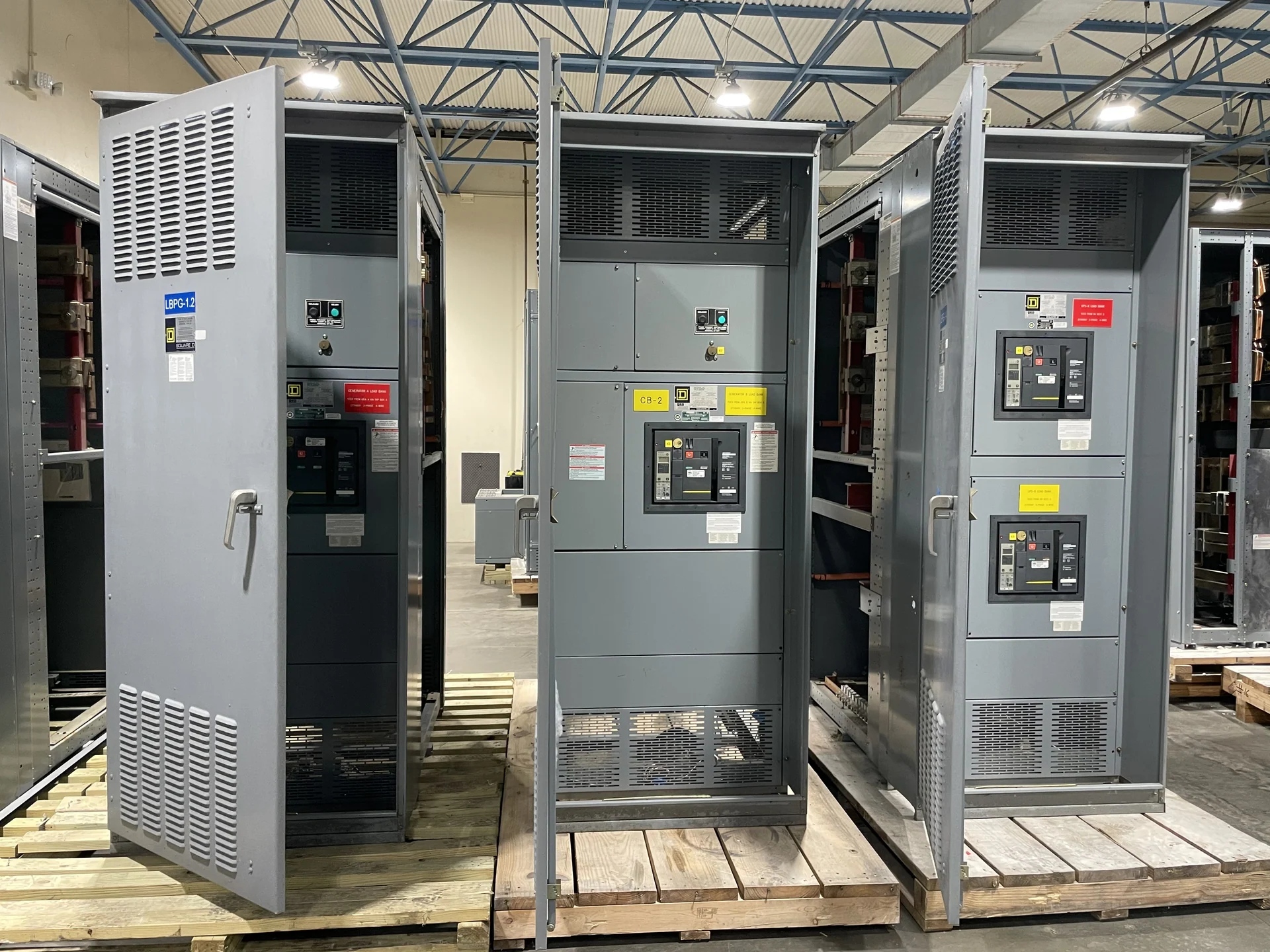
Circuit breakers may be installed as fixed-mounted devices or in drawout compartments, depending on the intended maintenance approach, space, connections, and operating sequence. A drawout arrangement can provide defined connected, test, and disconnected positions when the selected assembly and interlocks support those functions; it also requires attention to secondary wiring, shutters, racking access, and compartment dimensions. A fixed arrangement may simplify the physical layout while requiring a different plan for isolation and replacement. The surrounding bus, cable terminations, barriers, doors, and control wiring must be compatible with the chosen breaker.
Building New Switchgear Around the Breaker
For a custom new switchgear project, start with the single-line diagram and identify every source, main, tie, feeder, transformer connection, and critical load. Then provide breaker frame and trip information, conductor entry, available fault current, physical constraints, control logic, metering needs, and documentation expectations. Switchgear Builders manufactures custom electrical switchgear in the United States, using American components and supplying equipment with nationwide shipping. The exact breaker selection, assembly construction, testing scope, and any standard such as UL 891 must be confirmed for the specific project rather than assumed from a general glossary term.
Questions to Resolve Before Ordering
Before requesting a manufacturer quote, confirm whether the device is intended for a service entrance, feeder, generator interface, motor load, transformer connection, or another application. Gather the latest one-line diagram, load schedule, protection study, utility requirements when relevant, room dimensions, cable sizes, termination orientation, environmental conditions, and required submittal documents. Ask how the proposed breaker arrangement affects access, interlocking, control power, testing, and field installation. A complete information package helps the builder distinguish an electrical requirement from a preference and identify items that still need engineering review.