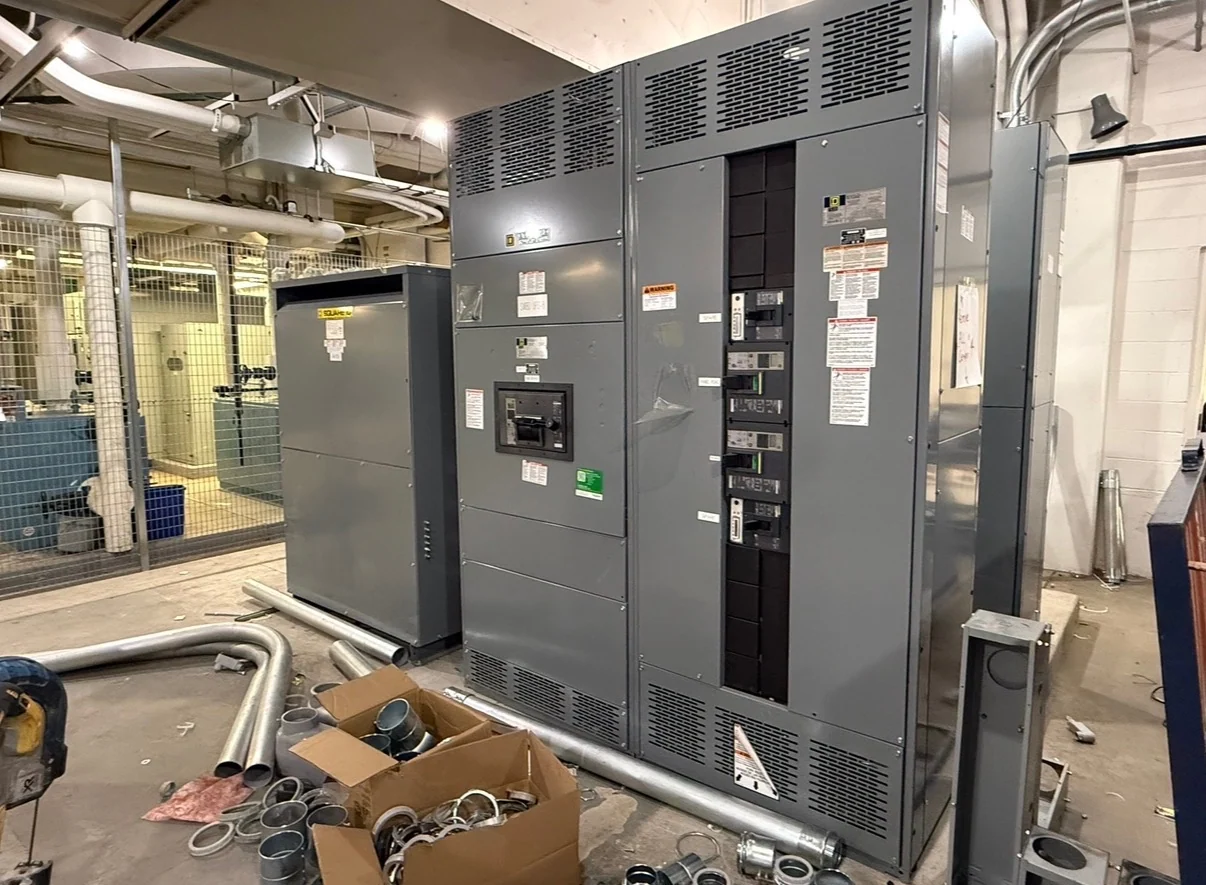
What Load-Interrupter Metal-Enclosed Switchgear Does
Load-interrupter metal-enclosed switchgear combines an enclosed medium-voltage switching assembly with a device intended to open and close specified energized load currents. The switch provides operational control for a feeder or transformer connection, while fuses or other project-defined protective devices address fault protection. That distinction matters: a switching device is not automatically a substitute for every protective function. A useful design begins by identifying the circuit's normal load, prospective fault duty, voltage class, grounding arrangement, and required operating sequence. Switchgear Builders manufactures new electrical switchgear in the United States, builds custom equipment to specification with American components, and supplies projects nationwide; the final arrangement remains dependent on the approved electrical design.
Switching and Protection Must Be Coordinated
Selection should connect the load-interrupter's switching capability to the protective scheme rather than treating the switch and fuse as unrelated line items. Engineers review continuous current, load characteristics, transformer inrush where applicable, available fault current, interrupting capability, coordination objectives, and the consequences of an upstream or downstream operation. Fuse type, rating, and time-current behavior can affect transformer protection and feeder selectivity, while switch operation influences how an operator isolates or energizes a circuit. A coordination study and the governing project requirements should establish settings, device relationships, and any interlocks before fabrication.
Enclosure and Compartment Decisions
The metal-enclosed construction has practical effects on access, cable termination, internal separation, ventilation, and the physical route from the lineup to the installation point. A specification should identify indoor or outdoor exposure, enclosure requirements, ambient conditions, corrosion concerns, cable entry direction, phase spacing, grounding provisions, and working clearances. The layout also needs room for operating handles, viewing or indication requirements, maintenance access, and safe connection of incoming and outgoing conductors. These details are not cosmetic: a compact lineup that cannot align with the room, foundation, cable bend radius, or lifting path can create field rework even when its electrical one-line is correct.
Operating Sequence and Interlocks
A load-interrupter arrangement should be described through its intended operating sequence. Project stakeholders can document which source is normal, when a feeder may be opened, whether a tie or alternate source exists, and which conditions must prevent an unsafe or unintended operation. Mechanical or electrical interlocks may be needed to preserve that sequence, but their form depends on the equipment design and control philosophy. The manufacturer needs the one-line diagram, control schematic, device schedule, key exchange requirements, and preferred indication points to translate the sequence into a buildable assembly. Review by the responsible engineer and installation team should occur before release for fabrication.
When UL 891 or Other Requirements Apply
Project documents may reference standards, utility rules, owner specifications, or particular construction practices, but applicability must be determined for the actual equipment and application. UL 891 is commonly associated with certain switchboard assemblies, so it should not be assumed to govern every metal-enclosed switchgear arrangement or every load-interrupter design. If UL 891 is named, ask the project engineer and manufacturer to confirm its scope, the applicable construction requirements, and whether any project-specific listing or verification is required. The same discipline applies to enclosure, seismic, arc-flash, metering, grounding, and installation requirements: identify them in the specification and confirm them for the exact configuration.
Prepare a Useful Manufacturer Quote Request
A precise request for a load-interrupter metal-enclosed switchgear quote should include the single-line diagram, nominal and maximum system voltage, frequency, phase and grounding information, continuous current, available fault current, feeder and transformer data, protective-device preferences, enclosure environment, dimensions or space limits, cable details, control voltage, metering needs, interlocks, documentation expectations, destination, and required shipping split. Include site access and receiving constraints when the lineup is large or sectionalized. Switchgear Builders can use those inputs to develop new custom equipment to specification, clarify open design questions, and coordinate nationwide shipping; any commercial scope, schedule, and project-specific technical capability must be confirmed in the quotation process.