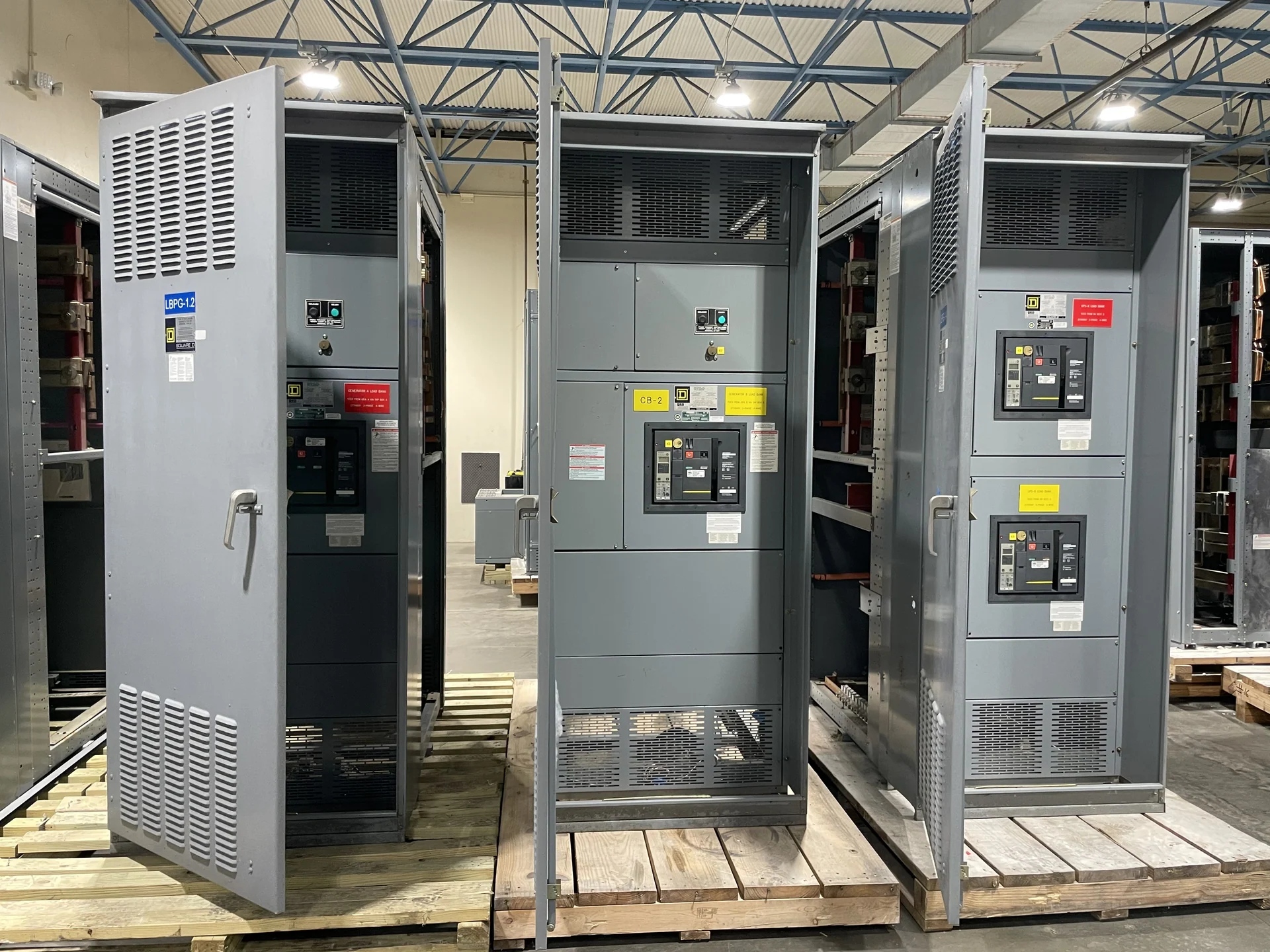
What Metal-Enclosed Switchgear Does
Metal-enclosed switchgear places switching and protective equipment inside a coordinated metal enclosure for a defined distribution application. The enclosure helps organize incoming conductors, bus connections, switches, fuses, grounding provisions, and cable terminations, while the internal arrangement determines how operators and qualified maintenance personnel access the equipment. It is not simply a generic cabinet: voltage class, continuous current, available fault current, system grounding, environmental exposure, and the one-line diagram all shape the design. A manufacturer builds new metal-enclosed switchgear to the project drawings and specified interfaces, so the equipment can be coordinated with transformers, feeders, utility requirements, and the installation space rather than selected by appearance alone.
Switch and Fuse Arrangements
A metal-enclosed lineup may use a load-interrupter switch, a fused switch, or another project-defined switching arrangement. A switch provides an operating function, while fuses add an overcurrent protection method whose characteristics depend on the selected fuse family, available fault duty, and coordination study. The distinction affects interrupting capability, selective coordination, replacement planning, operating sequence, and the space required for cable access. Engineers should identify whether each compartment is intended for load switching, isolation, feeder protection, transformer protection, or sectionalizing. Fuse selection must be coordinated with downstream devices and the equipment duty; the enclosure design must also provide the clearances, barriers, labeling, and access details specified for the assembly.
Comparing Enclosed Distribution Equipment
Metal-enclosed switchgear should be compared with switchboards, panelboards, metal-clad switchgear, and motor control centers by function rather than by name. A switchboard may organize mains, feeders, metering, and circuit breakers for a lower-voltage distribution lineup, while a panelboard commonly serves branch circuits and smaller feeder groups. Metal-clad equipment has its own construction and compartmentalization expectations, and a motor control center is organized around motor starters, drives, and controls. The right comparison asks which device must interrupt or switch the circuit, what voltage and fault duty apply, how much isolation is needed, how cables enter, and how operators will access the lineup.
Inputs for a Custom Build
A useful request for custom metal-enclosed switchgear starts with the latest single-line diagram and equipment schedule. Include nominal system voltage, frequency, phases, grounding method, continuous current, short-circuit information, feeder count, source arrangement, transformer data, protective-device preferences, metering, control power, and required interlocks. Physical information matters equally: indoor or outdoor placement, enclosure environment, cable-entry direction, termination space, lineup dimensions, access side, foundation or housekeeping-pad interfaces, lifting needs, and shipping sections. Switchgear Builders manufactures new switchgear in the United States and uses American components; confirm component origins, construction details, and any project qualification during submittal review.
Design Review, Testing, and Documentation
Before fabrication, the project team should review the one-line, general arrangement, elevations, wiring diagrams, nameplate data, device schedules, and operating sequence. That review can expose conflicts between fuse compartments, cable bending space, utility metering, grounding conductors, door swing, and installation clearances. Inspection and electrical testing should follow an agreed project test plan, with records tied to the equipment identification and acceptance criteria. If a specification references UL 891, determine whether that standard applies to the proposed assembly and confirm any listing, construction, or verification requirement for this specific project; the reference does not establish a blanket listing for every metal-enclosed switchgear configuration.
Shipping and Installation Coordination
Metal-enclosed switchgear is often shipped as one or more sections, so logistics belongs in the design conversation. Confirm section weights, lifting points, shipping splits, door and removable-panel protection, receiving inspection responsibilities, and the path from the truck to the electrical room or outdoor foundation. The installer should verify anchor locations, cable routes, working space, grounding connections, and the sequence for joining sections before equipment arrives. Switchgear Builders manufactures new custom equipment in the United States and supplies it with nationwide shipping; destination, packaging, freight terms, site access, and project-specific availability remain items to define in the quotation and order documents.