Definition and purpose
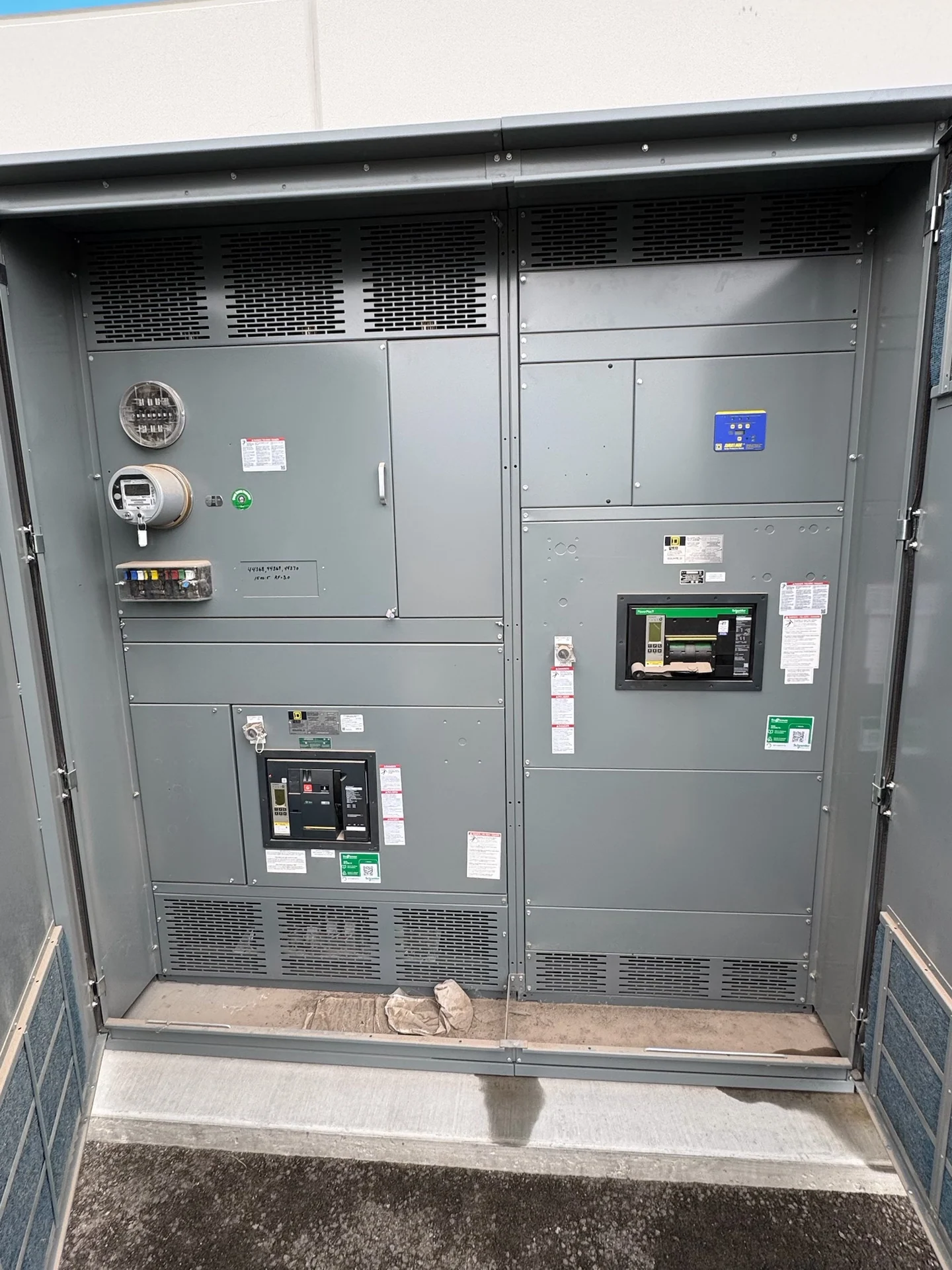
Metal-enclosed switchgear is an electrical switching assembly in which energized conductors, switching devices, protective components, and control elements are housed inside a metal enclosure. The enclosure establishes a defined equipment boundary and organizes the power path from an incoming source to outgoing feeders. It is not one fixed internal design: the arrangement can use switches, fuses, circuit breakers, bus sections, metering, or control wiring selected for the project. As an American manufacturer, Switchgear Builders manufactures new equipment custom to specification, using American components and coordinating the enclosure and internal arrangement with the applicable electrical design.
What the enclosure does
The metal housing supports the assembly mechanically while providing designated locations for doors, covers, barriers, cable entrances, operating handles, and maintenance access. Internal segregation may separate a bus compartment, switching compartment, cable space, or low-voltage control area, depending on the equipment concept and project requirements. Those boundaries can influence inspection access, conductor routing, heat management, and the sequence used to operate or isolate portions of the lineup. Enclosure material, dimensions, finish, ventilation, environmental exposure, and access direction should be reviewed together rather than chosen as isolated options.
Possible internal arrangements
A metal-enclosed lineup may be built around a fused switch, a load-interrupter switch, a circuit breaker, or another project-defined switching combination. A simple feeder arrangement can differ substantially from a lineup with multiple sources, a bus tie, metering compartments, grounding provisions, or control relays. Fixed-mounted devices and removable or drawout concepts also change clearances, service access, connection details, and the physical footprint. The correct arrangement follows the one-line diagram, voltage class, continuous current, interrupting or withstand duty, grounding method, operating sequence, and required interfaces; the term alone does not establish any rating or feature.
Inputs for selecting a configuration
A useful specification starts with system facts rather than a product label. Provide nominal voltage and frequency, phase and wire configuration, available fault current, continuous load, source and feeder information, grounding approach, environmental conditions, enclosure location, cable or busway entry, and required working clearances. The design team should also identify protective-device coordination, metering, communications, interlocking, control power, future circuits, and the intended operating sequence. Existing drawings and photographs can clarify replacement interfaces, but a qualified engineer must determine whether the proposed new assembly fits the electrical and physical conditions.
Metal-enclosed switchgear versus other equipment
Metal-enclosed switchgear should not be treated as a synonym for every enclosed distribution product. A switchboard, panelboard, motor control center, or transfer assembly may serve a different function and follow different construction details, device arrangements, and application criteria. The useful comparison is the job each assembly must perform: switching a feeder, interrupting fault current, distributing branch circuits, controlling motors, transferring sources, or measuring energy. During planning, compare the one-line function, device duty, access requirements, enclosure conditions, space, and applicable project standards before deciding which equipment category belongs in the design.
How a custom build is reviewed
For a new custom build, the manufacturer can use the approved one-line diagram, equipment schedule, control narrative, dimensional limits, component requirements, and shipping destination to develop a coordinated equipment package. Review should address bus layout, joints, supports, clearances, cable landing space, labels, terminal points, lifting and shipping sections, and the documents required for installation and commissioning. Inspection and electrical or functional testing should be defined by the project, with acceptance criteria agreed in advance. If a specification references UL 891, confirm whether it applies and what project-specific construction and documentation requirements must be met before finalizing the order.