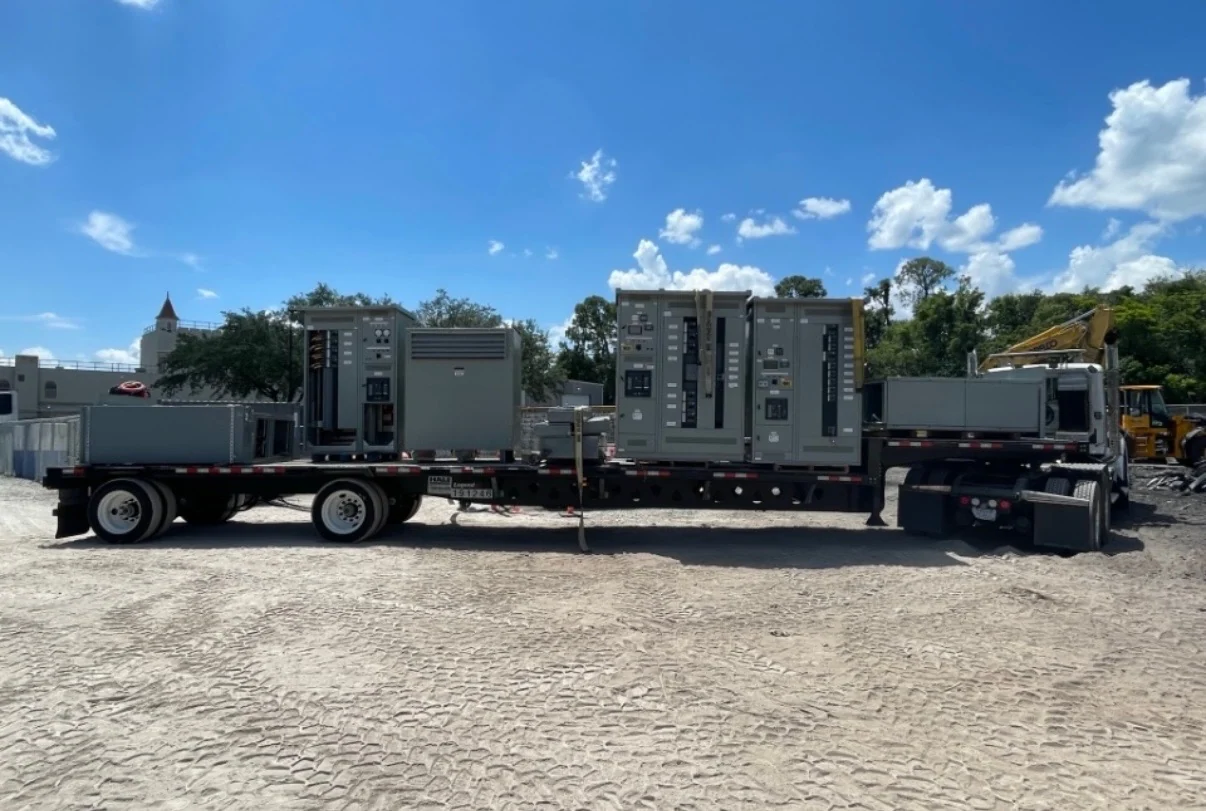
Delivery Starts with the Approved Equipment Plan
Switchgear delivery is planned around the approved electrical design, not treated as a generic freight shipment. Switchgear Builders manufactures, builds, and supplies new electrical switchgear in the United States, custom to specification with American components and nationwide shipping. Before release, the project team should identify the lineup arrangement, shipping destination, required sections, approximate weights and dimensions, access restrictions, receiving contact, and desired delivery sequence. Those inputs let the manufacturer coordinate packaging and freight details with the equipment design while leaving site-specific handling decisions to the owner, contractor, engineer, and qualified logistics personnel. Include the receiving hours and any appointment, badge, escort, or site-induction requirements early, because a carrier arrival is useful only when the destination can safely receive the equipment.
Why Large Lineups May Ship in Sections
A switchgear lineup may be divided into shipping sections when its assembled length, weight, doorway limitations, roadway conditions, or lifting requirements make one piece impractical. Shipping splits should preserve the intended lineup order and clearly identify field-joined interfaces, bus connections, control wiring, and hardware. The project documents should show which joints are completed before shipment and which connections require qualified field work. A split can simplify transportation, but it also creates coordination needs for staging space, section orientation, joint access, and protection against moisture or impact while equipment waits for installation.
Lifting Provisions and Rigging Responsibilities
Lifting provisions are selected from the equipment design and must be used with the handling instructions supplied for that project. The receiving team should review marked lifting points, section weights, center-of-gravity information when provided, sling or spreader requirements, and any restrictions on rolling, tilting, or stacking. A qualified rigging contractor should verify that the crane, forklift, hoist, rigging hardware, personnel, and ground conditions are suitable for the actual shipment. Do not infer lifting capacity from an enclosure appearance; confirm the approved drawings and shipping documents before moving any section.
Site Access Must Be Checked Before Freight Moves
Delivery planning should trace the complete route from the carrier's arrival point to the electrical room or prepared foundation. Measure gates, turns, dock openings, doors, corridors, ramps, overhead obstructions, and finished-floor transitions, then compare those dimensions with each shipping section and its handling equipment. Confirm whether the site can accept the carrier, whether a dock or street closure is needed, and who controls unloading. For outdoor equipment, coordinate foundation readiness, anchor locations, weather protection, and cable-entry access. These checks help reduce avoidable rehandling and clarify the delivery and receiving arrangements.
Receiving Inspection Protects the Project Record
When new switchgear arrives, the receiving party should inspect the crate or protective covering before unloading and record visible damage, missing packages, seal condition, section identification, and the delivery paperwork. Photograph questionable conditions and note them on the carrier's documentation according to the freight terms governing the shipment. After placement, keep doors, barriers, bus compartments, instruments, and control components protected from dust, water, condensation, and construction traffic. Compare the shipment against the packing list and approved equipment documents, then promptly communicate discrepancies to the manufacturer and project team before installation proceeds.
Coordinate Delivery with Installation and Commissioning
The delivery date should be coordinated with a ready receiving area, approved installation drawings, available rigging support, and the people responsible for field assembly and inspection. After sections are positioned, qualified personnel can verify lineup alignment, anchorage, bus and control connections, grounding and bonding interfaces, device labels, and accessible working space against the project requirements. Shipping is only one stage of the equipment package; field installation, electrical testing, and energization remain project-specific activities governed by the engineer's documents, applicable requirements, and the responsible electrical contractor.