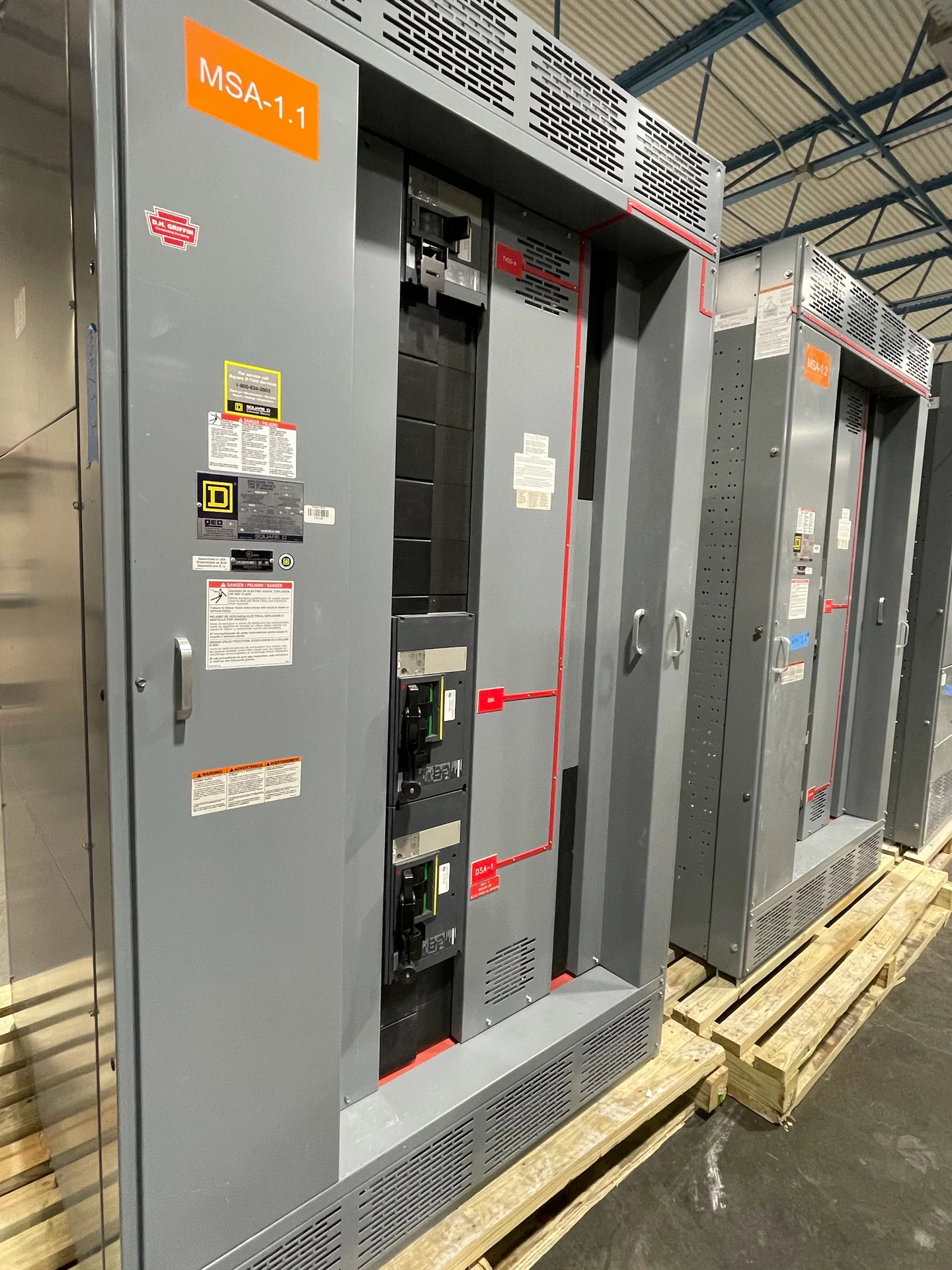
Prepare Before the Truck Arrives
Receiving and inspecting switchgear begins before shipment reaches the jobsite. Assign a responsible receiver, confirm the delivery address and contact details, and review the approved equipment schedule, shipping split, bill of lading, packing list, and project drawings. Make sure the unloading area is accessible to the planned lifting equipment, protected from active construction hazards, and large enough to stage each section without blocking egress. The purchaser should also confirm who is authorized to sign freight documents and who must be notified when discrepancies appear. Confirm the planned delivery window with the site team, identify weather contingencies, and make sure the receiver has access to the latest approved documents rather than an outdated equipment schedule.
Check the Shipment at Unloading
Inspect the crate, skids, wrap, doors, corners, lifting points, and visible barriers before unloading and again after each section is placed. Look for punctures, crushed edges, shifted packaging, water intrusion, oil or chemical exposure, loose hardware, and signs that the load moved during transit. Compare section labels and quantities with the shipping documents, but do not energize, operate, or remove protective packaging merely to speed inspection. A qualified person should control unloading, maintain the equipment orientation identified by the manufacturer, and keep unauthorized personnel clear. Record the carrier, trailer condition, seal information when present, arrival time, and unloading sequence; these details help distinguish a shipping observation from a later installation issue.
Document Damage or Missing Items
If damage or a shortage is visible, record it while the carrier representative is present whenever practical. Take dated photographs from wide and close perspectives, preserve labels and packaging, note the affected section or crate number, and write a specific description on the delivery receipt rather than relying on a general notation. Keep copies of the signed freight paperwork, packing list, photographs, and communications. Notify the manufacturer and the project’s responsible engineer or purchasing contact promptly so the condition can be evaluated before installation or corrective work changes the evidence. Do not discard protective materials until the receiving review is complete and any freight documentation has been copied. Retain the records according to the project’s document-control procedure.
Verify Identification and Scope
After the shipment is secure, compare nameplates, lineup identifiers, feeder labels, device designations, and accessory cartons with the approved submittal package. Check that the delivered arrangement matches the ordered voltage class, continuous-current requirements, protective-device layout, control interfaces, metering provisions, enclosure orientation, and shipping sections specified for the project. This is a document-and-identity check, not a substitute for field commissioning or an electrical test plan. If a label, drawing, component, or interface appears inconsistent, stop the affected installation step and request clarification before making field modifications. Include accessory boxes, loose hardware, keys, barriers, and documentation in the reconciliation because a complete lineup depends on items that may travel separately from the main enclosure.
Store Switchgear Correctly
Store new switchgear in a clean, dry, secure area that protects it from precipitation, condensation, dust, construction debris, corrosive substances, impact, and unauthorized access. Follow the manufacturer’s project instructions for upright orientation, protective coverings, ventilation, temperature control, and inspection intervals; do not seal equipment in a way that traps moisture. Keep doors and removable parts secured as directed, preserve desiccant or moisture indicators when supplied, and maintain a record of storage conditions. Extended storage can require additional inspection or preparation before installation, so include that review in the project plan. Coordinate the release with the electrical contractor, engineer, and manufacturer when a discrepancy affects fit, sequence, protection, or control wiring. Written disposition is preferable to an assumption made in the field.
Plan Handling and Release to Installation
Before moving a lineup, verify its weight, center of gravity, approved lifting points, shipping braces, route, floor capacity, turning clearance, and destination orientation. Use qualified rigging personnel and handling equipment selected for the actual shipment; never improvise by lifting from doors, bus supports, conduit, or control wiring. Once positioned, protect the assembly from nearby work and retain the receiving record with project documentation. The manufacturer can coordinate custom equipment details, American components, and nationwide shipping requirements, while the installing team remains responsible for site readiness, safe handling, and project-defined inspection and testing. Keep a simple receiving log that identifies each section, inspection date, condition, storage location, and person who performed the check. This creates a useful handoff from freight receiving to installation planning.