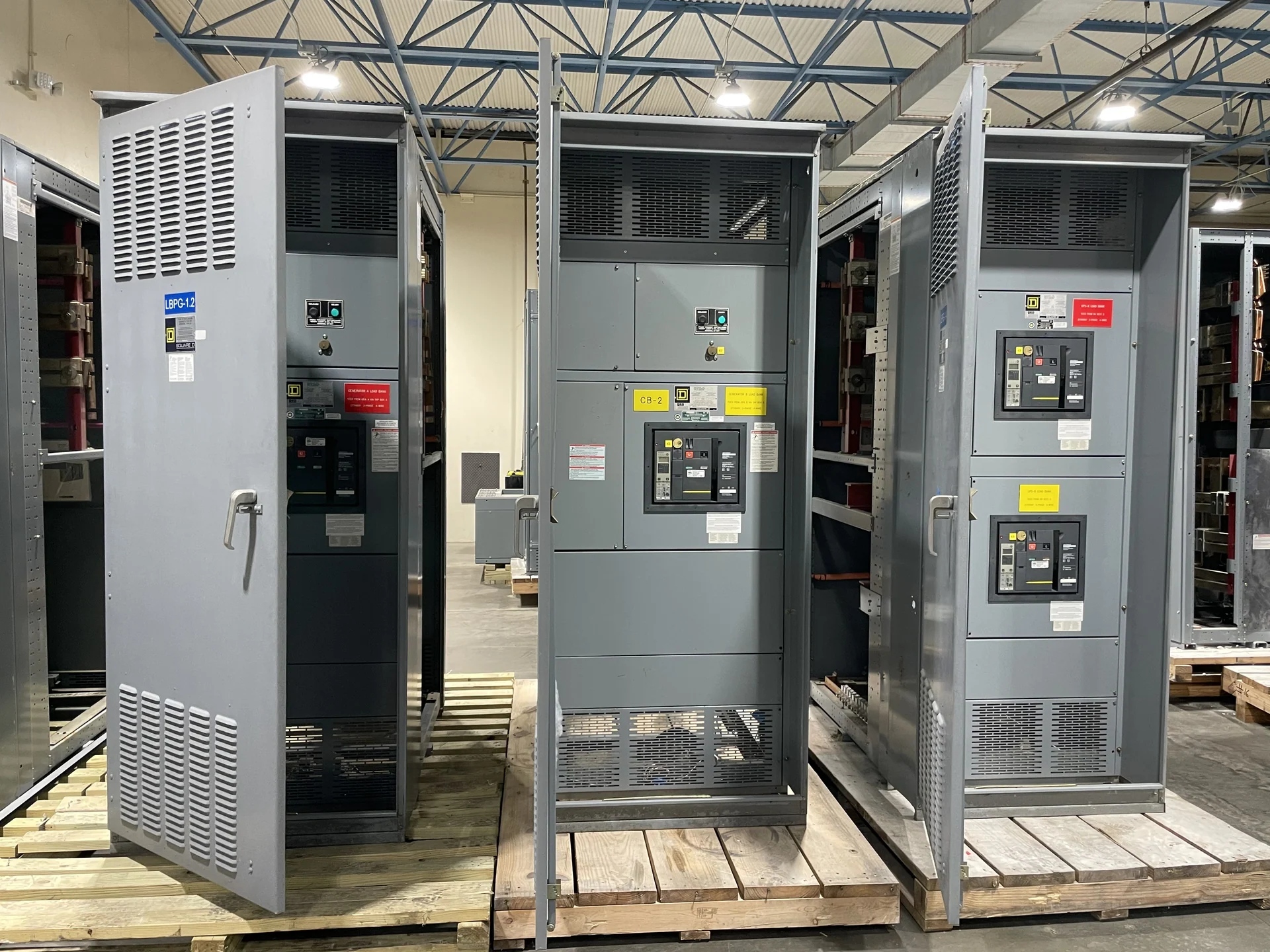
Start With the Installed Lineup and the Route
Shipping sections and rigging should be planned from the final installed lineup backward, not treated as a freight detail after fabrication. Record the overall length, height, depth, estimated section weights, center-of-gravity concerns, and the intended placement sequence. Then review the path from the carrier to the electrical room: dock height, doors, corridors, turns, ramps, elevators, floor transitions, and temporary obstructions all affect a workable split. A manufacturer building new custom switchgear can use these inputs to coordinate section boundaries, lifting provisions, and reassembly interfaces before drawings are released for production.
Choose Shipping Splits Around Electrical Interfaces
A useful shipping split preserves practical electrical and mechanical boundaries while keeping each piece manageable for the available handling equipment. Split locations may follow lineup compartments, bus transitions, shipping joints, or major device groupings, but the choice requires an engineering review of bus continuity, insulation, control wiring, ground paths, and enclosure alignment. Avoid assuming that a visually convenient seam is electrically neutral. The project team should identify which connections are completed at the manufacturing stage and which are intentionally left for field reassembly, with drawings clearly identifying every field interface and its required hardware.
Define Lifting Points and Center of Gravity
Lifting points must match the actual weight distribution and the rigging method, including spreader bars, slings, shackles, forklifts, or other equipment selected by the qualified rigging team. A tall enclosure can tilt even when its total weight appears acceptable, especially when devices, bus, and transformers are concentrated toward one end. Show lifting locations, allowable handling orientation, approximate section weights, and any restrictions on pulling or pushing in the shipping and installation information. The rigging contractor remains responsible for a site-specific lift plan, capacity checks, exclusion zones, and compliance with applicable workplace requirements.
Check Clearances Before the Carrier Arrives
Clearance planning covers more than the nominal width of a switchgear section. Verify diagonal dimensions through doorways, overhead obstructions, turning radii, trailer access, crane reach, forklift mast height, and the space needed to set a section down safely. Compare these measurements with the packaged dimensions rather than bare enclosure dimensions, because skids, corner protection, weather covering, and lifting hardware can change the envelope. The receiving team should document the route, protect finished floors where appropriate, and resolve conflicts with building trades before shipment. If a route cannot accept the planned section, revise the split before fabrication rather than improvising at delivery.
Coordinate Reassembly Interfaces
Reassembly quality depends on interfaces that are unambiguous in the field. Provide section identifiers, orientation marks, joint details, bus and ground connection information, control-circuit termination points, fastener requirements, and any torque or inspection instructions defined by the project documentation. The installation team should confirm that adjacent sections are supported and aligned before making electrical connections, and it should protect open interfaces from moisture, debris, and accidental impact during handling. A manufacturer supplying new switchgear can coordinate these details with the approved layout, one-line diagram, wiring information, and the installer’s sequence so field work is planned rather than guessed.
Build Shipping and Receiving Responsibilities Into the Quote
A complete switchgear guide should make logistics responsibilities visible in the inquiry and quote. Provide the destination, delivery access limitations, requested shipping sections, unloading method, storage conditions, receiving contact, packaging expectations, and whether a coordinated rigging partner will be engaged. Clarify who verifies dimensions, who supplies lifting equipment, who protects the route, and who records concealed or visible transit damage. We manufacture custom new electrical switchgear in the United States using American components and can coordinate nationwide shipping details around the project scope; actual splits, packaging, freight terms, and timing must be confirmed for the specific order.