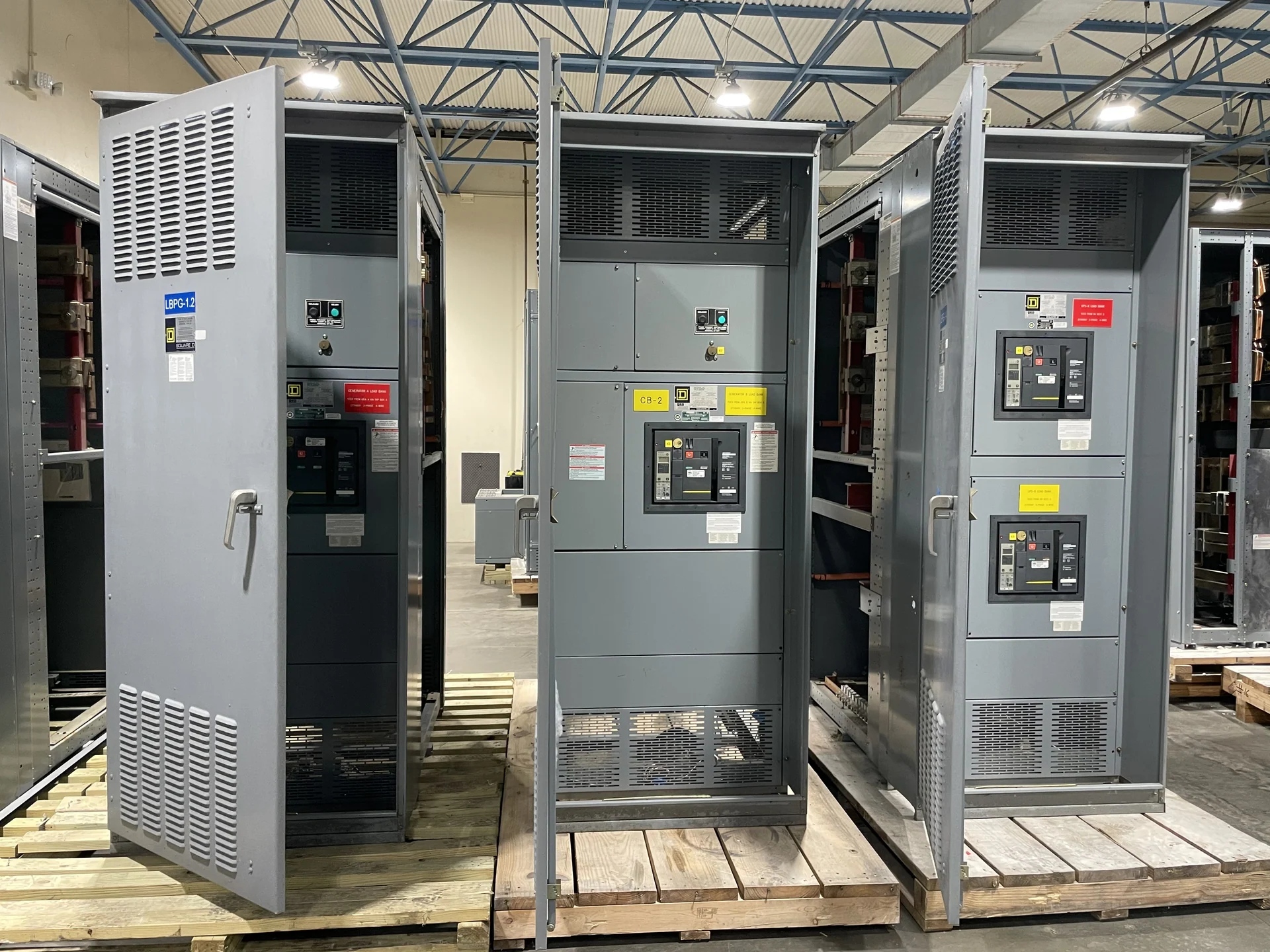
What Short-Circuit Current Rating Means
Short-circuit current rating, often abbreviated SCCR, is the maximum prospective fault current that an electrical assembly is identified to withstand or safely manage under stated conditions. It is an equipment-level value, not a prediction of the current a normal load will draw. A fault study may calculate available fault current at a location, while the SCCR identifies whether the specified assembly is suitable for that duty. The definition therefore depends on the assembly, its construction, its protective devices, and the applicable equipment standard. A rating should be read with its voltage, frequency, configuration, and other stated conditions rather than treated as a universal number.
SCCR Compared With Interrupting Rating
SCCR and interrupting rating answer related but different questions. A circuit breaker interrupting rating concerns the fault current the breaker can interrupt at a specified voltage and application. SCCR concerns the complete equipment assembly, including bus, bracing, conductors, connections, enclosure, and protective components as applicable. A lineup can contain a breaker with an appropriate interrupting rating and still require review of the assembly rating. Conversely, selecting a large assembly SCCR does not automatically establish that every installed protective device can interrupt the available fault current. Engineers should verify both values and their relationship in the project design.
Why Available Fault Current Controls the Selection
Available fault current is the prospective current that the electrical system could deliver at a particular point during a specified fault. Utility source strength, transformer impedance, conductor length and size, parallel sources, generators, and other system conditions can affect that calculation. The value may differ from one side of a transformer or feeder to another, so a single facility-wide assumption can be misleading. The equipment SCCR should be compared with the project calculation at the installation point, using the same voltage and system configuration. A qualified electrical professional should establish the fault-current basis and identify any future-source changes that could alter it.
Conditions and Applicable Standards Matter
A short-circuit current rating is meaningful only within the conditions and construction basis used to establish it. Voltage class, phase arrangement, grounding method, enclosure design, device combination, bus configuration, and protective coordination can all affect the engineering review. The applicable equipment standard also matters because terminology, test methods, marking expectations, and acceptance criteria may differ by equipment type. UL 891 applicability, including any project-specific listing or verification requirement, must be confirmed for the particular switchboard or switchgear project; it should not be assumed from the phrase SCCR alone.
Inputs to Specify New Custom Switchgear
A useful request for new custom switchgear should provide the nominal and maximum system voltage, frequency, phase and wire arrangement, grounding details, calculated available fault current, source information, continuous current requirements, one-line diagram, protective-device schedule, and physical installation constraints. Include service or feeder location, expected future sources, enclosure environment, cable entry direction, working-space limitations, metering, controls, and documentation needs where applicable. These inputs allow an American manufacturer building to specification to evaluate the assembly basis, coordinate components, and identify questions before fabrication. Missing fault-duty or system information should be treated as an open engineering item, not filled with an assumed rating.
Review, Marking, and Project Records
Before a new lineup is released for manufacture, the design team should reconcile the one-line diagram, fault-current study, protective-device data, equipment schedule, and physical drawings. The final documentation should identify the rating basis and any limitations or conditions that the project requires, with field installation matching the reviewed configuration. At delivery, the electrical contractor and commissioning team can use the approved drawings, device information, and project test records to confirm that the installed arrangement corresponds to the design. Switchgear Builders manufactures custom new electrical switchgear in the United States with American components and can coordinate nationwide shipping around the documented project requirements; final ratings remain project-specific.
When comparing manufacturer proposals, ask each supplier to state which equipment rating is being offered, what fault-current information was used, which protective devices and combinations are included, and what drawings or records support the selection. Also clarify whether the proposed arrangement is fixed or drawout, how sources and ties operate, and which assumptions require engineer approval. A clear comparison prevents the phrase short-circuit current rating from hiding differences in scope. The customer buys a defined new assembly, not merely a number, so the rating, configuration, conditions, and documentation should be reviewed together before authorization to build.