Start With the Motor and Process
Choosing between an across-the-line motor starter and a variable frequency drive begins with the driven load, not a preferred component. A starter applies the available system voltage to the motor for a direct start, while a VFD controls voltage and frequency during acceleration and operation. A pump, fan, conveyor, compressor, or machine tool may have very different torque, speed, cycling, and stopping requirements. Document motor horsepower, voltage, phase, full-load current, starting method, duty cycle, load inertia, required speed range, and the process consequence of acceleration before laying out the motor control equipment.
How Across-the-Line Starting Behaves
An across-the-line starter is conceptually straightforward: a contactor connects the motor to the supply, and overload protection responds to the motor application and selected settings. The motor generally accelerates toward its design speed according to its mechanical load and available system conditions. That simplicity can suit equipment that runs at one speed, starts infrequently, and tolerates a starting current and torque event. The design still requires attention to short-circuit protection, control voltage, disconnecting means, overload coordination, interlocks, enclosure arrangement, and the impact of starting current on the upstream distribution system.
What a Variable Frequency Drive Adds
A variable frequency drive changes the motor supply frequency and voltage so acceleration, deceleration, and operating speed can be controlled within the application limits. This may help a process match motor output to changing demand, manage a ramp instead of an abrupt start, or coordinate speed with other equipment. Those benefits introduce additional engineering questions: drive input current, bypass or maintenance arrangements, motor insulation suitability, cable length, grounding, harmonic effects, heat dissipation, control signals, fault behavior, and parameter ownership. A VFD is not automatically the better choice; its value depends on the process and the surrounding electrical design.
Compare Electrical and Mechanical Trade-Offs
The comparison should consider the complete system rather than the motor controller alone. A starter may simplify troubleshooting and provide a compact fixed-speed control scheme, but it cannot provide normal speed regulation or a controlled ramp by itself. A VFD can support adjustable speed and controlled acceleration, yet it may require more detailed settings, ventilation, electromagnetic compatibility review, and maintenance planning. Review available fault current, feeder and branch-circuit protection, motor starting voltage drop, expected harmonics, bypass philosophy, emergency stop behavior, and whether the load can tolerate regenerative or coast-to-stop conditions.
Coordinate the Switchgear Assembly
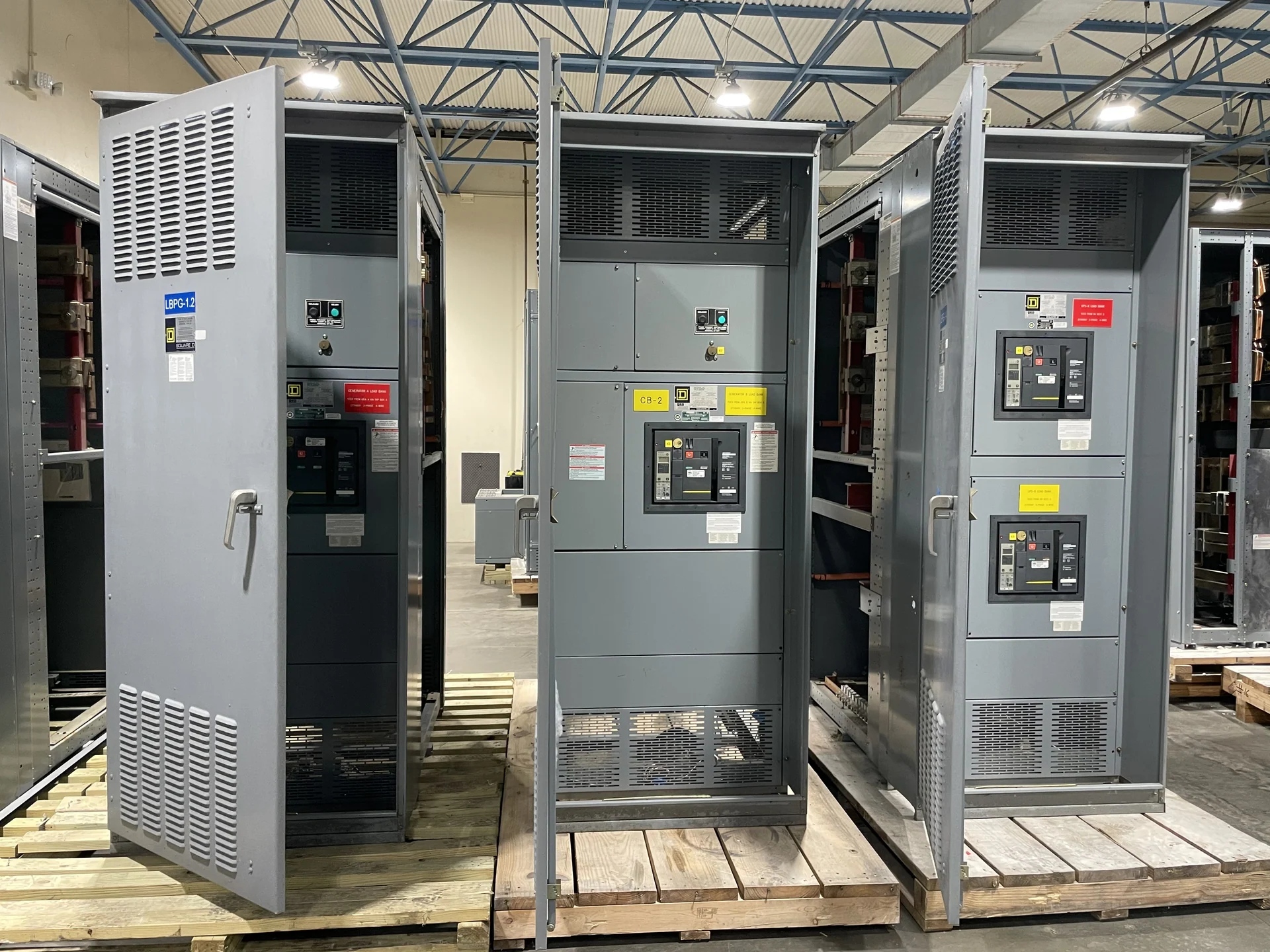
When the selected motor control is part of a custom switchgear or motor control assembly, provide the one-line diagram, motor schedule, feeder data, control narrative, enclosure constraints, cable-entry direction, environmental conditions, and required metering or communications. Identify which devices are supplied in the assembly and which are furnished separately, then define terminal points and responsibility for programming or field wiring. Switchgear Builders manufactures new electrical switchgear in the United States, builds custom to specification with American components, and can coordinate nationwide shipping requirements; final equipment scope, component selection, and project-specific standards remain subject to engineering review.
Prepare a Useful Project Inquiry
A productive inquiry states whether the motor must run at one speed or vary continuously, how often it starts, what acceleration and stopping behavior the process needs, and what happens when control power or a source is lost. Include motor nameplate information, load profile, ambient conditions, available space, incoming electrical ratings, network or analog-control requirements, bypass expectations, and documentation needs. Ask the manufacturer to identify assumptions, exclusions, interface points, and testing requirements in the quotation so the starter-versus-drive decision can be reviewed consistently by the engineer, contractor, owner, and controls team.