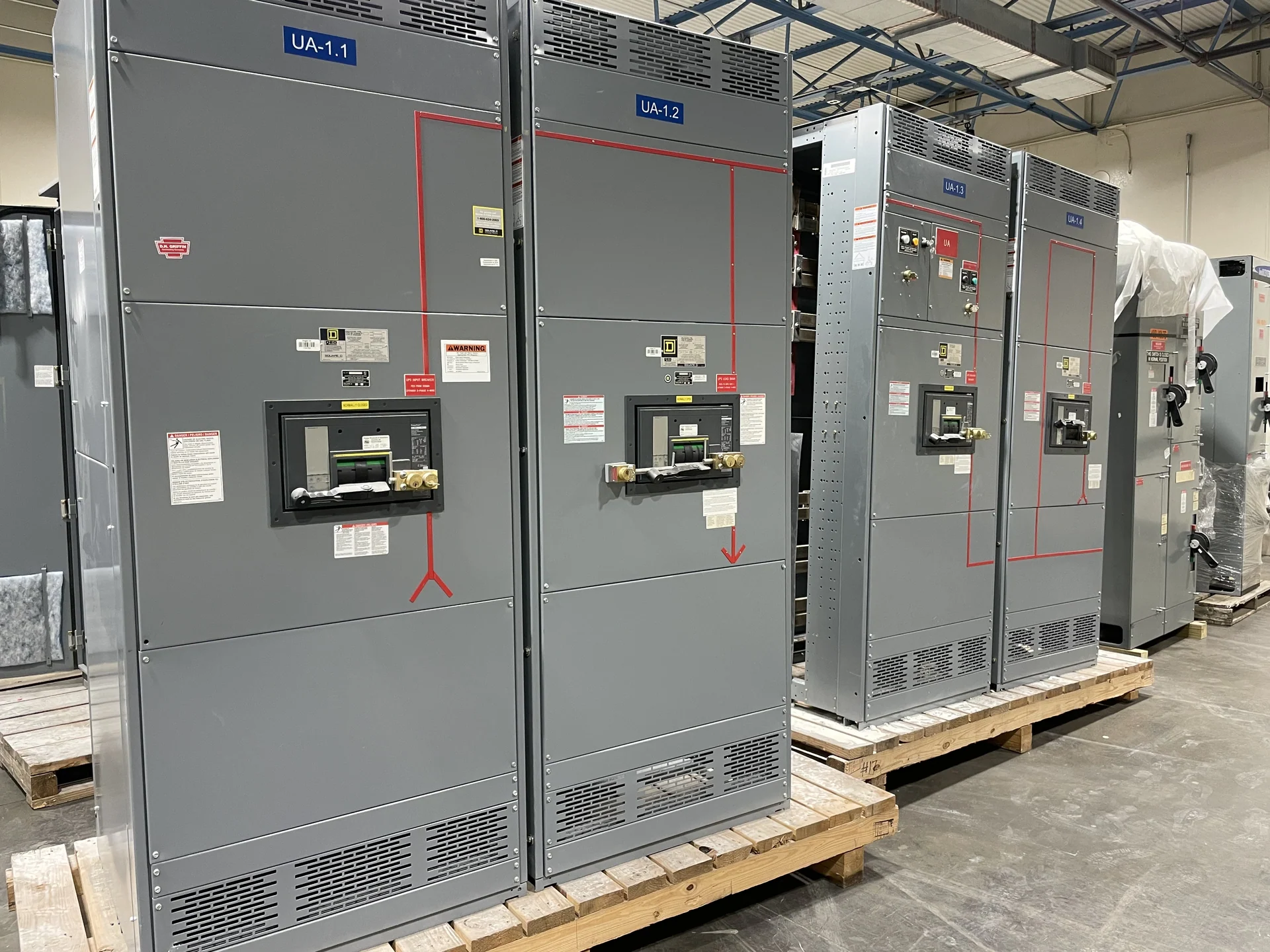
What a Continuous Current Rating Describes
A switchgear continuous current rating identifies the current an assembly, bus, main device, or feeder arrangement is intended to carry continuously under the conditions defined for the project. It is not simply a label chosen from the expected load total. Engineers also consider conductor heating, protective-device ratings, enclosure construction, connection methods, ambient conditions, and the relationship between the equipment and the distribution system. A useful specification states which component each rating applies to, so a main, bus, and individual feeder are not incorrectly treated as interchangeable.
Start With the Calculated Load
The starting point is a documented load calculation or design basis that identifies present demand, continuous loads, noncontinuous loads, motor contributions, transformer loads, and any planned operating scenarios. The equipment rating should be evaluated against the calculated duty rather than a rough connected-load total. For a custom switchgear quote, provide the one-line diagram, load schedule, system voltage and phase, source information, feeder list, and assumptions used by the engineer. Those inputs allow a manufacturer to build a new lineup around the actual distribution intent instead of guessing from an ampere number.
Mains, Bus, and Feeder Ratings
Mains, bus conductors, and feeders can have different continuous current requirements within the same lineup. A main may be selected for the service or source duty, while a bus must accommodate the expected combination of simultaneous feeder loads and an individual feeder must suit its connected load and protective device. The specification should identify each section, device position, and connection point. For main-tie-main or other divided-bus arrangements, normal and alternate operating conditions deserve separate review because a tie operation can change which portions carry current.
Future Capacity Without Oversizing Blindly
Future capacity can make a higher continuous current rating sensible, but spare ampacity is only useful when the enclosure, bus arrangement, termination space, protection scheme, and physical footprint support the intended expansion. Oversizing every component may add cost, space, or coordination complications without solving a defined need. Identify expected load growth, reserved feeder positions, prospective process additions, and the planned method of expansion. The manufacturer can then review a new custom configuration with the design team, distinguishing genuinely useful capacity from an arbitrary rating increase.
Environmental and Installation Inputs
Continuous current performance depends on installation conditions as well as the nominal rating. Include indoor or outdoor location, ambient temperature assumptions, enclosure requirements, elevation when relevant, ventilation constraints, conductor entry direction, cable space, and the available working area. Site conditions can affect heat dissipation, terminations, access, and layout decisions. A nationwide shipment still requires project-specific receiving and installation coordination: the destination, shipping split, lifting route, foundation or housekeeping pad, and installer responsibilities should be defined before fabrication drawings are finalized.
Review Ratings Before Ordering
Before ordering new switchgear, compare the proposed continuous current ratings with the one-line diagram, load study, fault information, protective-device schedule, and physical plan. Confirm that the stated ratings apply to the complete assembly and to the relevant mains, bus sections, and feeders, rather than relying on a single headline value. Ask for drawing review, component data, and project-specific test or inspection documentation included in the scope. If UL 891 is requested, its applicability and any listing requirements must be confirmed for this specific project; they should not be assumed from an ampere rating. The review should also separate continuous loading from short-duration events, starting and inrush conditions, and any source-transfer state that changes the current path. Record assumptions about diversity and simultaneous operation so later revisions can be checked against the same design basis. This disciplined comparison helps the purchaser and installer understand what the rating covers before equipment is released for fabrication.