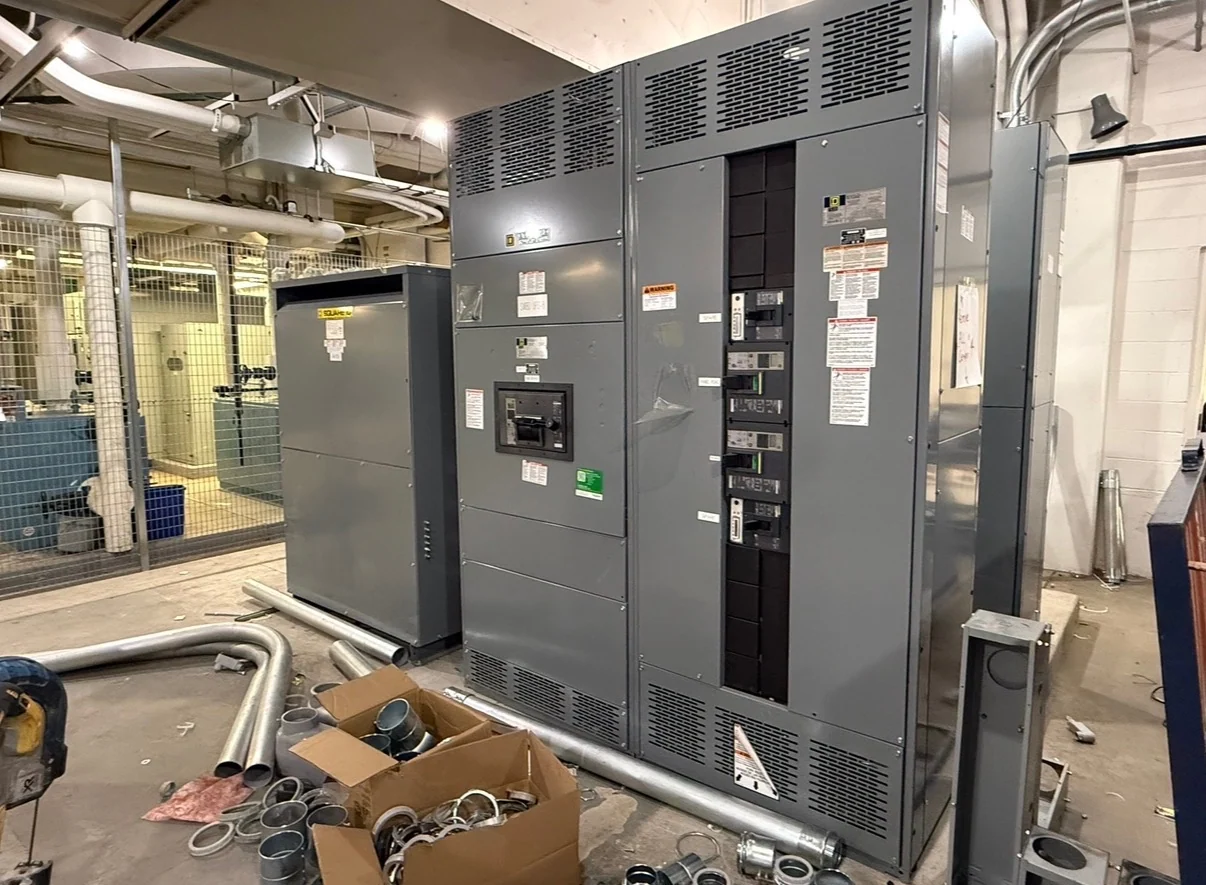
What a Switchgear Submittal Package Should Establish
Switchgear submittal drawings turn a project requirement into a reviewable equipment package. The set should show how the proposed new assembly relates to the approved electrical design, available space, connected feeders, and installation responsibilities. A useful package normally coordinates the one-line diagram, equipment elevations, plan or footprint views, schedules, nameplates, device information, and connection details. Switchgear Builders manufactures custom new electrical switchgear in the United States, using American components and nationwide shipping; the drawings should make the selected scope clear before fabrication and delivery. It should also identify drawing scale, revision status, design assumptions, and items requiring field coordination, allowing reviewers to distinguish confirmed dimensions from information still awaiting project input.
Start With the One-Line Diagram
The one-line is the electrical anchor for submittal review. Check that each source, main device, bus section, tie, feeder, transformer interface, metering point, and grounding connection is represented consistently with the engineer's design. Device labels should match schedules and physical elevations, while phase, wire, frequency, voltage, continuous current, and short-circuit information should be traceable to the project documents. If a proposed arrangement changes the operating sequence or protective-device coordination, identify that difference for engineering review rather than treating the drawing as an approval by itself.
Coordinate Layout, Access, and Interfaces
Physical drawings need more than overall width and height. Review section boundaries, door swings, removable parts, cable entry, bus transitions, control compartments, lifting provisions, conduit zones, and termination space against the electrical room and delivery path. Confirm working clearances, maintenance access, anchorage points, floor conditions, and the location of adjacent equipment with the responsible design and installation teams. For a custom switchgear quote, provide available room dimensions, access limitations, incoming and outgoing conductor details, and any required shipping splits so the manufacturer can resolve interfaces before release.
Use Schedules and Details to Prevent Ambiguity
Schedules should identify each protective device, instrument, control component, rating, frame or enclosure position, and intended circuit reference without relying on assumptions. Detail views can clarify bus joints, lugs, neutral and grounding provisions, control terminals, interlocks, shutters, communication connections, and field wiring points where those items are part of the defined scope. Compare every tag across the one-line, elevation, wiring diagram, bill of material, and equipment schedule. Mark questions about substitutions, exclusions, owner-furnished interfaces, or field-installed work as review comments so procurement and installation teams share the same boundary.
Define Review Responsibilities and Revisions
A submittal process works best when the reviewer, design engineer, electrical contractor, owner, and manufacturer each know what they are checking. The engineer should verify design intent, ratings, protection, coordination, and code or utility requirements; the installer should confirm access, terminations, routing, and constructability; the owner should confirm operations, metering, controls, and documentation needs. Track drawing numbers, revision letters, comments, responses, and release status. Do not treat an approved-for-fabrication stamp as a substitute for field verification or qualified electrical review of changes discovered later. A disciplined comment log is especially valuable when multiple revisions affect device tags, feeder destinations, enclosure sections, or the documents needed for installation and commissioning.
Confirm Standards and Documentation Before Release
The project specification should identify applicable construction standards, testing expectations, labeling, documentation, and any required third-party evaluation. If UL 891 is relevant to the proposed assembly, confirm its applicability, construction requirements, and any project-specific listing or capability with the manufacturer and responsible engineer; it should not be assumed from a generic drawing title. Also define the final document set, such as approved drawings, wiring information, device data, test records, installation instructions, and shipping documents. Switchgear Builders can use the approved scope to build and supply new equipment, with delivery arrangements coordinated for the U.S. destination.