Start with a Campus Distribution Map
A university electrical upgrade begins with a clear picture of how buildings, feeders, transformers, emergency sources, and operating loads relate to one another. Gather current one-line diagrams, panel schedules, protective-device information, load studies, utility requirements, and records of later field changes. Walk the route from the planned equipment location to the receiving dock and electrical room, noting doors, corridors, stairs, housekeeping pads, cable paths, working space, and areas that must remain accessible. A manufacturer can use these inputs to develop new custom switchgear around the actual campus interfaces rather than treating a replacement as an isolated cabinet. The design review should also identify which buildings can be separated, which feeders require temporary arrangements, and which shutdown boundaries need approval from campus facilities and the project engineer.
Sequence Replacement by Risk and Access
Phasing is more than dividing a procurement package into several shipments. Each phase should define the electrical boundary, the loads affected, the temporary operating condition, the demolition or removal sequence, and the point at which the new lineup can be energized. A campus may choose to address a constrained service entrance first, then proceed building by building, or coordinate a central distribution change with a scheduled academic break. The right sequence depends on redundancy, critical research or healthcare functions, residence occupancy, utility coordination, and the ability to isolate feeders. For every stage, engineers and installers should document switching responsibilities, lockout procedures, verification steps, temporary power assumptions, and restoration checks. These decisions also inform lineup sections, cable entry, bus connections, controls, and the documentation supplied with the new equipment.
Design Around Physical Constraints
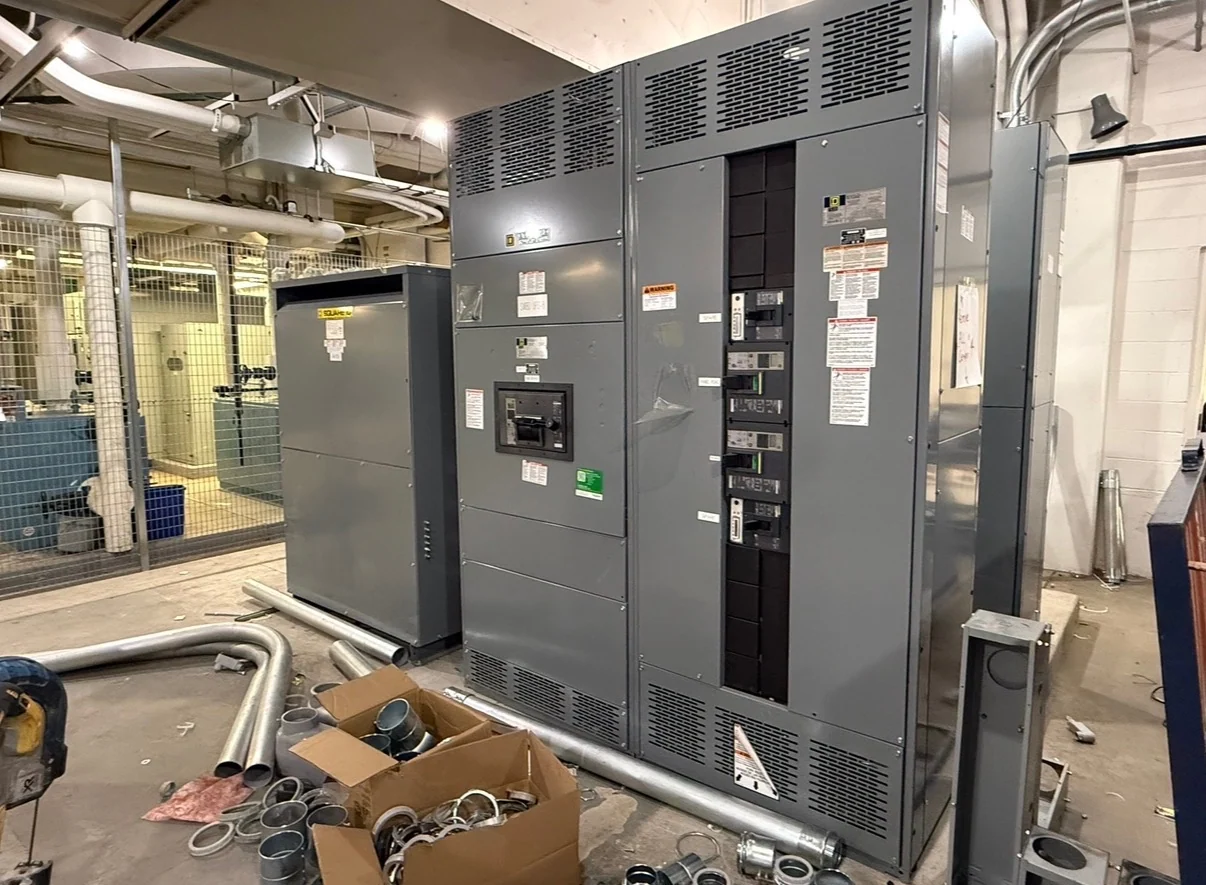
Older campus electrical rooms frequently impose constraints that are invisible on a single-line diagram. Measure the available footprint, ceiling height, clearances, wall openings, floor elevations, ventilation, cable-bending space, and the path needed to position each shipping section. Confirm whether doors, louvers, removable panels, or lifting provisions must be coordinated with the building. A custom manufacturer-built lineup can be developed from approved dimensions, bus orientation, feeder locations, device arrangement, control wiring, metering provisions, and required access zones, but each choice must remain subject to engineering review and the installation conditions. If the room cannot accept a single assembled lineup, the project team can evaluate shipping splits and field joining details while preserving a coherent equipment arrangement and clear identification of every connection.
Coordinate Ratings and Project Documents
Replacement equipment should be specified from verified system data, not from the nameplate of one predecessor assembly alone. Confirm nominal voltage, frequency, phase and grounding arrangement, continuous current, available fault current, protective-device interrupting duties, bus requirements, feeder quantities, environmental conditions, and any generator or transfer interfaces. The engineer should review selective coordination, arc-flash study inputs, grounding and bonding, and utility or authority requirements as applicable. If a project calls for UL 891, its applicability, construction requirements, and any project-specific listing or verification must be confirmed before fabrication; it should not be assumed for every switchgear application. A useful submittal package may include the one-line diagram, elevations, floor plan, wiring diagrams, device schedules, terminal information, shipping weights, lifting points, and agreed inspection or test records.
Plan the Purchase and Campus Delivery
When a university requests a quote, provide the campus location, phase boundaries, required equipment scope, drawings, ratings, room constraints, outage assumptions, delivery access, and the desired documentation. Switchgear Builders manufactures new electrical switchgear in the United States, builds custom equipment to specification, uses American components, and supplies nationwide shipping; project-specific configuration, manufacturing details, and transit expectations should still be confirmed during quotation. The purchasing team should align the equipment package with the electrical contractor, rigging responsibilities, receiving inspection, storage conditions, installation sequence, and commissioning plan. Ask how revisions will be controlled between design approval and fabrication, how each shipping section will be identified, and what records are needed for turnover. This coordination reduces surprises when a phased campus upgrade moves from procurement to installation.