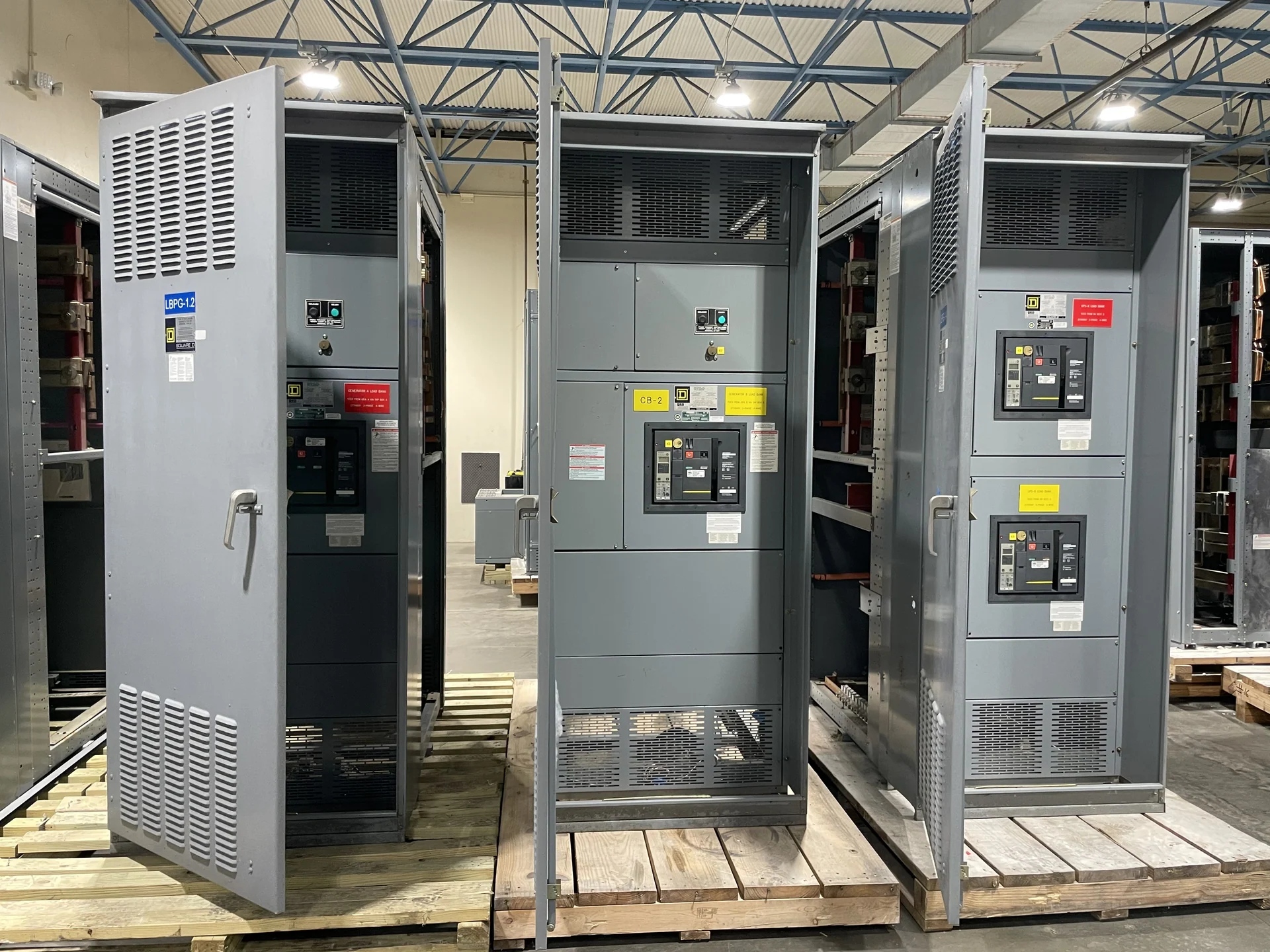
Start with the Operating Sequence
A phased electrical upgrade should begin with a written operating sequence, not with a cabinet dimension or a preferred breaker arrangement. Map the present source, buses, feeders, critical loads, and planned new equipment, then identify which circuits must remain energized during each stage. A qualified electrical engineer can use that sequence to define switching boundaries, isolation points, temporary connections, and approval steps. The manufacturer can then build new switchgear to the documented arrangement, with American components and nationwide shipping from the United States.
Define Temporary Connections Carefully
Temporary connections can support continuity while permanent distribution equipment is installed, but they require their own design review. Document the temporary source, conductor routing, overcurrent protection, grounding and bonding method, environmental exposure, physical protection, and access controls. Confirm that temporary equipment does not reduce required working space or create an unplanned backfeed path. Drawings should show who operates each disconnect and how the temporary arrangement will be removed. These details help align the construction plan with the new switchgear configuration rather than treating temporary power as an informal field change.
Plan Load Transfers and Isolation
Load transfers should account for the electrical behavior and operating importance of each connected load. List normal and alternate sources, transfer order, interlocks, bypass provisions if applicable, and the conditions that permit energization. Identify loads that cannot tolerate an interruption, loads that must be shut down, and loads whose starting current could affect another stage. The project team should confirm protective settings, phasing, and verification tests before each transfer. A custom manufacturer quote is more useful when it includes the one-line diagram, control narrative, device schedule, and required cable or bus interfaces.
Coordinate Safety Reviews Before Field Work
Every stage needs a safety review that matches the actual work boundary and energized condition. Review the planned outage, lockout and tagging responsibilities, approach boundaries, grounding points, switching authority, arc-flash information, and emergency communications with the responsible electrical professionals. Confirm that equipment access, lifting paths, temporary barriers, and housekeeping remain practical as rooms change from one stage to the next. If a project calls for UL 891 or another standard, its applicability, construction requirements, and any project-specific listing must be confirmed before the equipment scope is finalized; no general assumption should replace that review.
Sequence Procurement Around Design Approvals
Procurement for a multi-stage upgrade should separate decisions that must be fixed early from details that can follow an approved design. Early information normally includes system voltage and frequency, phase and grounding, continuous current, available fault current, enclosure environment, lineup footprint, feeder locations, control power, metering, and the intended installation stage. Later submittals may refine labels, terminal schedules, and field connection details, but only under the project's document-control process. When requesting a quote for new custom switchgear, provide the delivery destination, shipping access, packaging expectations, required documentation, and desired project milestones.
Verify Each Stage Before Energization
Stage-gate verification creates a disciplined handoff between construction and operation. Compare installed equipment with approved drawings, check torque and identification records as required by the project, verify conductor terminations and grounding, and complete the agreed continuity, insulation, functional, or control checks. Confirm that temporary feeds are isolated or removed when their role ends, and update the one-line diagram and operating instructions after every accepted change. Switchgear Builders manufactures new electrical switchgear custom to specification, so the final inquiry should state which tests, records, shipping splits, and field responsibilities belong in the equipment package. Keep every revision traceable. Record the person responsible for accepting each stage before the next transfer begins.