Plan the Distribution System Around the Los Angeles Site
A Los Angeles industrial project should begin with the electrical system rather than a preferred enclosure or device list. Define the utility or generator sources, nominal voltage, phase and wire arrangement, grounding method, calculated load, available fault current, and whether the facility must support process continuity. Site conditions can affect outdoor exposure, room access, ventilation, corrosion control, seismic design inputs, and cable routing. A manufacturer can then develop new custom switchgear around the project drawings, American components, and the required interfaces, with applicability of standards and approvals confirmed for the specific assembly.
Match Motor Control to Pumps, Conveyors, and Process Loads
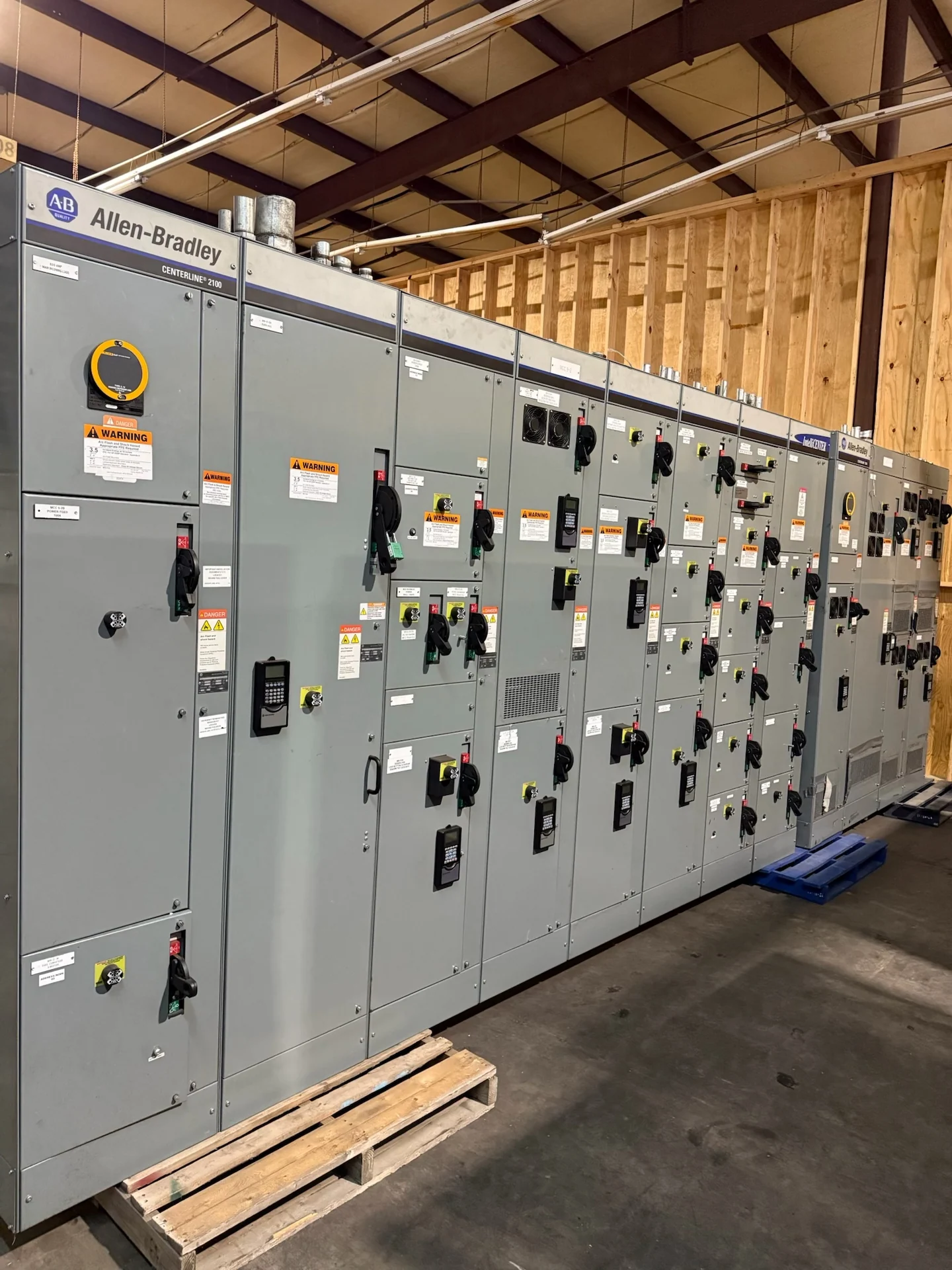
Motor control centers for industrial pumps, conveyors, and process loads should be organized by the way equipment starts, stops, and communicates with the operating system. The design team should identify motor horsepower, full-load current, starting method, duty cycle, acceleration requirements, overload protection, disconnecting means, and any variable frequency drive application. Across-the-line starters, reduced-voltage methods, and drives each create different requirements for heat, harmonics, bypass arrangements, maintenance access, and control wiring. Those choices belong in the one-line diagram, equipment schedules, and control narrative before fabrication.
Coordinate Protection and Feeder Interfaces
Motor protection cannot be selected in isolation from the upstream and downstream distribution system. Review feeder ampacity, breaker or fuse characteristics, overload settings, short-circuit current ratings, selective coordination objectives, grounding and bonding, and the relationship between motor starting current and source capacity. For a Los Angeles electrical distribution project, the engineer and manufacturer should reconcile the site utility information, study assumptions, protective-device data, and field cable terminations. A new lineup may include mains, feeders, motor branches, metering, control power, and communications, but each inclusion should be shown and approved in project documentation.
Design the Control Interface Before Building
A reliable control interface starts with a written sequence, not merely terminal numbers. Identify permissives, interlocks, local and remote commands, emergency-stop behavior, run and fault indications, analog signals, network points, alarm priorities, and the division of responsibility between the motor control center, programmable controller, and field devices. Specify terminal locations, wire identification, segregation, spare points, and test expectations so installers and controls contractors can coordinate without guessing. The manufacturer can translate those requirements into drawings and a custom assembly, while the project team verifies logic against actual process hazards and operating procedures.
Account for Installation, Access, and Southern California Conditions
Physical planning is as important as the electrical schedule. Confirm the equipment-room dimensions, working clearances, door swings, lifting path, shipping splits, housekeeping pads, cable entrance direction, ventilation, and space for future circuits. Outdoor or semi-exposed locations may require a project-defined enclosure approach for moisture, dust, sunlight, temperature, and corrosive surroundings; the correct environmental classification should come from the engineer and site requirements. Seismic anchorage and qualification, where required, must likewise be identified and documented for the project rather than assumed from geography alone.
Request a Complete Manufacturer Quote and Delivery Plan
A useful quote request for Los Angeles industrial equipment should include the latest one-line diagram, load schedules, motor list, fault-current information, control schematics, floor plan, enclosure location, cable details, utility requirements, applicable specifications, documentation expectations, and destination constraints. State whether the scope is a motor control center, switchboard, switchgear lineup, or coordinated combination so the equipment type remains clear. Include the requested source arrangement, feeder count, spare capacity, metering points, and installation handoff so assumptions are visible during review. Switchgear Builders manufactures new electrical switchgear in the United States, builds custom to specification with American components, and supplies nationwide; shipping, packaging, freight responsibilities, and project timing should be confirmed in the written quotation.