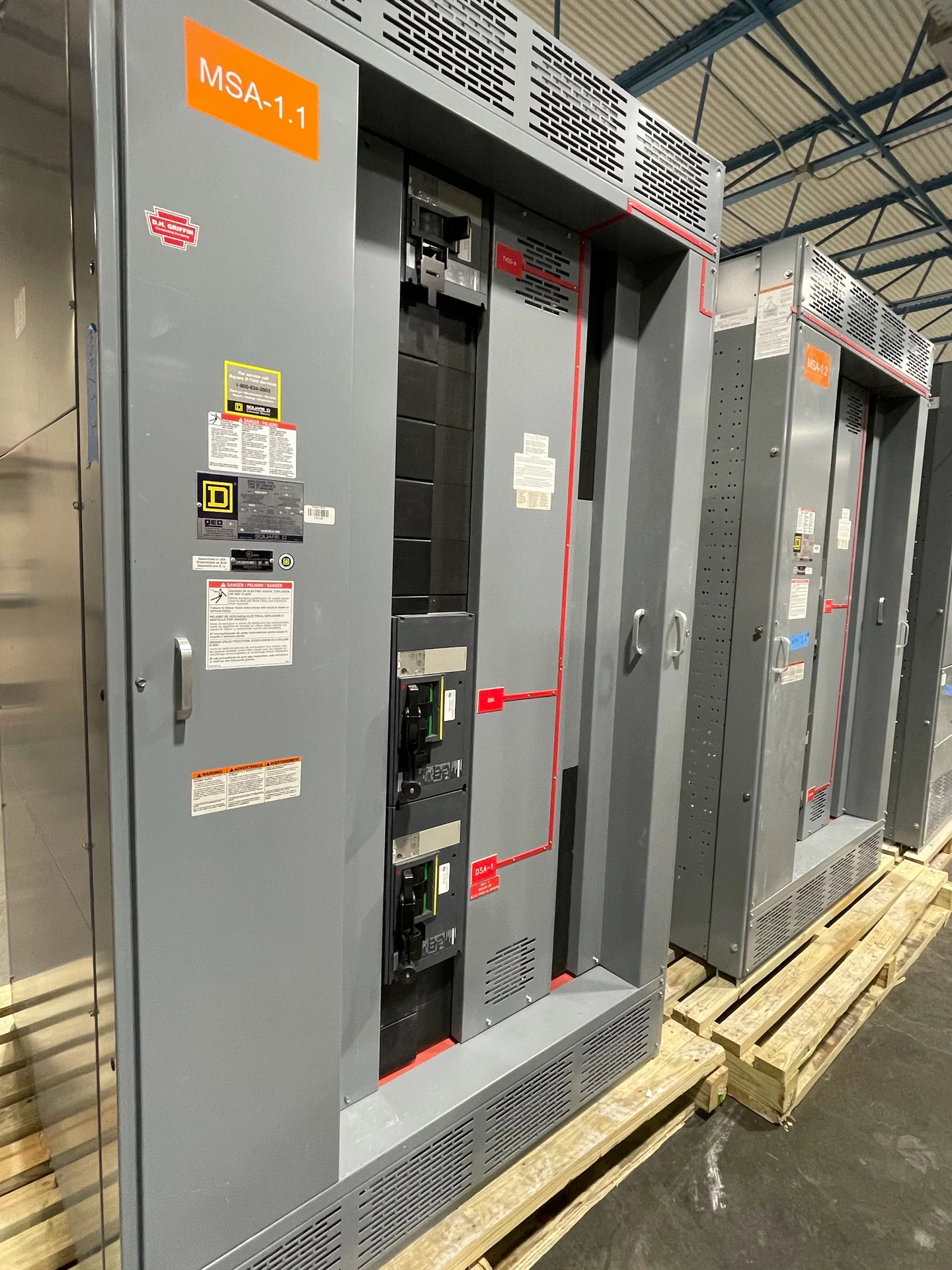
Plan San Francisco Expansion Around the Existing Distribution System
A facility expansion in San Francisco, California should begin with a clear picture of how the present electrical distribution system operates. Collect the one-line diagram, service information, feeder schedules, equipment dimensions, protective-device data, grounding arrangement, and available-fault-current information before defining new switchgear. A manufacturer can use those inputs to develop new equipment that fits the planned electrical interfaces rather than treating the expansion as an isolated lineup. The design team should also identify which loads are growing, which feeders are new, and whether the project changes normal or emergency operating sequences.
Define New Feeder Requirements Before Requesting a Quote
New electrical feeders need more than a circuit label and an ampere value. Provide the source, nominal voltage, phase and wire configuration, grounding method, continuous-load calculation, available fault current, conductor entry direction, feeder destinations, protective-device requirements, metering needs, and anticipated future capacity. If the expansion includes motors, drives, generators, photovoltaic sources, or other specialized loads, describe their interfaces separately. These details help Switchgear Builders prepare a custom-to-spec equipment proposal using American components, while the engineer of record confirms coordination, settings, and applicable California project requirements.
Coordinate Physical Space, Access, and Installation Interfaces
Available space can determine whether a new lineup is practical even when the electrical ratings are straightforward. Document room dimensions, working clearances, doors, corridors, floor elevations, structural limitations, cable-bending space, ventilation provisions, and the route from receiving to the final installation point. For a constrained San Francisco site, review these conditions early with the electrical contractor and qualified rigging professionals. A custom enclosure arrangement may address the defined interfaces, but final dimensions, lifting provisions, anchorage, and field installation responsibilities must follow project drawings and site verification.
Build the Outage and Cutover Plan Into the Equipment Scope
An expansion that connects to energized distribution requires an outage and cutover plan developed by the responsible electrical professionals. Identify the loads that cannot be interrupted, temporary power needs, switching steps, testing boundaries, shutdown approvals, and the sequence for connecting each new feeder. The equipment scope should distinguish factory work from field termination, commissioning, and energization activities. Sharing target outage windows with the manufacturer gives the project team a basis for reviewing design approvals, fabrication coordination, shipping, and site readiness together.
Review Protection, Grounding, and Documentation Inputs
Expansion work can alter fault duty and protective coordination throughout a facility, so the equipment specification should be checked against the current study assumptions. Confirm main and feeder interrupting requirements, bus short-circuit duty, relay or trip-unit functions, ground-fault strategy, bonding points, control voltage, interlocks, and communications interfaces where applicable. Request drawings that show the proposed arrangement, device identification, terminal points, and dimensions, along with a project-defined inspection and test record package. UL 891 applicability, construction requirements, and any listing expectations must be confirmed for the particular assembly rather than presumed from the location or application.
Source New Switchgear for a California Project
Switchgear Builders manufactures new electrical switchgear in the United States and supplies custom equipment with American components and nationwide shipping. Include the project address, receiving access, and installation responsibilities in a San Francisco electrical distribution inquiry so the shipping and field interfaces can be coordinated. Send the single-line diagram, schedules, specifications, room information, feeder list, control narrative, documentation requirements, and desired purchasing milestones. Include delivery access constraints and the responsible installation contact as well. The manufacturer can review the defined scope, identify open technical questions, and prepare a project-specific quotation; ratings, availability, required qualifications, and schedule must be confirmed for the order.