Define the Hilo Industrial Feeder Application
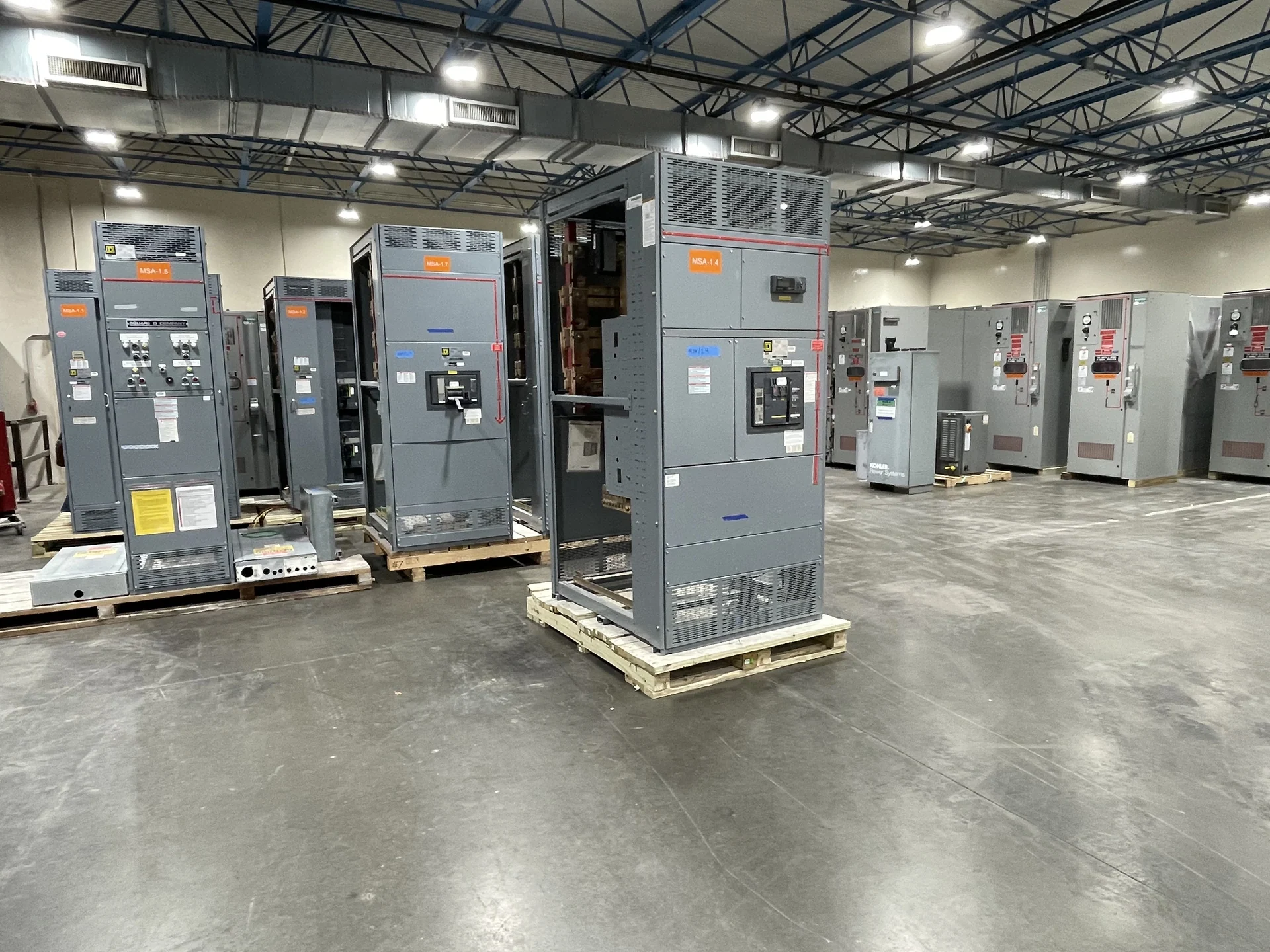
A Hilo industrial facility feeder should be specified from the electrical system outward, not from a generic equipment label. Start with the source arrangement, nominal system voltage, frequency, phase configuration, grounding method, feeder destinations, transformer data, and expected operating sequence. Medium-voltage switchgear may sit between a utility service, generation source, or transformer and several process loads, so the lineup must fit the one-line diagram and the facility’s operating responsibilities. A project team should also identify whether feeders supply motors, transformers, process skids, or mixed loads, because switching duty, protection, cable termination, and maintenance access can differ substantially. Switchgear Builders manufactures new electrical switchgear in the United States, custom to specification with American components and nationwide shipping; the inquiry should state the Hilo site requirements clearly so the proposed assembly can be evaluated against the actual application.
Confirm Voltage Class and Insulation Requirements
Voltage class is more than the nominal number printed on a project schedule. The equipment specification should distinguish system operating voltage from the switchgear voltage class, insulation level, power-frequency withstand, and any applicable impulse or environmental requirements. Confirm the grounding arrangement, phase spacing, cable entry direction, termination type, and elevation or exposure conditions that could influence the design review. For a Hilo installation, the electrical engineer and authority having jurisdiction should identify local requirements and site conditions rather than relying on assumptions tied to the city name. A manufacturer quote should reflect the requested class, bus arrangement, switching devices, instrument transformers, and enclosure conditions, while final applicability of standards and construction details remains a project-specific engineering decision.
Coordinate Transformer Connections and Feeder Interfaces
Transformer connections deserve a dedicated review because the primary switching arrangement, transformer impedance, secondary configuration, and grounding method affect both protection and physical layout. Provide transformer kVA or MVA information, primary and secondary voltages, connection details, impedance when available, neutral treatment, inrush considerations, and the intended disconnecting or switching function. The switchgear design also needs cable sizes, termination space, phase identification, and the interface dimensions supplied by the transformer and installation teams. If several industrial feeders share a lineup, identify which sections are incoming, transformer primary, bus tie, or outgoing feeder positions. These details help a custom builder separate equipment functions, coordinate barriers and access, and avoid treating every feeder compartment as interchangeable.
Develop Protective Relaying and Coordination Inputs
Protective relaying should be developed from a coordinated study rather than selected in isolation. Supply the available fault current at each relevant bus, transformer contribution, feeder conductor information, grounding-fault assumptions, upstream device data, downstream protective devices, and the desired operating sequence. The design team can then define relay functions, sensing locations, trip logic, communications, auxiliary power, and settings documentation appropriate to the system. A relay panel that looks complete may still be unsuitable if current-transformer ratios, polarity, burden, or interrupting duty do not match the study. Ask for drawings that show control power, interlocks, annunciation, and test access, and have the engineer responsible for the distribution system approve the protection philosophy before fabrication proceeds.
Evaluate Fault Duty, Switching, and Physical Construction
Fault duty must be checked at the actual point of installation, including the source contribution, transformer contribution, motor contribution where applicable, and clearing assumptions used by the study. Specify the required short-circuit withstand or interrupting capability for each device and the applicable bus bracing, grounding, and compartment requirements. Also review whether the lineup uses fixed or removable devices, how feeder cables enter, where lifting and anchoring points are needed, and how operators and qualified maintenance personnel will access controls. Outdoor exposure, salt-laden air, rain, drainage, corrosion concerns, and enclosure selection should be addressed by the project specification for a coastal Hilo site. UL 891 applicability, if relevant to the proposed assembly, must be confirmed for the particular project; it should not be assumed from a product name alone.
Prepare a Complete Manufacturer Quote and Shipment Plan
A useful request for Hilo Hawaii switchgear should include the one-line diagram, load and feeder schedule, voltage and grounding data, fault-current study or preliminary values, transformer information, relay and metering requirements, enclosure environment, dimensions, cable details, control schematics, desired drawings, inspection expectations, and site delivery constraints. Include the receiving address, available unloading equipment, access limitations, shipping splits, lifting points, and who will coordinate rigging after arrival. Switchgear Builders can build new custom equipment to the supplied scope using American components and arrange nationwide shipping, but configuration, documentation, commercial terms, and transit estimates must be confirmed for the individual order. Early coordination among the owner, engineer, electrical contractor, manufacturer, and qualified logistics providers reduces surprises at submittal review and receiving.