Planning Commercial Distribution in Honolulu
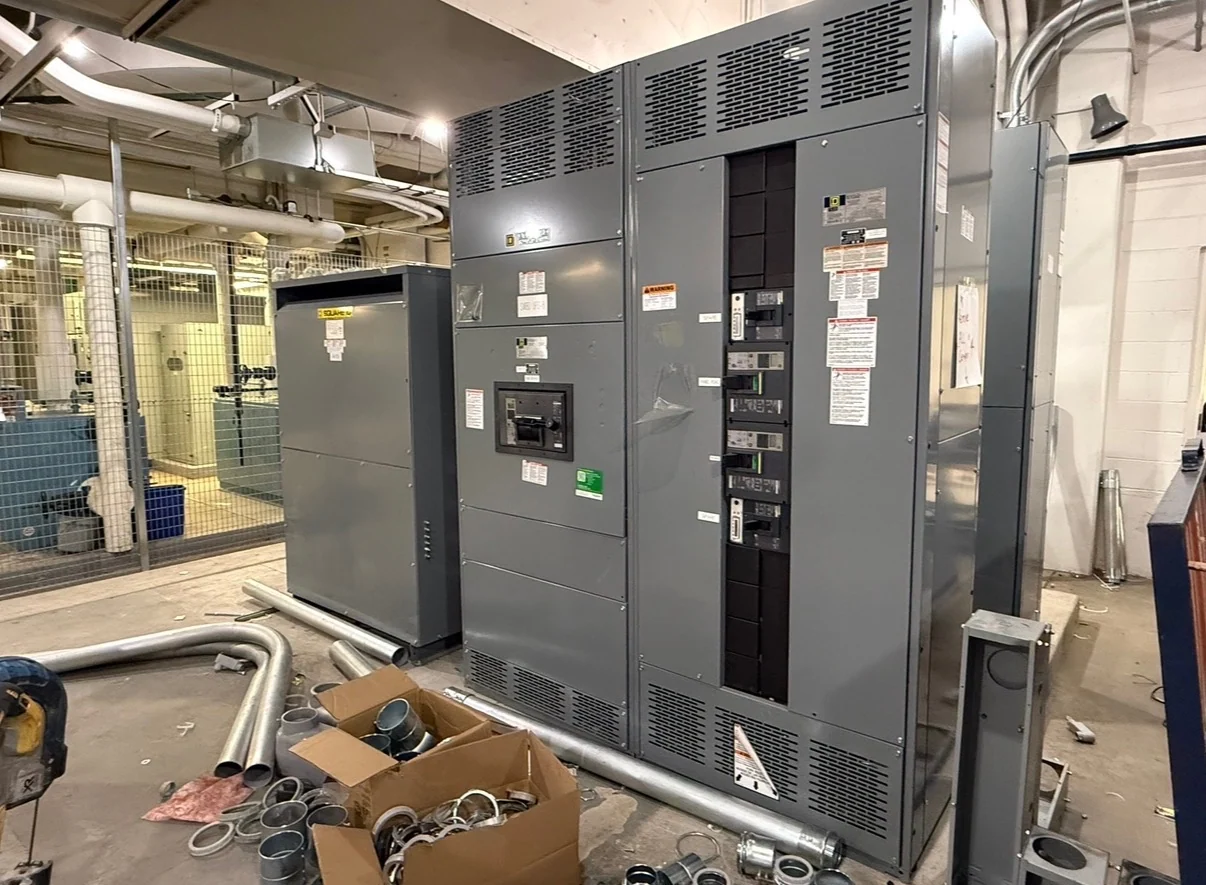
Commercial electrical distribution in Honolulu should begin with the building's actual service arrangement, calculated demand, available fault current, and operating goals rather than a generic equipment size. A new low-voltage switchgear lineup can be custom built to the project's one-line diagram, service rating, feeder schedule, physical access, and control requirements. For a Hawaii project, the design team should also coordinate utility interface information, site logistics, environmental exposure, and the path from shipment receipt to the electrical room. Switchgear Builders manufactures new electrical switchgear in the United States, using American components and supplying projects nationwide, with final configuration determined by the project documents.
Service Ratings and Available Fault Current
Service rating is only one part of selecting commercial low-voltage switchgear. Engineers should identify nominal voltage, phase and wire arrangement, frequency, continuous load, demand assumptions, main-device rating, feeder ratings, and the available fault current at the service point. Protective devices must be evaluated for their interrupting duties and coordinated with upstream utility equipment, transformers, generators, and downstream distribution. A quotation request should include the latest one-line diagram and fault-current information, while any calculation changes should be communicated before drawings are finalized. This disciplined input helps distinguish a suitable lineup from equipment that merely appears to match an ampere value.
Feeder Protection and Operating Arrangements
Feeder protection for a commercial building depends on the loads being served, conductor ampacity, selective coordination objectives, ground-fault requirements where applicable, and the desired maintenance or outage sequence. A custom lineup may need a main device, multiple feeder sections, metering provisions, a bus tie, or another arrangement defined by the electrical engineer; none should be assumed from the building name alone. Review breaker frame and trip characteristics, neutral treatment, grounding and bonding, control power, interlocks, and labeling as a coordinated package. The manufacturer can use these project inputs to build new equipment to specification, while the responsible design professionals confirm settings and field installation requirements.
Equipment Room Space and Access
Honolulu commercial projects should document the electrical room footprint, finished-floor elevations, door and corridor dimensions, turning points, housekeeping pads, working clearances, ventilation conditions, and cable-entry direction before a lineup is released for fabrication. Available space affects section width, depth, lineup orientation, maintenance access, and whether shipping splits are practical. Confirm how the equipment will be unloaded, moved, positioned, anchored, and connected, including responsibilities for qualified rigging and installation personnel. These details are especially important when a building renovation has constrained routes or when equipment must travel by freight to an island destination.
Coordinating a New Switchgear Quote
A useful request for Honolulu switchgear should identify the project location, equipment type, service and feeder ratings, one-line diagram, enclosure environment, dimensions, incoming and outgoing cable details, metering, controls, protective-device preferences, documentation, inspection expectations, and shipping destination. Include the required review milestones and note whether a field survey, engineer approval, utility review, or special site condition remains outstanding. Switchgear Builders can review the defined scope for a new custom build and prepare a manufacturer quotation around the stated requirements. Confirm delivery estimates, freight terms, component details, and project-specific capabilities in writing before placing the order.
Project Documentation and Verification
Before procurement, compare the proposed equipment schedule with the approved one-line diagram, load calculations, fault-current study, coordination study, room drawings, and installation plan. Submittal review should resolve device identification, bus configuration, neutral and ground provisions, control wiring, metering interfaces, nameplates, shipping sections, and field termination space. If the specification references UL 891, determine whether that standard applies to the particular assembly and confirm any project-specific listing or verification requirements; applicability is not automatic for every switchgear design. Final acceptance should follow the contract documents and qualified project inspection process, not an unsupported assumption about certification or performance.