Start with the Baton Rouge Project Conditions
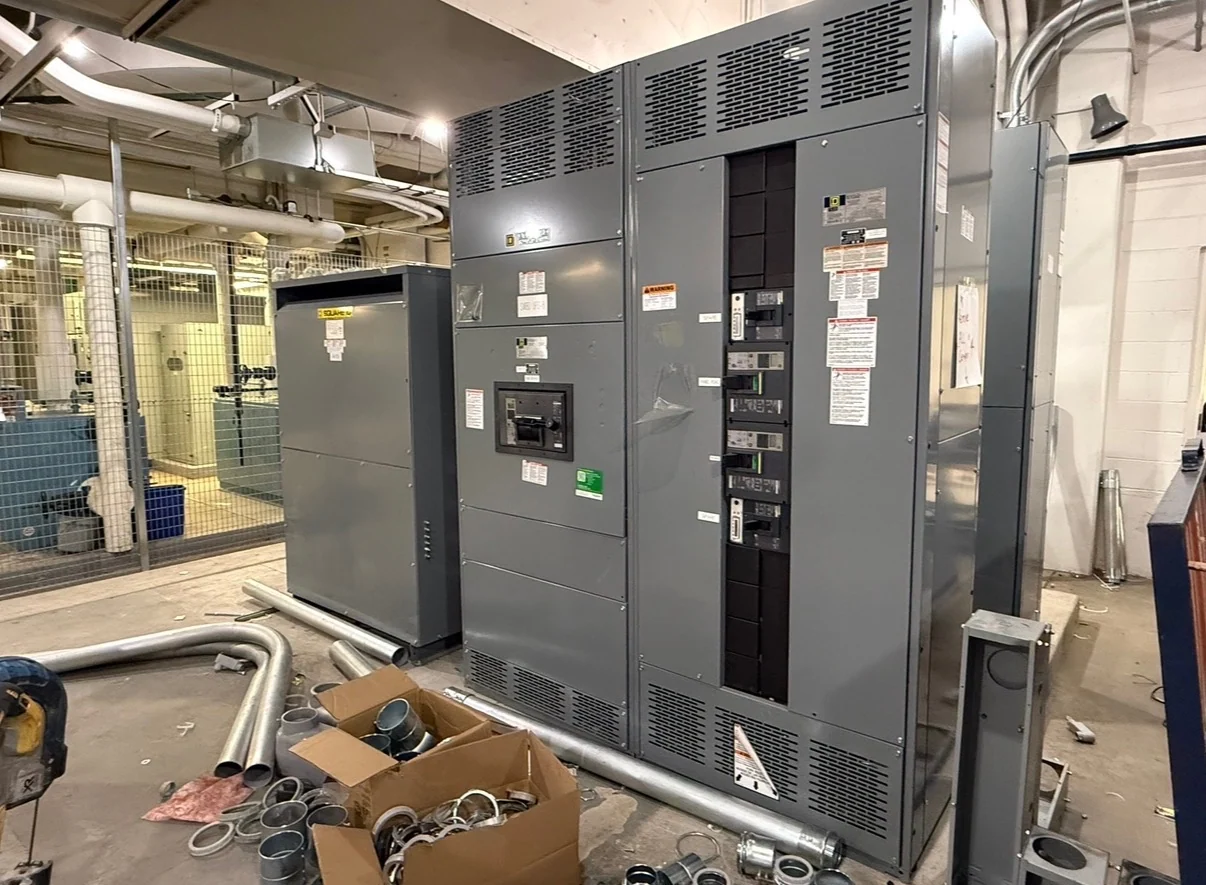
A Baton Rouge electrical distribution project should begin with the actual service arrangement, building or process loads, and the installation environment rather than a generic equipment label. A useful manufacturer inquiry identifies whether the application is commercial, industrial, expansion, or replacement work; the nominal voltage and phase arrangement; expected continuous current; available fault current; grounding method; and the required service entrance configuration. Site drawings, utility information, load calculations, and the engineer's one-line diagram give the design team a common technical starting point. Switchgear Builders manufactures new electrical switchgear in the United States, custom to project specifications, with American components and nationwide shipping.
Coordinate Service-Entrance Switchboards
Service-entrance switchboards connect the utility interface to mains, feeders, metering provisions, and downstream distribution, so each boundary must be defined before fabrication. Confirm the utility's service requirements, metering arrangement, disconnecting means, conductor entry, grounding and bonding details, and responsibility for approvals or field connections. A project may require a main breaker, fused equipment, multiple service sections, or a particular compartment layout; those choices depend on the engineered system and utility direction. The equipment schedule should identify every incoming and outgoing circuit, device frame or type where specified, and space reserved for documented future needs.
Review Ratings and Feeder Protection
Available fault current is a design input, not a detail to estimate from the city or building type. The engineer should provide the calculated value at the service equipment and identify the required short-circuit current rating or other applicable withstand duty for the assembly. Continuous-current ratings must align with calculated demand, conductor ampacity, ambient conditions, and any planned load growth. Feeder breakers, fuses, and other protective devices should be selected and coordinated with the upstream utility interface and downstream circuits. Where settings, metering, shunt trips, or control power are required, include their sources and operating sequence in the equipment specification.
Define Physical Layout and Installation Interfaces
A technically correct electrical lineup can still create field problems if dimensions and access are left vague. Provide the available room footprint, working clearances, door swing limitations, wall or floor conditions, cable-routing direction, conductor bending space, ventilation constraints, and the route from unloading point to the final position. Identify shipping splits, section weights, lifting provisions, anchorage expectations, and whether the installer needs removable panels or special access. For a Baton Rouge project, local site conditions and the authority having jurisdiction should be reviewed by the responsible design and installation professionals; geography alone does not determine enclosure selection or construction.
Build a Clear Submittal Package
Submittal drawings should let the engineer, contractor, owner, utility, and manufacturer review the same equipment definition. Depending on the project, the package can include a dimensioned elevation, plan and section views, a one-line diagram, nameplate and circuit schedules, bus arrangement, device identification, control schematics, terminal information, metering provisions, shipping splits, and connection details. Mark assumptions separately from confirmed requirements, and track comments by revision so an approved drawing does not silently change the scope. If UL 891 is specified, its applicability, construction requirements, and any project-specific listing or verification must be confirmed for the particular assembly rather than presumed from the drawing title.
Prepare the Quote and Delivery Coordination
A quote request for Baton Rouge switchgear is easier to compare when it includes the one-line diagram, equipment schedule, site address, required shipping destination, utility criteria, fault-current study information, layout constraints, documentation list, and desired review milestones. State what the manufacturer is expected to furnish and identify field-installed work, engineering responsibilities, freight terms, unloading, rigging, and final connections. Switchgear Builders can use those inputs to develop new custom equipment for the specified application and coordinate nationwide shipment. Confirm component availability, manufacturing sequence, transit estimates, and commercial terms for the individual project.